The 7.5% talok and 2% pare leaf extract hair tonic effectively promotes hair growth, similar to minoxidil.
47 citations
,
September 2004 in “Journal of Biological Chemistry” Hoxc13 regulates specific hair protein genes on mouse chromosome 16.
 40 citations
,
January 2010 in “International Journal of Trichology”
40 citations
,
January 2010 in “International Journal of Trichology” Loose Anagen Syndrome is a hair condition where hairs can be easily pulled out, mainly affecting young girls, and may improve on its own or with treatment.
 February 2026 in “Journal of Sylva Indonesiana”
 Avicennia marina heartwood extract shows strong antioxidant potential for health benefits.
 May 2018 in “Hair transplant forum international”
 The document's conclusion cannot be summarized because the content is not accessible or understandable.
25 citations
,
July 2004 in “Experimental Dermatology” Illicium anisatum extract may boost hair growth.
 5 citations
,
January 1998 in “Journal of Toxicologic Pathology”
5 citations
,
January 1998 in “Journal of Toxicologic Pathology” Maneb causes delayed hair follicle damage in rats.
April 2025 in “Mutiara Jurnal Penelitian dan Karya Ilmiah” Green spinach leaf tonic significantly reduces hair loss.
June 2022 in “Journal of Holistic and Health Sciences (Jurnal Ilmu Holistik dan Kesehatan)” Papaya seed and celery leaf powder can help maintain hair health and lasts 3 weeks.
117 citations
,
April 2008 in “Developmental biology” Ectodysplasin inhibits Wnt signaling to help form hair follicles.
 27 citations
,
June 2005 in “The journal of investigative dermatology/Journal of investigative dermatology”
27 citations
,
June 2005 in “The journal of investigative dermatology/Journal of investigative dermatology” The study found that variations in hair protein genes are likely due to evolutionary deletions or duplications.
September 2017 in “Journal of Investigative Dermatology” Ceramide may help delay hair aging by restoring stressed hair cells.
 July 2023 in “Anuradhapura Medical Journal”
 Many students at Rajarata University in Sri Lanka experience skin issues like acne, causing significant stress and concern.
 January 2011 in “Journal of The American Academy of Dermatology”
 Treating generalized granuloma annulare is difficult, with PUVA being the most effective option, but relapses are common.
Ayurvedic treatments improved alopecia areata symptoms.
March 1956 in “Institutional Repositories DataBase (IRDB)”  7 citations
,
January 2013 in “University of Michigan Press eBooks”
7 citations
,
January 2013 in “University of Michigan Press eBooks” Mammograms are important for detecting breast cancer early.
5 citations
,
July 2024 in “Journal of Microbiology and Biotechnology” ICP5249 helps hair grow by activating a specific cell pathway.
June 2026 in “Zenodo (CERN European Organization for Nuclear Research)” Indralupta, similar to Alopecia Areata, is caused by an imbalance of body energies, mainly Pitta and Vata.
 June 2025 in “Jurnal Bumigora Information Technology (BITe)”
 Naive Bayes algorithm can help predict hair loss risk early.
September 2023 in “Journal of the American Academy of Dermatology” Recognizing IPPP is crucial to prevent misdiagnosis and unnecessary treatments.
 30 citations
,
May 2005 in “Pediatric dermatology”
30 citations
,
May 2005 in “Pediatric dermatology” Some families have a genetic condition where they are born with irregular scalp defects.
 10 citations
,
November 1997 in “British Journal of Dermatology”
10 citations
,
November 1997 in “British Journal of Dermatology” A 10-year-old boy had the earliest reported case of hair that became progressively kinkier but eventually returned to normal on its own.
 March 2024 in “Jurnal Ilmu Kesehatan Hewan”
 The treatment was effective for the puppy's skin and intestinal infections.
1 citations
,
November 2022 in “Journal of Investigative Dermatology” ALRN-6924 may prevent hair loss caused by chemotherapy.
5 citations
,
October 2012 in “Australian veterinary journal” Two Australian Poll Hereford calves had severe anaemia, abnormal red blood cells, and skin issues.
 2 citations
,
January 2025 in “Pharmaceutical Research”
2 citations
,
January 2025 in “Pharmaceutical Research” Angelica gigas Nakai root extracts may help with cancer, pain, memory loss, and metabolic issues.
January 2009 in “China Practical Medicine” Certain genes help dermal papillae cells in hair follicles grow and group together.
 January 2024 in “Journal of cutaneous and aesthetic surgery”
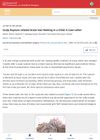
 Scalp injuries and harsh hair care can cause severe hair matting in children.
7 citations
,
October 2018 in “South African journal of botany” Clausena anisata may be effective in treating acne due to its ability to fight bacteria, reduce inflammation, and possibly lower sebum production.