10 citations
,
January 2013 in “International Journal of Trichology” Systemic steroids effectively treated severe nail issues in a card illusionist with alopecia areata.
Recognizing bamboo hair helps diagnose Netherton’s syndrome.
 January 2015 in “Turkiye Klinikleri Journal of Ophthalmology”
 Eyelash loss can indicate various health issues, and excessive growth may be linked to certain conditions or medications; both require careful examination and tailored treatment.
3 citations
,
January 2020 in “International journal of trichology” Congenital triangular alopecia is a hair loss condition present from birth or early childhood with no effective treatment needed.
May 2025 in “VETERINARY SCIENCE TECHNOLOGIES OF ANIMAL HUSBANDRY AND NATURE MANAGEMENT” Poor-quality feed and low vitamin A cause reproductive issues in nutrias.
 23 citations
,
April 2010 in “Clinical, cosmetic and investigational dermatology”
23 citations
,
April 2010 in “Clinical, cosmetic and investigational dermatology” Bimatoprost ophthalmic solution 0.03% safely and effectively increases eyelash growth when applied to the upper eyelid.
 5 citations
,
February 2015 in “JEADV. Journal of the European Academy of Dermatology and Venereology/Journal of the European Academy of Dermatology and Venereology”
5 citations
,
February 2015 in “JEADV. Journal of the European Academy of Dermatology and Venereology/Journal of the European Academy of Dermatology and Venereology” OCT can non-invasively diagnose follicular keratosis and other hair follicle disorders.
 6 citations
,
July 2018 in “JAMA facial plastic surgery”
6 citations
,
July 2018 in “JAMA facial plastic surgery” Injecting minced fat into the facial artery can cause severe eye problems and death, more so than other fat types, and larger amounts increase these risks.
 30 citations
,
March 2015 in “Journal of Dermatology”
30 citations
,
March 2015 in “Journal of Dermatology” Hair thickness differences help diagnose hair loss severity.
September 2024 in “Journal of the American Academy of Dermatology” A new type of alopecia areata, called the "confetti variant," causes small bald spots that often heal on their own in a few months.
 28 citations
,
February 2020 in “Clinical Ophthalmology”
28 citations
,
February 2020 in “Clinical Ophthalmology” Certain medications and patient factors increase the risk of Intraoperative Floppy Iris Syndrome during cataract surgery, but with careful planning and technique adjustments, complications can be minimized.
2 citations
,
December 2013 in “Journal of dermatology” A specific gene mutation causes a rare hair loss condition in a Chinese patient.
January 2020 in “International journal of scientific research” Dermoscopy shows that varying hair shaft thickness and single hair follicles are main signs of male pattern baldness, especially in the fronto-temporal region.

Traumatic anserine folliculosis is a harmless skin condition in young males that needs correct diagnosis to avoid unnecessary treatments.
14 citations
,
June 2011 in “Australasian Journal of Dermatology” An 8-year-old boy had both alopecia areata and vitiligo on the same spot on his scalp, which is very rare.
April 2025 in “Pediatric Dermatology” Scalp biopsies are essential for diagnosing congenital alopecia areata.
23 citations
,
December 2008 in “Pediatric neurology” The document adds two cases of Gomez-Lopez-Hernandez syndrome and suggests including trigeminal anesthesia and scalp alopecia as key diagnostic criteria.
3 citations
,
October 2015 in “PubMed” Finasteride may increase iris billowing risk during surgery, similar to tamsulosin.
 May 2025 in “Modern technologies in ophtalmology”
 Minoxidil might rarely increase eye pressure.
 3 citations
,
July 2014 in “QJM”
3 citations
,
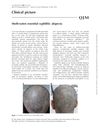
July 2014 in “QJM” A 35-year-old man had patchy hair loss that was actually due to syphilis, not alopecia areata.
 March 2012 in “Journal of the American Academy of Dermatology”
 Treating ovarian-related inflammation may help hair regrowth in women with alopecia areata.
 5 citations
,
October 2018 in “Dermatologic therapy”
5 citations
,
October 2018 in “Dermatologic therapy” Recognizing congenital triangular alopecia is crucial to avoid unnecessary treatments.
 March 2026 in “Journal of Skin and Stem Cell”
 Periorbital melanosis may be linked to metabolic syndrome.
 January 2012 in “Yearbook of Dermatology and Dermatologic Surgery”
 The study concluded that a 'Swiss cheese' pattern in hair follicles is a useful sign for diagnosing alopecia areata.
 4 citations
,
September 2019 in “Journal of cosmetic dermatology”
4 citations
,
September 2019 in “Journal of cosmetic dermatology” Topical bimatoprost 0.01% improves eyebrow density and diameter, especially at the tail.
8 citations
,
January 2017 in “Acta Dermato Venereologica” Thorough clinical examination is crucial for diagnosing unusual alopecia.
3 citations
,
February 2022 in “Canadian Medical Association Journal” Severe hypothyroidism can cause eyebrow hair loss, but improves with thyroid hormone treatment.
 6 citations
,
January 2014 in “Clinical hemorheology and microcirculation”
6 citations
,
January 2014 in “Clinical hemorheology and microcirculation” Hereditary elliptocytosis causes elongated red blood cells and can lead to mild or no symptoms.
 October 2022 in “Journal of ophthalmology”
 Light therapy may improve eye conditions by stimulating cell activity and increasing oxygen availability.