July 2023 in “Panacea Journal of Medical Sciences” Chemotherapy often causes skin, hair, and nail problems in cancer patients.
6 citations
,
July 2015 in “JAAD Case Reports” Doxycycline can effectively treat hair loss caused by EGFR inhibitors.
 20 citations
,
August 1987 in “Journal of steroid biochemistry/Journal of Steroid Biochemistry”
20 citations
,
August 1987 in “Journal of steroid biochemistry/Journal of Steroid Biochemistry” Aldactone was more effective in reducing hair growth in women with hirsutism than Diane, despite having less impact on hormone levels.
86 citations
,
November 2020 in “Annals of Oncology” Early intervention and tailored management can reduce skin side effects from cancer treatments.
 June 2017 in “Reactions Weekly”
 Some breast cancer treatments caused long-term hair loss in women, similar to a condition called alopecia areata.
November 2025 in “Portuguese National Funding Agency for Science, Research and Technology (RCAAP Project by FCT)” Hair loss from cervical cancer treatment needs better prevention and management.
 April 2022 in “Anti-cancer agents in medicinal chemistry”
 Some existing medicines show promise as safe treatments to protect against the side effects of radiation therapy.
11 citations
,
July 2014 in “Clinical Rheumatology” Cyclophosphamide often causes gastrointestinal issues, hair loss, and low blood cell counts in Chinese patients with autoimmune diseases.
 431 citations
,
October 2008 in “Current Medicinal Chemistry”
431 citations
,
October 2008 in “Current Medicinal Chemistry” Coumarin derivatives show promise as anti-estrogenic agents for treating breast cancer, with some in clinical trials.
 18 citations
,
April 2001 in “Bioorganic & Medicinal Chemistry Letters”
18 citations
,
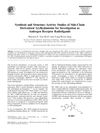
April 2001 in “Bioorganic & Medicinal Chemistry Letters” The nature of the side chain in RU 58841 derivatives greatly affects its AR affinity, with the N-(iodopropenyl) derivative 13 showing the highest AR binding affinity, suggesting its potential for developing high-affinity radioiodinated AR radioligands.
4 citations
,
July 2025 in “Frontiers in Pharmacology” Cooling with antioxidants helps protect hair during chemotherapy.
June 2008 in “Experimental Dermatology” 17-beta estradiol and prednisolone may help regrow hair damaged by chemotherapy.
1 citations
,
November 2022 in “Journal of Investigative Dermatology” ALRN-6924 may prevent hair loss caused by chemotherapy.
 May 2015 in “Cancer Research”
 A new treatment may prevent hair loss from chemotherapy by normalizing scalp cell death and reducing inflammation.
52 citations
,
May 1993 in “Southern Medical Journal” Imuvert can prevent some chemotherapy-induced hair loss.
 June 2024 in “Journal of Clinical Oncology”
 Dalpiciclib is the safest and most satisfying CDK4/6 inhibitor for advanced breast cancer patients in China.
2 citations
,
May 2024 in “International Journal of Medical Arts” Diphenylcyclopropenone (DPCP) is more effective than anthralin for treating resistant alopecia areata.
 December 2022 in “International Journal of Advanced Research in Science Communication and Technology”
 Plant-based medicines can effectively prevent and treat cancer with fewer side effects.
Cepharanthine and tetrandrine show promise as COVID-19 drugs.
 14 citations
,
August 2009 in “Cancer epidemiology”
14 citations
,
August 2009 in “Cancer epidemiology” AHCC reduces hair loss and liver injury caused by chemotherapy in rodents.
53 citations
,
October 1998 in “The journal of investigative dermatology/Journal of investigative dermatology” Topical calcitriol-analogs can reduce hair loss caused by chemotherapy.
 70 citations
,
January 2000 in “Drug Development Research”
70 citations
,
January 2000 in “Drug Development Research” New butyric acid prodrugs show promise for cancer treatment, anemia management, and protecting hair from chemotherapy damage.
8 citations
,
July 2024 in “Journal of Advanced Research” CDK inhibitors may help treat ARDS and psoriasis but need more testing for safety and effectiveness.
7 citations
,
March 2025 in “Cytotechnology” June 2021 in “BIOMED natural and applied science” Chemotherapy targets all dividing cells, causing side effects like nausea and hair loss.
18 citations
,
December 2016 in “European journal of pharmacology” A new compound slows cancer cell growth and causes cell death by blocking cell cycle progression and increasing cell-damaging molecules.
65 citations
,
April 2018 in “Oncotarget” Anabolic androgenic steroids can increase cancer risk and disrupt hormones.
5 citations
,
February 2016 in “International Journal of Cancer” Topical vasoconstrictors do not reduce chemotherapy effectiveness against leukemia in mice.
32 citations
,
December 1963 in “Pharmacological Reviews” Some drugs can cause hair loss and skin issues.
January 2011 in “Archivio Istituzionale della Ricerca (Universita Degli Studi Di Milano)” New molecules can prevent cell death in hair follicles.