 45 citations
,
December 2014 in “Journal of the European Academy of Dermatology and Venereology”
45 citations
,
December 2014 in “Journal of the European Academy of Dermatology and Venereology” Plasmacytoid dendritic cells are a key factor in causing hair loss in alopecia areata and could help differentiate it from other hair loss conditions.
 28 citations
,
August 2018 in “Dermatologic Surgery”
28 citations
,
August 2018 in “Dermatologic Surgery” Platelet-Rich Plasma (PRP) may help improve hair density in primary cicatricial alopecias (PCAs) patients, but more trials are needed to confirm its benefits.
 26 citations
,
October 2018 in “British Journal of Dermatology”
26 citations
,
October 2018 in “British Journal of Dermatology” Regular use of sunscreen may be linked to frontal fibrosing alopecia.
 22 citations
,
June 2013 in “Australasian Journal of Dermatology”
22 citations
,
June 2013 in “Australasian Journal of Dermatology” Early stage bald spots are linked to skin inflammation and damage to the upper part of the hair follicle.
 21 citations
,
February 2012 in “Journal of the European Academy of Dermatology and Venereology”
21 citations
,
February 2012 in “Journal of the European Academy of Dermatology and Venereology” Late-onset alopecia areata in Taiwanese patients is more common in women, usually starts at age 57, often involves less than 10% hair loss, and may have a minimal link to thyroid issues.
 16 citations
,
February 2010 in “Journal of the European Academy of Dermatology and Venereology”
16 citations
,
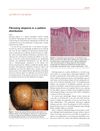
February 2010 in “Journal of the European Academy of Dermatology and Venereology” Fibrosing alopecia in a pattern distribution is a unique hair loss condition that may respond to antiandrogen therapy.
12 citations
,
May 2021 in “Clinical Interventions in Aging” Men with androgenetic alopecia have oilier and less hydrated scalps, especially in sensitive areas.
 8 citations
,
September 2011 in “European Journal of Dermatology”
8 citations
,
September 2011 in “European Journal of Dermatology” Most treatments for Frontal Fibrosing Alopecia are ineffective, but early anti-inflammatory therapy may help and the condition may stabilize over time.
 7 citations
,
August 2021 in “Journal of the European Academy of Dermatology and Venereology”
7 citations
,
August 2021 in “Journal of the European Academy of Dermatology and Venereology” Early treatment of fibrosing alopecia in a pattern distribution may improve outcomes.
5 citations
,
January 2021 in “Frontiers in Cell and Developmental Biology” Inhibiting Zyxin may help treat androgenetic alopecia by promoting hair growth.
 2 citations
,
April 2023 in “Pharmaceuticals”
2 citations
,
April 2023 in “Pharmaceuticals” Scopolin and scopoletin from Merremia peltata leaves may help treat hair loss and showed promising results in rabbit tests.
2 citations
,
September 2021 in “Clinical, Cosmetic and Investigational Dermatology” Hospital staff have a higher rate of hair loss than the general population.
 2 citations
,
February 2014 in “Hair therapy & transplantation”
2 citations
,
February 2014 in “Hair therapy & transplantation” Alopecia Areata is an autoimmune condition causing hair loss, influenced by genetics, environment, and possibly improved by anti-MIF therapy, with many patients experiencing regrowth within a year.
 1 citations
,
December 2022 in “Pharmaceuticals”
1 citations
,
December 2022 in “Pharmaceuticals” Noni fruit extract, specifically the FEA-3 sub-fraction, can increase hair growth and reduce baldness in male rabbits, potentially acting like common hair loss treatments.
1 citations
,
July 2022 in “Clinical, Cosmetic and Investigational Dermatology” Taohong Siwu Decoction may help treat hair loss by targeting multiple genes and pathways.
 1 citations
,
February 2017 in “MOJ bioequivalence & bioavailability”
1 citations
,
February 2017 in “MOJ bioequivalence & bioavailability” Treating hair loss effectively may require a multi-sided approach, using different treatments together, and topical treatments could be more effective and safer than oral ones.
1 citations
,
January 2015 in “Journal of Dermatology and Venereology” Early hair loss may predict heart disease.
 June 2026 in “World Journal of Urology”
 Long-term finasteride use may lead to earlier use of ED medication and lower prostate cancer diagnosis rates.
 May 2026 in “International Journal of Molecular Sciences”
 Hydroxytyrosol may help treat hair loss by reducing inflammation and oxidative stress.
April 2026 in “World Allergy Organization Journal” Allergic rhinitis increases hair loss risk, but antihistamines can reduce it.
March 2026 in “Materials Today Chemistry” Smart microneedles improve hair loss treatment by delivering drugs precisely with fewer side effects.
 February 2026 in “International Journal of Nanomedicine”
 Engineered exosomes with EGF and FGF improved hair growth in mice with hair loss.
January 2026 in “Egyptian Journal of Dermatology and Venerology” Androgenetic alopecia is linked to insulin resistance and hormonal imbalances.
 November 2025 in “Journal of Nanobiotechnology”
 A new treatment using special nanovesicles with linoleic acid shows promise in improving hair growth and reducing irritation for hair loss.
 November 2025 in “SKIN The Journal of Cutaneous Medicine”
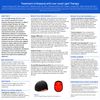
 Low-level light therapy safely increases hair growth in various types of hair loss.
October 2025 in “Cosmetics” Genetic insights can lead to personalized treatments for acne, androgenetic alopecia, and alopecia areata.
 September 2025 in “Journal of Medicinal Chemistry”
 Targeting the Wnt/β-catenin pathway may lead to better treatments for hair loss.
 June 2025 in “Indian Dermatology Online Journal”
 Severe hair loss may worsen with skin condition, suggesting treating the skin might help.
May 2025 in “International Journal of Trichology” Partially bald areas in Indian AGA patients still have hair growth cells, suggesting early treatment is best.
 April 2025 in “International Journal of Clinical Research and Reports”
 Lifestyle changes can significantly improve hair loss in overweight women with PCOS.