 12 citations
,
September 2020 in “Journal of cosmetic dermatology”
12 citations
,
September 2020 in “Journal of cosmetic dermatology” Trichoscopy is useful for diagnosing and monitoring alopecia areata treatment.
January 2014 in “Repository KITopen (Karlsruhe Institute of Technology)” Autoimmune diseases need combined therapy of tolerance induction and immunosuppression.
Baricitinib effectively treats alopecia areata, with over half of patients improving after 52 weeks.
3 citations
,
September 2025 in “Frontiers in Immunology” JAK inhibitors are effective for treating moderate-to-severe alopecia areata.
1 citations
,
December 2023 in “Journal of Ayub Medical College Abbottabad” People with alopecia areata are more likely to have thyroid autoimmunity, but not thyroid disease.
 18 citations
,
January 2017 in “Annals of dermatology/Annals of Dermatology”
18 citations
,
January 2017 in “Annals of dermatology/Annals of Dermatology” Certain immune cells contribute to severe hair loss in chronic alopecia areata, with Th17 cells possibly having a bigger impact than cytotoxic T cells.
 1 citations
,
April 2017 in “Journal of Investigative Dermatology”
1 citations
,
April 2017 in “Journal of Investigative Dermatology” D-OCT shows increased blood vessel growth in response to tissue damage in Frontal Fibrosing Alopecia and is useful for diagnosis and monitoring.
37 citations
,
March 1998 in “Lupus” Aggressive SLE treatment helped hair regrowth and improved oral plaque, but scalp lesions stayed.
2 citations
,
June 2025 in “Journal of Investigative Dermatology” CD8+ T cells re-expressing CD45RA may predict treatment resistance in severe alopecia areata.

Tofacitinib effectively regrows hair in alopecia universalis triggered by a virus.
 9 citations
,
January 2017 in “Dermatology Online Journal”
9 citations
,
January 2017 in “Dermatology Online Journal” Some hair loss drugs can cause a unique type of hair loss that resembles both psoriasis and alopecia.
 69 citations
,
August 2008 in “Journal of The European Academy of Dermatology and Venereology”
69 citations
,
August 2008 in “Journal of The European Academy of Dermatology and Venereology” Oral dutasteride and topical pimecrolimus can safely and effectively treat Frontal Fibrosing Alopecia, leading to significant hair regrowth.
 2 citations
,
September 2022 in “Dermatologic Therapy”
2 citations
,
September 2022 in “Dermatologic Therapy” Tofacitinib is a promising treatment for severe alopecia areata, with many patients experiencing complete or partial hair regrowth.
 29 citations
,
September 1997 in “PubMed”
29 citations
,
September 1997 in “PubMed” Follicular transplantation can greatly improve hair restoration if done with detailed planning and patient evaluation.
 29 citations
,
July 2010 in “Journal of Cutaneous Medicine and Surgery”
29 citations
,
July 2010 in “Journal of Cutaneous Medicine and Surgery” Treatments for Frontal Fibrosing Alopecia have not been proven effective.
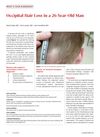 January 2022 in “Consultant”
 The man's occipital hair loss was due to temporal triangular alopecia, not alopecia areata.
32 citations
,
August 2016 in “Journal of the American Academy of Dermatology” Temporal triangular alopecia is a non-scarring hair loss in children, often linked to other health conditions.
July 2024 in “Journal of Investigative Dermatology” ITK inhibitors may effectively treat alopecia areata.
74 citations
,
April 2017 in “JEADV. Journal of the European Academy of Dermatology and Venereology/Journal of the European Academy of Dermatology and Venereology” Researchers found three patterns of Frontal fibrosing alopecia, with Pattern III having the best prognosis after treatment.
May 2024 in “Drugs & Therapy Perspectives” New treatments like JAK inhibitors offer hope for better alopecia areata management.
5 citations
,
January 2024 in “Therapeutic Advances in Hematology” Mogamulizumab treatment in Sézary syndrome may cause skin issues and hair loss but can lead to a complete response.
1 citations
,
April 2017 in “Journal of Investigative Dermatology” Abatacept may help some people with alopecia areata regrow hair.
4 citations
,
February 2013 in “PubMed” A3 antibody helps identify key cells in rat hair follicle development.
 28 citations
,
September 2017 in “Gynecological Endocrinology”
28 citations
,
September 2017 in “Gynecological Endocrinology” Women with PCOS have higher levels of AMH in their blood and follicles, and this can help predict their risk of overreaction to fertility treatments.
 August 2021 in “Acta Haematologica Polonica”
 Folliculotropic mycosis fungoides has a worse prognosis than other types, with survival rates varying significantly based on subtype and organ involvement.
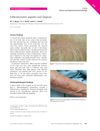 May 2014 in “Clinical and Experimental Dermatology”
 A 70-year-old woman with a rare skin condition improved after treatment with topical steroids and acitretin.
January 2026 in “Dermatologic Therapy”  9 citations
,
August 2018 in “JAAD Case Reports”
9 citations
,
August 2018 in “JAAD Case Reports” Tofacitinib can temporarily improve hair growth in alopecia universalis, but its effectiveness may decrease over time.
December 2023 in “Minia Journal of Medical Research” Transverse sectioning is more reliable for diagnosing alopecia areata.
 45 citations
,
October 2009 in “Dermatology”
45 citations
,
October 2009 in “Dermatology” Half of the patients treated with a specific drug for skin cancer experienced hair loss not related to the drug's dosage.