 1 citations
,
April 2019 in “JAAD case reports”
1 citations
,
April 2019 in “JAAD case reports” A woman with lymphoma had a rare skin rash on her scalp and forehead, which was hard to diagnose but responded well to treatment.
June 2025 in “Academic Medical Journal” Restoring hair follicle immune privilege may help treat alopecia areata.
 2 citations
,
April 2018 in “Journal of Investigative Dermatology”
2 citations
,
April 2018 in “Journal of Investigative Dermatology” Frontal fibrosing alopecia shows increased inflammation and JAK-STAT pathway activity without reduced hair proteins.
April 2020 in “International Journal of Dermatology” T-cell patterns in skin help distinguish alopecia areata from androgenetic alopecia.
 January 2012 in “Yearbook of Dermatology and Dermatologic Surgery”
 The study concluded that a 'Swiss cheese' pattern in hair follicles is a useful sign for diagnosing alopecia areata.
51 citations
,
May 1984 in “Journal of the American Academy of Dermatology” Benign follicular mucinosis involves immune cells attacking hair follicles.
March 2025 in “Revista Foco” Early diagnosis of Alopecia Frontal Fibrosante is crucial for effective treatment.
 4 citations
,
June 2025 in “Frontiers in Immunology”
4 citations
,
June 2025 in “Frontiers in Immunology” BAFF-targeted therapies can reduce autoimmune disease activity, but more research is needed for precise treatments.
 19 citations
,
February 2016 in “Journal of The American Academy of Dermatology”
19 citations
,
February 2016 in “Journal of The American Academy of Dermatology” CD3+ T-cell presence is a reliable marker to tell apart alopecia areata from pattern hair loss.
1 citations
,
November 2018 in “immuneACCESS” Expanded CD8+ T cells are linked to Alopecia Areata and may cause relapse after treatment.
 August 2023 in “Research Square (Research Square)”
 Melanocytes may trigger the immune response in alopecia areata, affecting hair regrowth.

The study concluded that Frontal fibrosing alopecia can affect younger people, is often missed in men, and may be autoimmune-related.
 23 citations
,
November 2024 in “Scientific Reports”
23 citations
,
November 2024 in “Scientific Reports” Higher thyroid antibodies in Hashimoto's thyroiditis are linked to more inflammation and symptoms.
 30 citations
,
July 2019 in “PloS one”
30 citations
,
July 2019 in “PloS one” Patients with Alopecia areata have fewer specific immune cells that normally regulate the immune system, which may contribute to the condition.
 August 2015 in “Dermatología Argentina”
 Frontal fibrosing alopecia causes hairline recession and eyebrow loss in postmenopausal women.
 9 citations
,
January 2018 in “Journal of the European Academy of Dermatology and Venereology”
9 citations
,
January 2018 in “Journal of the European Academy of Dermatology and Venereology” A male patient developed frontal fibrosing alopecia after antiandrogen therapy for prostate cancer.
 4 citations
,
January 2020 in “Skin appendage disorders”
4 citations
,
January 2020 in “Skin appendage disorders” A woman with an unusual pattern of hair loss was confirmed to have Frontal Fibrosing Alopecia and treated with specific medications.
November 2025 in “Skin Appendage Disorders” Immune cell-targeting biologics show potential for treating alopecia areata but need better-targeted therapies.
 19 citations
,
March 1997 in “Journal of Cutaneous Pathology”
19 citations
,
March 1997 in “Journal of Cutaneous Pathology” Alopecia areata involves specific T-cells, unlike androgenetic alopecia.
April 2011 in “Medical Journal of Tabriz University of Medical Sciences and Health Services” Many patients with Alopecia Areata have underlying autoimmune disorders, especially thyroid issues.
6 citations
,
January 2024 in “International Journal of Dermatology” Monoclonal antibodies are often linked to alopecia areata cases.
December 2018 in “International journal of women’s dermatology” FFA in young women is often missed, and no single treatment works best.
January 2011 in “Repository KITopen (Karlsruhe Institute of Technology)” Blocking certain proteins on immune cells may help treat alopecia areata.
 8 citations
,
September 2011 in “European Journal of Dermatology”
8 citations
,
September 2011 in “European Journal of Dermatology” Most treatments for Frontal Fibrosing Alopecia are ineffective, but early anti-inflammatory therapy may help and the condition may stabilize over time.
August 2019 in “Journal of the American Academy of Dermatology” Frontal fibrosing alopecia may be caused by an autoimmune reaction and hormonal imbalance.
19 citations
,
December 2011 in “PubMed” Inflammation and immunity play a key role in androgenetic alopecia, with better treatment outcomes in certain immune-positive cases.
 10 citations
,
September 2014 in “European Journal of Dermatology”
10 citations
,
September 2014 in “European Journal of Dermatology” A woman's hair loss worsened after starting hepatitis C treatment due to immune changes in her hair follicles.
 16 citations
,
January 2007 in “Actas dermo-sifiliográficas/Actas dermo-sifiliográficas”
16 citations
,
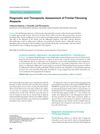
January 2007 in “Actas dermo-sifiliográficas/Actas dermo-sifiliográficas” The document concludes that there are no reliable treatments for frontal fibrosing alopecia, with only temporary benefits from current options.
 May 2024 in “Australasian journal of dermatology”
 A man with a type of skin lymphoma had unusual yellowish skin growths despite normal blood lipid levels, and treatment reduced some symptoms but not the growths.