Search
for
Sort by
Research
960-990 / 1000+ resultsresearch INHIBITION OF KERATINIZING STRUCTURES BY SYSTEMIC DRUGS
Some drugs can cause hair loss and skin issues.
research The risk of dermatological toxicities of combined BRAF and MEK inhibition versus BRAF inhibition alone in melanoma patients: a systematic review and meta-analysis
Combined BRAF and MEK treatment increases rash risk but reduces other skin issues compared to BRAF alone.
research Subjective and Objective Evaluation of Noncultured Epidermal Cellular Grafting for Repigmenting Vitiligo
Noncultured epidermal cell transplantation is effective for repigmenting stable vitiligo.
research AI04 A novel machine learning software application for prognosticating cutaneous malignant melanoma based on data from 78 351 patients from the Surveillance, Epidemiology, and End Results (SEER) database
The new AI software predicts melanoma outcomes more accurately than traditional methods.
research IMMEDIATE HYPERSENSITIVITY TO PERMANENT HAIR COLOR: 7
Tazarotene gel is more effective for acne than tretinoin and works as well as adapalene.

research Toxic epidermal necrolysis caused by skin hypersensitivity to monosulfiram.
A woman's severe skin reaction was caused by an allergy to a skin treatment.
research Reversible cutaneous hyperpigmentation and nails with white hair due to vitamin B12 deficiency.
Vitamin B12 deficiency can cause skin darkening and white hair, but it's reversible.
research Melatonin-Loaded Nanoparticles for Enhanced Antidepressant Effects and HPA Hormone Modulation
Melatonin-loaded nanoparticles improve antidepressant effects and HPA hormone balance better than regular melatonin.

research The role of zinc in skin physiology – relevance for the pathogenesis and treatment of vitiligo
Zinc may be linked to vitiligo development and severity, but its role is not fully understood and zinc supplementation benefits are unclear.

research Malus pumila Mill. cv Annurca apple extract might be therapeutically useful against oxidative stress and patterned hair loss
Annurca apple extract may help treat hair loss and protect against oxidative stress.

research Subungual melanocytic lesions
Early subungual melanoma might be treated with less aggressive surgery because it invades the skin under the nail more slowly.
research Targeted expression of spermidine/spermine N1-acetyltransferase increases susceptibility to chemically induced skin carcinogenesis
Increasing SSAT makes skin more prone to cancer.

research Identification of hair shaft progenitors that create a niche for hair pigmentation
Scientists found cells in hair that are key for growth and color.

research An unusual anatomical colocalization of alopecia areata and vitiligo in a child, and improvement during treatment with topical prostaglandin E2
Topical prostaglandin E2 can help treat both alopecia areata and vitiligo.
research Prevention and management of dermatological toxicities related to anticancer agents: ESMO Clinical Practice Guidelines☆
Early intervention and tailored management can reduce skin side effects from cancer treatments.

research Systemic Circulating Leptin – Aiding New Dimension of Immune-Related Skin Carcinogenesis and Lipid Metabolism
High leptin levels may promote skin cancer and inflammation, suggesting potential for leptin-targeted therapies.
research Erosive pustular dermatosis of the scalp following topical methylaminolaevulinate photodynamic therapy
A 93-year-old woman developed a rare scalp condition after therapy, which improved with steroids, not antibiotics.

research 1409 Temporary cell cycle arrest by ALRN-6924: A novel, p53-targeting strategy to protect human scalp hair follicles against cyclophosphamide-induced alopecia
ALRN-6924 can protect hair follicles from chemotherapy damage by temporarily stopping cell division.
research Human Hair Graying Revisited: Principles, Misconceptions, and Key Research Frontiers
Hair graying is caused by damage and cell depletion but might be temporarily reversible with drugs and hormones.
research Functional analysis of thymosin beta-4 using over-expressing transgenic mice
Melanoma cells lose their ability to form tumors when placed in a zebrafish embryo environment.
research Vitiligo as a Reaction to Topical Treatment with Diphencyprone
Diphencyprone treatment for alopecia areata can cause vitiligo in some patients.

research Advanced Inhibition of Undesired Human Hair Growth by PPARγ Modulation?
GMG-43AC may help reduce unwanted hair growth and treat certain hair loss conditions.

research Perinevoid Alopecia: Report of Two Cases and Literature Review
Antigens from skin cells may cause hair loss in perinevoid alopecia.

research Temporal Variations of Skin Pigmentation in C57Bl/6 Mice Affect Optical Bioluminescence Quantitation
Increased skin pigmentation in mice reduces bioluminescent signal accuracy.

research Therapies
The document concludes that low-dose acne treatment is most suitable for moderate acne, with high patient satisfaction and low relapse rates.

research A Case of Tofacitinib for the Treatment of Resistant Vitiligo and Sustained Repigmentation After Discontinuation
A woman's vitiligo improved with tofacitinib treatment, and her skin color remained even after stopping the medication, but there are concerns about cancer risk.

research P56 Azathioprine-induced alopecia totalis and knuckle hyperpigmentation in a child with uveitis: test before you leap!
Monitor for early signs of azathioprine toxicity and check blood counts regularly.
research Ornithine decarboxylase is a target for chemoprevention of basal and squamous cell carcinomas in Ptch1+/– mice
Inhibiting ornithine decarboxylase may help prevent certain skin cancers.
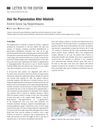
research Hair Re-Pigmentation After Nilotinib
Nilotinib may cause gray hair to return to its original color.