January 2025 in “Indian Journal of Small Ruminants (The)” Timely diagnosis and treatment improved a goat's skin condition.
 April 2023 in “Jurnal Farmasi Indonesia”
 Candlenut oil and celery powder improved hair growth and could be a potential treatment for alopecia.
A mange outbreak nearly wiped out vicuña and guanaco populations in San Guillermo National Park.
10 citations
,
May 2020 in “Dermatologic therapy” Tildrakizumab significantly improved recalcitrant lichen planopilaris and frontal fibrosing alopecia.
 June 2019 in “Journal of evolution of medical and dental sciences”
 Dermoscopy is useful for tracking alopecia areata treatment, with yellow dots and new vellus hairs being good indicators of hair regrowth.
4 citations
,
May 1958 in “Journal of Investigative Dermatology” 1 citations
,
June 2025 in “Biomolecules” Stauntonia hexaphylla leaves and fruits, especially leaves, may help prevent osteoporosis by boosting bone growth and reducing bone loss.
1 citations
,
March 2017 in “Semina Ciências Agrárias” Hunting wild boar can cause fungal infections in dogs.
1 citations
,
November 2017 in “JFL : Jurnal Farmasi Lampung” Nothopanax scutellarium extract can effectively promote hair growth in male rabbits.
 March 2021 in “Research Square (Research Square)”
 Strontium ranelate helps cartilage growth by blocking a specific cell pathway.
1 citations
,
September 2020 in “The Indian journal of veterinary sciences and biotechnology” Mange in camels causes blood and organ damage, especially in older females.
 February 2025 in “Animals”
 Amino acid-complexed trace minerals improve hair quality and activity in senior dogs.
2 citations
,
July 2024 in “Indian Journal of Dermatology” Adults with alopecia areata often have empty follicular openings, while children show more honeycomb pigment patterns.
 January 2022 in “Yonago Acta Medica”
 A woman got a skin condition from misusing a steroid cream, which improved after she stopped using it and started a new treatment.
 August 2024 in “Microscopy Research and Technique”
 The study identifies the pheromone gland's location and structure in Endoclita vietnamensis, aiding future pest control methods.
25 citations
,
August 2017 in “Frontiers in Zoology” Marine mammals lost many α-keratin genes, aiding their adaptation to aquatic life by becoming hairless.
62 citations
,
December 1994 in “Journal of Endocrinology/Journal of endocrinology” Prolactin speeds up hair growth and moulting in cashmere goats.
4 citations
,
October 2013 in “Botanics Targets and Therapy” The herbal preparation may help manage alopecia by reducing inflammation and boosting the immune response.
 4 citations
,
August 2022 in “The Scientific World Journal”
4 citations
,
August 2022 in “The Scientific World Journal” Merremia peltata leaf extract, particularly the bufotalinin compound, shows potential for treating hair loss.
35 citations
,
March 2010 in “BMC veterinary research” Goats with BSE or scrapie show varying symptoms, and using only clinical signs may not detect all scrapie cases.
 4 citations
,
January 2011 in “Dermatology”
4 citations
,
January 2011 in “Dermatology” A patient grew extra hair on their ears after treatment for testicular cancer, possibly due to hormonal changes or genetics.
18 citations
,
April 2009 in “Journal of Chromatography A” Detecting steroid esters in cattle hair is inconsistent and influenced by sampling factors.
9 citations
,
December 2004 in “Archives of Pathology & Laboratory Medicine” The neck mass was a rare benign "wattle," surgically removed for diagnosis and appearance.
 28 citations
,
January 2022 in “PLoS ONE”
28 citations
,
January 2022 in “PLoS ONE” Sarcoptic mange nearly wiped out vicuñas and guanacos in an Argentine park.
1 citations
,
August 2024 in “Journal of Morphology” Mammary glands evolved from hair organs in Monodelphis domestica.
January 2014 in “Journal of Guangdong Pharmaceutical University” The new rabbit model better mimics human acne symptoms.
January 2026 in “Materialia” Porcine ADM scaffold helps hair growth in mice.
March 2026 in “World Rabbit Science” DKK4 can be used to improve wool quality in Zhexi Angora rabbits.
 6 citations
,
February 2016 in “British Journal of Dermatology”
6 citations
,
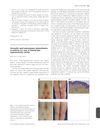
February 2016 in “British Journal of Dermatology” A woman with a drug allergy to anakinra was successfully desensitized, allowing her to continue treatment without allergic reactions.
26 citations
,
August 2007 in “Annals of Anatomy - Anatomischer Anzeiger” Feathers become harder as they develop due to a change in keratin type.