 6 citations
,
February 2023 in “Journal of nanobiotechnology”
6 citations
,
February 2023 in “Journal of nanobiotechnology” The new anti-acne treatment HA-P5 effectively reduces acne by targeting two key receptors and avoids an enzyme that can hinder treatment.
 11 citations
,
March 2021 in “Dermatology and therapy”
11 citations
,
March 2021 in “Dermatology and therapy” Researchers created a new tool to measure the effects of alopecia areata from the patient's view, focusing on hair loss, daily life, and emotional health.
324 citations
,
May 2002 in “Oncogene”  22 citations
,
November 2021 in “Dermatology and Therapy”
22 citations
,
November 2021 in “Dermatology and Therapy” The AAPPO questionnaire is a reliable tool for assessing hair loss impact in alopecia areata patients.
 8 citations
,
September 2021 in “EMBO Molecular Medicine”
8 citations
,
September 2021 in “EMBO Molecular Medicine” A new small peptide may help hair growth by activating a specific receptor and should be tested in humans.
33 citations
,
June 2007 in “Gene Expression Patterns” CTIP2 may help in skin development and maintenance.
2 citations
,
February 2022 in “bioRxiv (Cold Spring Harbor Laboratory)” Impaired LEF1 activation speeds up skin cell development in Hutchinson-Gilford Progeria Syndrome.
 March 2026 in “Clinical Cosmetic and Investigational Dermatology”
 Upadacitinib improved multiple immune-related conditions in one patient.
4 citations
,
May 2022 in “Genes & Diseases”  76 citations
,
May 2011 in “Cell death and differentiation”
76 citations
,
May 2011 in “Cell death and differentiation” A20 protein is crucial for normal skin and hair development.
January 2015 in “Faculty of 1000 Research Ltd” Androgenetic alopecia may be irreversible due to the detachment of a muscle from hair follicles.
August 2025 in “Dermatopathology” Pilomatricomas are often linked to genetic syndromes, especially Apert syndrome, and genetic analysis is crucial for diagnosis.
3 citations
,
October 2021 in “Clinical, Cosmetic and Investigational Dermatology” Setipiprant did not significantly improve hair growth in men with hair loss.
19 citations
,
May 2022 in “International journal of molecular sciences” PRX01, PRX44, and PRX73 are essential for root hair growth in Arabidopsis thaliana.
 November 2025 in “SKIN The Journal of Cutaneous Medicine”
 Upadacitinib effectively treats severe alopecia areata and is safe.
16 citations
,
October 2004 in “Journal of Investigative Dermatology” Normal human melanocytes can avoid cell death through multiple pathways.
43 citations
,
May 1999 in “Journal of Biological Chemistry” Agouti protein affects melanocortin receptors through competitive antagonism and receptor down-regulation.
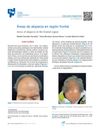 January 2025 in “Revista del Centro Dermatológico Pascua”
 The document presents a clinical case of a 71-year-old woman with fibrosing alopecia in a pattern distribution (FAPD), a scarring type of alopecia affecting the frontal region. It highlights the condition's distinction from androgenetic alopecia through its scarring nature and specific histological features, such as lymphocytic infiltration and follicular degeneration. FAPD is more prevalent in postmenopausal women and lacks definitive treatment guidelines. Current treatments, including oral minoxidil, spironolactone, and topical steroids, focus on halting progression rather than promoting hair regrowth in scarred areas. Early diagnosis and intervention are essential for improving outcomes.
50 citations
,
December 2017 in “Nanoscale” Polymeric micelle nanocarriers deliver adapalene more effectively to hair follicles than commercial products.
 March 2026 in “Frontiers in Veterinary Science”
 All-trans retinoic acid slows cell growth and increases cell death in goat hair follicles through a specific pathway.
January 2026 in “International Journal of Dermatology” Treatment improved scalp conditions and hair loss with no recurrence after 1 year.
May 2025 in “Acta Dermato Venereologica” The Paxbp1 gene is crucial for healthy hair follicles.
 1 citations
,
February 2022 in “bioRxiv (Cold Spring Harbor Laboratory)”
1 citations
,
February 2022 in “bioRxiv (Cold Spring Harbor Laboratory)” Certain interactions help prepare the androgen receptor for pairing and activation, which is important for its role in development and disease.
July 2022 in “Journal of Investigative Dermatology” Arg1+ macrophages may play a role in Alopecia Areata, offering new treatment targets.
41 citations
,
December 2011 in “The journal of investigative dermatology/Journal of investigative dermatology” Deleting MED1 in skin cells causes hair loss and skin changes.
 January 2025 in “BMJ Case Reports”
 Precocious puberty can signal familial adenomatous polyposis.
11 citations
,
February 2022 in “JAAD case reports” Abrocitinib, a JAK inhibitor, may help treat atopic dermatitis and alopecia universalis together.
5 citations
,
October 2024 in “Reumatismo” Upadacitinib significantly improved alopecia universalis and psoriatic arthritis in a patient.
 32 citations
,
August 2015 in “Journal of Investigative Dermatology”
32 citations
,
August 2015 in “Journal of Investigative Dermatology” Prominin-1 expressing cells in the dermal papilla help regulate hair follicle size and communication but don't aid in skin repair.