 1 citations
,
September 2025 in “Clinical Cosmetic and Investigational Dermatology”
1 citations
,
September 2025 in “Clinical Cosmetic and Investigational Dermatology” Adipose-derived stem cell exosomes and AI can improve personalized skincare by offering anti-aging benefits and precise product customization.
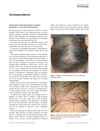 13 citations
,
January 2018 in “International Journal of Dermatology”
13 citations
,
January 2018 in “International Journal of Dermatology” The study found that treatment improved hair condition in patients with Fibrosing Alopecia in a Pattern Distribution in Chile.
November 2025 in “F1000Research” Certain fungi may contribute to hair loss in cynomolgus macaques.
40 citations
,
July 2018 in “European Journal of Pharmaceutical Sciences” Melatonin vitamin C-based nanovesicles improved hair growth and reduced hair loss in androgenic alopecia patients.
 January 2024 in “Wiadomości Lekarskie”
 AI and advanced technologies are improving medical diagnostics and treatments.

The document's conclusion cannot be provided because the content is not available.
4 citations
,
October 2024 in “Experimental Dermatology” CD8A and FOXD2-AS1 may be key for diagnosing and treating alopecia areata.
 2 citations
,
March 2017 in “Asian Journal of Beauty and Cosmetology”
2 citations
,
March 2017 in “Asian Journal of Beauty and Cosmetology” Caffeic acid protects human scalp cells from UV damage.
 10 citations
,
May 2018 in “Cell death discovery”
10 citations
,
May 2018 in “Cell death discovery” HSP90 and lamin A/C are crucial for hair growth and could be targets for treating hair loss.
11 citations
,
May 2022 in “Chinese medicine” Alpinetin helps grow hair by turning on hair stem cells and is safe for use.
 November 1999 in “Hair transplant forum international”
 The document could not be understood or processed.
 September 2023 in “Cureus”
 Early recognition and treatment of atypical alopecia areata in infants are crucial.
 April 2020 in “International journal of research in dermatology”
 An 8-year-old girl has a rare, irreversible hair loss condition caused by a genetic mutation.
 2 citations
,
May 2021 in “Scientific Reports”
2 citations
,
May 2021 in “Scientific Reports” Stress is likely causing hair loss in Formosan macaques.
November 2015 in “The journal of investigative dermatology. Symposium proceedings/The Journal of investigative dermatology symposium proceedings” Alopecia areata is now understood to be driven by genetic and immune factors.
May 2026 in “Complementary Medicine Research” Acupuncture may effectively treat long-standing alopecia areata.
 March 2022 in “Research Square (Research Square)”
 4-aminopyridine, a FDA-approved drug, speeds up skin wound healing and tissue regeneration.
The pare fruit hair mask effectively reduces hair loss and dandruff.
January 2015 in “Faculty of 1000 Research Ltd” Androgenetic alopecia may be irreversible due to the detachment of a muscle from hair follicles.
11 citations
,
May 2019 in “Journal of Medical Primatology” Alopecia in rhesus macaques is linked to pregnancy, not stress.
 March 2014 in “Journal of The American Academy of Dermatology”
 Mycophenolic acid may help hair grow by activating pathways important for hair growth.
48 citations
,
February 2010 in “Molecular biology reports” KAP7.1 and KAP8.2 genes are crucial for cashmere quality in goats.
 December 2022 in “Dermatology and Therapy”
 Alopecia areata needs more recognition and better treatment access in Latin America to improve patient care and outcomes.
Epimorphin helps shape and develop epithelial cells, like those in hair follicles.
 December 2017 in “The journal of investigative dermatology. Symposium proceedings/The Journal of investigative dermatology symposium proceedings”
 The summit aimed to speed up finding treatments for alopecia areata.
 51 citations
,
April 2021 in “JAMA network open”
51 citations
,
April 2021 in “JAMA network open” The AI tool helped primary care doctors and nurse practitioners diagnose skin conditions more accurately.
 April 2023 in “Journal of Investigative Dermatology”
 Transplanted stem cells from hair follicles significantly boosted hair growth and normalized follicles in certain mice.
 2 citations
,
February 2023 in “Journal of the American Academy of Dermatology”
2 citations
,
February 2023 in “Journal of the American Academy of Dermatology” People with autism are more likely to develop alopecia areata than those without autism.
February 2013 in “UNESP Institutional Repository (São Paulo State University)” Female pattern alopecia causes hair thinning due to shrinking hair follicles.
3 citations
,
October 2024 in “Animals” An allele of the KRTAP13-2 gene may improve wool quality in sheep.