1 citations
,
January 2019 in “Dermatology Online Journal” A rare skin condition appeared on a 19-year-old woman's scalp.
A 2-year-old boy with a rare type of lupus causing hair loss improved with oral steroids.
 April 2017 in “Journal of Investigative Dermatology”
 Removing the Crif1 gene in mouse skin disrupts skin balance and hair growth.
 July 2025 in “Journal of Medical Science And clinical Research”
 A 21-year-old male has a rare scalp condition with excessive skin folds.
25 citations
,
October 1975 in “Journal of Cutaneous Pathology” Hair growth in alopecia areata is hindered due to impaired cell activity in the surrounding tissue.
189 citations
,
July 2009 in “The Journal of clinical investigation/The journal of clinical investigation” Epidermolysis bullosa simplex causes easily blistered skin due to faulty skin cell proteins, leading to new treatment ideas.
 20 citations
,
September 2005 in “Clinics in Dermatology”
20 citations
,
September 2005 in “Clinics in Dermatology” Some skin problems can be signs of diabetes or other metabolic diseases and recognizing them can help diagnose and treat these diseases early.
 September 2023 in “Cureus”
 Early recognition and treatment of atypical alopecia areata in infants are crucial.
 11 citations
,
December 2014 in “The American journal of pathology”
11 citations
,
December 2014 in “The American journal of pathology” A gene deletion in mice causes weak protein, immune issues, hair loss, airway problems, and wasting disease.
5 citations
,
August 2001 in “International Journal of Dermatology” A 20-year-old had hair loss and skin issues from lichen planopilaris starting at age 10.
1 citations
,
May 2024 in “Dermatology Online Journal” Scalp pemphigus vulgaris can be effectively treated with low-dose prednisone and triamcinolone.
15 citations
,
November 2015 in “International Journal of Dermatology” Keratin 14 may be an autoantigen in autoimmune skin diseases.
44 citations
,
August 2004 in “Journal of Investigative Dermatology” A gene deletion in DSG4 causes sparse hair in some Pakistani families.
 1 citations
,
December 2020 in “Acta dermato-venereologica”
1 citations
,
December 2020 in “Acta dermato-venereologica” Some scalp sores are linked to different inherited skin conditions.
20 citations
,
November 2004 in “Archives of Pathology & Laboratory Medicine” A rare benign skin growth called melanocytic matricoma was identified in a 69-year-old man.
January 2025 in “International Journal of Advanced Research” Alopecia can be a skin sign of ulcerative colitis.
5 citations
,
February 2005 in “Journal of the American Academy of Dermatology” Focal palmoplantar callosities may help diagnose non-Herlitz junctional epidermolysis bullosa.
 August 2022 in “Frontiers in genetics”
 A new genetic change in the DSC3 gene is linked to a rare condition causing hair loss and skin blisters in a child.
24 citations
,
March 2001 in “PubMed” In Freixo de Espada à Cinta, common skin conditions include melanocytic nevi, hemangiomas, and acne, with variations based on age and sex.
 April 2008 in “Companion Animal”
 The cat's skin condition was linked to cancer and did not improve with treatment, leading to a poor outcome.
 1 citations
,
February 2017 in “The American journal of dermatopathology/American journal of dermatopathology”
1 citations
,
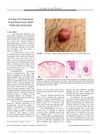
February 2017 in “The American journal of dermatopathology/American journal of dermatopathology” A man with a skin nodule was diagnosed with a rare skin condition called cutaneous focal mucinosis, which can be confused with other skin cancers.
 12 citations
,
November 1987 in “Pediatric dermatology”
12 citations
,
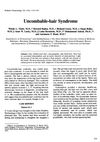
November 1987 in “Pediatric dermatology” Four children had unmanageable pale blond hair due to uncombable-hair syndrome.
 January 2026 in “International Journal of Dermatology Research”
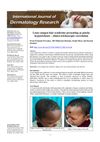
 Early recognition of loose anagen hair syndrome is important to prevent misdiagnosis and unnecessary treatments.
 April 2024 in “Journal of cutaneous pathology”
 Skin conditions like seborrheic dermatitis can make it harder to correctly diagnose hair loss because they can cause the oil glands in the skin to shrink.

Follicular atopic dermatitis in dark skin can look different, making diagnosis harder.
40 citations
,
May 2010 in “American Journal of Clinical Dermatology” AKN might be a skin marker for metabolic syndrome.
3 citations
,
January 2015 in “Indian journal of paediatric dermatology” Oral isotretinoin temporarily improved skin symptoms in a child with IFAP syndrome.
 7 citations
,
July 2003 in “Clinics in Dermatology”
7 citations
,
July 2003 in “Clinics in Dermatology” The article helps identify common, non-harmful skin conditions in newborns to avoid undue concern and treatment.
 11 citations
,
October 2015 in “Journal der Deutschen Dermatologischen Gesellschaft”
11 citations
,
October 2015 in “Journal der Deutschen Dermatologischen Gesellschaft” Women who had bariatric surgery risk nutritional deficiencies causing skin issues during pregnancy and breastfeeding.
November 2025 in “Journal of Investigative Dermatology” KLHL24-mutant stem cells help understand skin and heart disease.