August 2020 in “bioRxiv (Cold Spring Harbor Laboratory)” Normal cells outcompete and remove mutant cells in the pancreas with the help of the EphA2 receptor.
January 2005 in “Experimental Dermatology” Genetic factors play a major role in acne.
27 citations
,
November 2007 in “Genomics” Mutations in specific keratin genes cause improper hair structure in mice due to faulty keratin protein assembly.
December 2009 in “Cancer Research” Over-expression of Sp2 can lead to cancer by preventing proper stem cell differentiation.
3 citations
,
January 2021 in “Veterinary dermatology” A litter of cats had a hair condition similar to a mouse mutation, leading to hair loss and abnormal hair and skin.
 87 citations
,
July 2018 in “Biochimica et Biophysica Acta (BBA) - Molecular Cell Research”
87 citations
,
July 2018 in “Biochimica et Biophysica Acta (BBA) - Molecular Cell Research” Mice studies show that Protein Phosphatase 2A is crucial for cell growth, development, and disease prevention.
 5 citations
,
September 2015 in “BMC Medical Genetics”
5 citations
,
September 2015 in “BMC Medical Genetics” The EDAR gene mutation leads to thinner and more deformed hair shafts.
 January 2014 in “S. Karger AG eBooks”
 Type 2 diabetes in youth is increasing, with high treatment failure rates and more severe than Type 1; certain drugs can lower lipid levels effectively with varying side effects, and apples may benefit heart health like statins but with fewer side effects.
 July 2016 in “Experimental Dermatology”
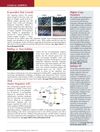
 New treatments for hair growth and psoriasis may be possible, and gene differences could affect baldness and the severity of skin conditions.
September 2019 in “Journal of Investigative Dermatology” Innate lymphoid cells type 1 may contribute to alopecia areata.
 November 2022 in “Journal of Investigative Dermatology”
 The medicine Cyclosporin A might cause excessive hair growth by reducing a protein that controls hair growth.
54 citations
,
November 1986 in “Journal of the American Academy of Dermatology” Generalized trichoepitheliomas with hair loss may indicate myasthenia gravis.
September 2018 in “Fertility and Sterility” The HSD3B1 variant increases hair loss risk in overweight women with PCOS.
 1 citations
,
December 2018 in “Journal of genetic medicine”
1 citations
,
December 2018 in “Journal of genetic medicine” A small change in the TRPS1 gene leads to a less severe form of a syndrome affecting hair, nose, and finger development.
 80 citations
,
January 1995 in “The American Journal of Medicine”
80 citations
,
January 1995 in “The American Journal of Medicine” Hair loss in androgenetic alopecia is caused by genetic factors and androgen excess, and can be treated with combined therapies.
100 citations
,
December 2002 in “Journal of biological chemistry/The Journal of biological chemistry” Researchers mapped and categorized specific keratin-associated protein genes on human chromosome 21q22.1.
 44 citations
,
November 2016 in “Journal of The American Academy of Dermatology”
44 citations
,
November 2016 in “Journal of The American Academy of Dermatology” The updated SALT II tool offers a more precise way to measure scalp hair loss.
 34 citations
,
December 1995 in “Pediatric Dermatology”
34 citations
,
December 1995 in “Pediatric Dermatology” Congenital Triangular Alopecia is a rare, non-scarring hair loss that can be surgically treated in females for cosmetic reasons.
April 2016 in “Journal of Investigative Dermatology” Mutations in the TSPEAR gene cause a new form of ectodermal dysplasia affecting hair and tooth development.
 16 citations
,
January 2012 in “European Journal of Endocrinology”
16 citations
,
January 2012 in “European Journal of Endocrinology” The study suggests certain ACE gene variations are more common in women with PCOS and may be linked to increased insulin resistance.
 September 2024 in “Egyptian Journal of Medical Human Genetics”
 Consider NF1 in newborns with rare congenital anomalies.
May 2026 in “Journal of International Medical Research” Atrichia with papular lesions causes irreversible hair loss from infancy and is often misdiagnosed.
2 citations
,
January 1989 Tay syndrome is a unique genetic disorder causing skin, hair, and developmental issues.
 January 2002 in “Proceedings of The Japanese Society of Animal Models for Human Diseases”
 Keratin2-6g is crucial for hair follicle development, with mutations causing cell degeneration and vacuolation.
January 2026 in “International Journal of Dermatology” APKH in young males may signal early hair loss and needs early attention.
 December 2019 in “Journal of pediatrics & neonatology”
 A 13-year-old boy had a rare, stable type of hair loss with little chance of regrowth, but treatment is available for looks.
 January 2017 in “Medeniyet medical journal”
 Early onset baldness may be linked to thicker artery walls.
49 citations
,
October 1989 in “Genomics” Type I keratin genes are closely linked to the rex locus on mouse chromosome 11, affecting hair development.
24 citations
,
September 2019 in “Experimental cell research” BMP2 helps hair follicle stem cells become specialized by increasing PTEN, which causes autophagy.
20 citations
,
October 1995 in “Biochimica et Biophysica Acta (BBA) - Gene Structure and Expression” hHb1, hHb3, and hHb6 mRNAs start expressing at the same time in hair follicles.