 13 citations
,
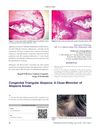
January 2011 in “International Journal of Trichology”
13 citations
,
January 2011 in “International Journal of Trichology” CTA is often mistaken for AA but doesn't respond to steroids and may require hair transplantation.
30 citations
,
August 2008 in “The journal of investigative dermatology/Journal of investigative dermatology” TGase 3 helps build hair structure by forming strong bonds between proteins.
30 citations
,
October 2010 in “Biochemical and biophysical research communications” The Gsdma3 gene is essential for normal hair development in mice.
 18 citations
,
March 2011 in “Journal of The American Academy of Dermatology”
18 citations
,
March 2011 in “Journal of The American Academy of Dermatology” Familial factors affect hair loss types in Koreans, with M type in men, L type in women, and paternal factors influencing male hair loss more.
July 2020 in “Benha Journal of Applied Sciences” Young men with early hair loss and high SAA3 levels are at higher risk for heart disease.
4 citations
,
February 2013 in “PubMed” A3 antibody helps identify key cells in rat hair follicle development.
 April 2026 in “Human Genome Variation”
 The MBTPS2 gene variant c.970+5G>A is a common mutation causing IFAP syndrome.
23 citations
,
July 2003 in “Journal of Investigative Dermatology” Genetic testing for hairless gene mutations is crucial to correctly diagnose and treat atrichia with papular lesions.
 7 citations
,
January 2016 in “Laboratory Investigation”
7 citations
,
January 2016 in “Laboratory Investigation” TR3 is mainly found in hair follicle stem cells and may be involved in hair loss.
 125 citations
,
May 2007 in “Journal of The American Academy of Dermatology”
125 citations
,
May 2007 in “Journal of The American Academy of Dermatology” The BASP classification is a detailed and accurate way to categorize hair loss in both men and women.
8 citations
,
January 2011 in “International journal of trichology” Accurate diagnosis of APL is crucial to avoid unnecessary treatments.
Mutations in the PADI3 gene may cause central centrifugal cicatricial alopecia in women of African ancestry.
 64 citations
,
November 2008 in “Journal of The American Academy of Dermatology”
64 citations
,
November 2008 in “Journal of The American Academy of Dermatology” A new type of rapid hair loss called ADTA usually gets better on its own within 6 months.
2 citations
,
October 2000 in “Journal of Investigative Dermatology” AUC and APL are distinct conditions needing careful clinical assessment.
 June 2025 in “International Medical Case Reports Journal”
 Timely diagnosis and treatment of complex autoimmune diseases like APS2 are crucial to prevent complications and improve life quality.
124 citations
,
November 2000 in “The journal of investigative dermatology/Journal of investigative dermatology” PAD3 plays a key role in hair and skin protein structure and may be linked to skin diseases.
 45 citations
,
May 2003 in “Journal of Cell Science”
45 citations
,
May 2003 in “Journal of Cell Science” α3β1-integrin is crucial for maintaining normal hair follicle shape and function but not needed for the development of the surrounding skin.
2 citations
,
June 2012 in “American Journal of Dermatopathology” A rare neck cyst in a 47-year-old man showed diverse skin cell types and was not linked to HPV.
 July 2007 in “Faculty Opinions – Post-Publication Peer Review of the Biomedical Literature”
 The BASP classification is a detailed system for categorizing hair loss in both men and women, but it may be complex for beginners and not fully suitable for grading female hair loss.
1 citations
,
September 1986 in “Journal of the Forensic Science Society” Hair root sheaths can be used to accurately analyze genetic markers.
119 citations
,
November 2016 in “American journal of human genetics” Mutations in three genes cause Uncombable Hair Syndrome, leading to frizzy hair that can't be combed flat.

ARHGEF3 is essential for proper hair follicle development.
26 citations
,
September 2009 in “Clinical genetics” Arab APS1 patients have unique and recurrent AIRE gene mutations.
 5 citations
,
February 2019 in “The New England Journal of Medicine”
5 citations
,
February 2019 in “The New England Journal of Medicine” Certain mutations in the PADI3 gene may increase the risk of developing a type of scarring hair loss common in women of African descent.
May 2026 in “Frontiers in Medicine” The patient's hair improved after treatment, but the genetic link is unclear.
1 citations
,
January 2022 in “Annals of Dermatology” A new mutation in the MBTPS2 gene causes a mild form of IFAP syndrome.
 April 2017 in “Journal of Investigative Dermatology”
 A boy with Oculodentodigital syndrome had a unique GJA1 gene mutation causing his symptoms.
 January 2001 in “Biomedical Research”
 THH and PAD type III appear together early in hair growth, but deiminated THH appears later, suggesting another factor is involved.
12 citations
,
August 2013 in “Journal of Dermatological Science” The MAGE3 hypothesis for alopecia areata did not lead to a significant breakthrough.
 January 2011 in “International Journal of Trichology”
 The document concludes that doctors should recognize congenital triangular alopecia to avoid unnecessary treatments, as it does not respond to steroids like alopecia areata does.