People with early-onset hair loss (AGA) have a higher risk of heart disease, metabolic syndrome, and prostate enlargement.
 February 2025 in “Dermatology and Therapy”
 Alopecia areata incognita causes sudden hair loss but usually improves with topical steroids.
 February 2024 in “Drug Delivery and Translational Research”
 A new liposomal formulation improves drug delivery and hair growth for treating hair loss without causing skin irritation.
 33 citations
,
August 1985 in “Archives of Dermatology”
33 citations
,
August 1985 in “Archives of Dermatology” Acquired Progressive Kinking of Hair is likely an early sign of male pattern baldness.
 4 citations
,
April 2021 in “Journal of Cosmetic Dermatology”
4 citations
,
April 2021 in “Journal of Cosmetic Dermatology” Intradermal injections improve hair density and thickness better, while derma roller is more convenient.
 September 2017 in “Journal of Investigative Dermatology”
 Injections of special skin cells showed potential in treating hair loss, with some participants experiencing increased hair density.
2 citations
,
April 1970 in “Archives of Dermatology” Ichthyosis serpentina may be a variant linked to bamboo hair, with a possible genetic component.
 17 citations
,
January 2010 in “Acta Dermato Venereologica”
17 citations
,
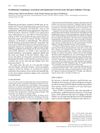
January 2010 in “Acta Dermato Venereologica” EGFR inhibitors can cause yellowish skin eruptions.
 27 citations
,
June 2017 in “International Journal of Dermatology”
27 citations
,
June 2017 in “International Journal of Dermatology” The study suggests that acne keloidalis nuchae is linked to conditions like pseudofolliculitis barbae, scalp infections, metabolic syndrome, and is more common in males with an average onset age of 25.4 years.
March 2025 in “Egyptian Journal of Animal Health” Zinc deficiency causes parakeratosis in buffalo calves, and supplementation improves symptoms.
 January 2026 in “International Journal of Dermatology Venereology and Leprosy Sciences”
 Intradermal dutasteride effectively and safely improves hair growth in early-stage androgenetic alopecia.
 6 citations
,
October 2014 in “Experimental Dermatology”
6 citations
,
October 2014 in “Experimental Dermatology” Prostaglandins and the enzyme AKR1C3 could play a role in skin cancer and hair loss, and further research is needed to understand these mechanisms.
 1 citations
,
April 2023 in “Clinical, cosmetic and investigational dermatology”
1 citations
,
April 2023 in “Clinical, cosmetic and investigational dermatology” Antigens from skin cells may cause hair loss in perinevoid alopecia.
 June 2024 in “International Journal of Health Science”
 Current treatments for androgenetic alopecia are often ineffective and have side effects, needing better options.
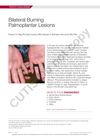
The woman was diagnosed with lichen sclerosus, a rare skin condition, after initial misdiagnosis and ineffective treatments.
 1 citations
,
April 2017 in “Drugs & Therapy Perspectives”
1 citations
,
April 2017 in “Drugs & Therapy Perspectives” Use antiandrogens and other treatments for hair loss.
2 citations
,
November 1999 in “Journal of Cutaneous Medicine and Surgery”  October 2025 in “BMC Pediatrics”
 Timely zinc treatment is crucial for preventing severe complications in Acrodermatitis enteropathica.
 29 citations
,
September 2017 in “Oncology and therapy”
29 citations
,
September 2017 in “Oncology and therapy” The document provides advice on how to recognize and treat skin-related side effects of cancer drugs known as EGFR inhibitors.
68 citations
,
January 2014 in “Dermatology research and practice” Skin side effects from cancer drugs targeting EGFR can affect treatment adherence but can be managed with antibiotics like tetracycline.
30 citations
,
June 2000 in “Journal of dermatological science” Human keratinocytes do not naturally respond to androgens.
 May 2025 in “Journal of Nanobiotechnology”
 The gel improves hair regrowth and reduces irritation in alopecia areata treatment.
84 citations
,
April 2002 in “Archives of Dermatology” Loose anagen hair syndrome may be caused by keratin gene mutations.
 1 citations
,
January 2020 in “ARC Journal of Dermatology”
1 citations
,
January 2020 in “ARC Journal of Dermatology” Oral zinc and Nd:YAG laser therapy effectively treated primary cicatricial alopecia in five patients.
 10 citations
,
January 2012 in “International Journal of Trichology”
10 citations
,
January 2012 in “International Journal of Trichology” PRP helps hair growth in common hair loss disorder.
44 citations
,
August 2004 in “Journal of Investigative Dermatology” A gene deletion in DSG4 causes sparse hair in some Pakistani families.
 9 citations
,
December 2024 in “Nano Research”
9 citations
,
December 2024 in “Nano Research” A protein-based hydrogel helps heal diabetic wounds and repair nerves.
 6 citations
,
May 2006 in “Skinmed”
6 citations
,
May 2006 in “Skinmed” Androgens contribute to common male hair loss; more research needed for hair growth medication.
 88 citations
,
January 2013 in “Indian Journal of Dermatology, Venereology and Leprology”
88 citations
,
January 2013 in “Indian Journal of Dermatology, Venereology and Leprology” Minoxidil and finasteride effectively treat hair loss.
 May 2024 in “British journal of dermatology/British journal of dermatology, Supplement”
 Hair follicles in androgenetic alopecia age faster, especially in the front.