 November 2025 in “Communications Biology”
 Human hair contains many different molecules that change along its length, influenced by personal care products.

A new microneedle patch helps repair spinal cord injuries by reducing scarring and promoting nerve growth.
 October 2025 in “Journal of Drug Delivery and Therapeutics”
 Senna Makki is mainly effective as a laxative, but more research is needed for other uses.

Blocking autophagy worsens lipid buildup and dysfunction in brain cells after injury.

Combining nanotechnology with herbal medicine may improve PCOS treatment.
 March 2025 in “Journal of Endocrinology and Metabolism”
 Rodent models of PCOS show some hormone changes similar to humans, but also have key differences.

Polarized microscopy helps identify hair irregularities in genetic disorders.
 January 2025 in “Scripta Medica”
 Natural hydrolates may improve burn healing and fight antibiotic resistance.
 December 2024 in “International Journal of Drug Delivery Technology”
 The new delivery method for dutasteride is more effective and has fewer side effects.
Hibiscus rosa-sinensis can naturally help heal skin inflammation.
 April 2024 in “Research Square (Research Square)”
 16-MHA can restore the barrier and moisture of damaged hair, making it similar to undamaged hair.
 March 2024 in “Journal of medicinal plants studies”
 Hibiscus has medicinal benefits but can be toxic in high doses and is unsafe for pregnant women and infants.
 February 2024 in “International Journal of Scientific Research in Science and Technology”
 Pomegranates have many health benefits, including fighting bacteria, viruses, cancer, and diabetes.
 January 2024 in “LA Referencia (Red Federada de Repositorios Institucionales de Publicaciones Científicas)”
 Carbon Quantum Dots can effectively detect cobalt ions and methylcobalamin in water.
 January 2024 in “Journal of chemical health risks”
 Gold nanoparticles show promise for treating inflammatory bowel disease by reducing inflammation and colon injury.
 September 2023 in “Asian journal of beauty & cosmetology”
 Lipids are important for healthy hair, but their exact role is not fully understood and needs more research.
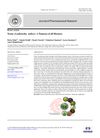 May 2023 in “Journal of Pharmaceutical Research”
 Neem is highly beneficial for health and beauty with no major side effects.
The study aims to create a model to improve personalized and preventive health care.
 January 2023 in “Book of Abstracts”
 COVID-19 can cause different types of hair loss, with telogen effluvium being the most common.
 July 2022 in “International journal of KIU”
 Genetics influence opioid addiction risk, diet affects COVID-19 severity, Aerva lanata may harm kidneys, some plants fight fungi and cancer, and nursing students need better contraceptive knowledge.

Wild African goats have genetic adaptations for surviving harsh desert conditions.
 January 2021 in “Middle East journal of applied sciences”
 Zinc is essential for plant growth and human health, but many soils lack enough zinc, affecting crops and potentially leading to health problems.

The workshop promoted better medicine use and health practices through global collaboration.

The workshop successfully promoted better medicine use and international collaboration.
 January 2019 in “Durham e-Theses (Durham University)”
 Advanced microscopy shows hair damage and keratin proteins' roles, aiding future cosmetic treatments.
 January 2016 in “Journal of Materials Chemistry B”
 Advancements in biomaterials and nanotechnology are improving medical applications like hair growth, bone regeneration, and cancer treatment.
Forensic hair analysis for drugs is now more reliable and accurate.
 January 2015 in “Durham e-Theses (Durham University)”
 Adipose tissue changes in obesity can trigger stress in fat cells.
 January 2010 in “Actas Dermo-Sifiliográficas”
 A woman was allergic to quinine in her anti-hair loss lotion.