26 citations
,
September 2009 in “Clinical genetics” Arab APS1 patients have unique and recurrent AIRE gene mutations.
 14 citations
,
January 2017 in “Pharmacological Reports”
14 citations
,
January 2017 in “Pharmacological Reports” TP0427736 may help treat hair loss by blocking a specific protein and promoting hair growth.
June 2024 in “Current Developments in Nutrition” KeraGLO improves skin and hair health.
23 citations
,
December 2013 in “Molecular cancer therapeutics” Breast cancer treatments work better with AR activation, improving results and reducing side effects.
4 citations
,
January 2023 in “Journal of Clinical Investigation” Specific mutations in a receptor cause facial abnormalities and hair loss.
February 2023 in “Materials today bio” The treatment effectively promotes hair regrowth in androgenetic alopecia without causing skin irritation.
 October 2025 in “Dermatology Practical & Conceptual”
 ChatGPT 4.0 and Gemini 1.5 Flash are effective for educating patients about androgenetic alopecia, while Deepseek R1 is less reliable.
63 citations
,
May 2015 in “PloS one” GALT5 and GALT2 are important for plant growth and development because they help with protein glycosylation.
1 citations
,
November 2022 in “Journal of Investigative Dermatology” ALRN-6924 may prevent hair loss caused by chemotherapy.
The treatment showed promising hair regrowth in advanced-stage hair loss.
5 citations
,
March 2020 in “Thoracic Cancer” CT-707 is effective and safe for treating certain Chinese lung cancer patients.
 January 2026 in “Stem Cell Research & Therapy”
 ASLNC168501 can help treat hair loss by restoring hair follicle stem cell function.
The treatment showed promising results in improving advanced-stage hair loss.
 5 citations
,
November 2017 in “Asian journal of pharmaceutical and clinical research”
5 citations
,
November 2017 in “Asian journal of pharmaceutical and clinical research” Pakis Gajah (Angiopteris evecta) water extract may promote hair growth in rabbits, but more research is needed for human use.
 4 citations
,
January 2004 in “Biological and Pharmaceutical Bulletin”
4 citations
,
January 2004 in “Biological and Pharmaceutical Bulletin” AgK114 protein helps in hamster skin injury recovery.
 July 2008 in “Hair transplant forum international”
 The document cannot be understood or processed.
 41 citations
,
October 2011 in “Clinical and Experimental Dermatology”
41 citations
,
October 2011 in “Clinical and Experimental Dermatology” G allele of AR Stul polymorphism linked to higher hair loss risk, especially in white people.
 March 2011 in “European Urology Supplements”
 Gene variation affects prostate issues and hair loss.
 March 2009 in “International Journal of Dermatology”
 The androgen receptor gene doesn't help identify women likely to have female pattern hair loss.
 1 citations
,
January 2016 in “Journal of gastrointestinal & digestive system”
1 citations
,
January 2016 in “Journal of gastrointestinal & digestive system” The new bariatric surgery SAGI PGP is effective for weight loss and diabetes control with few complications.
August 2024 in “Steroids” The androgen receptor's shape-changing ability helps it function but can lead to cancer treatment resistance.
9 citations
,
August 2011 in “The World Journal of Men s Health” Taking 5-ARI before prostate laser surgery may lead to more blood changes, longer surgery, and more urinary issues.
January 2011 in “The Chinese Journal of Dermatovenereology” Shorter GGN repeats in the androgen receptor gene are linked to androgenetic alopecia.
Standardized PRP therapy can improve treatment for hair loss.
January 2006 in “Chinese Journal of Dermatology” Shorter GGC triplet repeats in the androgen receptor gene are linked to less hair loss in Han men.
4 citations
,
April 2025 in “Antioxidants” Alpha-ketoglutarate protects rabbit skin cells from oxidative damage by activating a specific cell pathway.
6 citations
,
June 2021 in “EClinicalMedicine” ALRV5XR significantly improves hair density in women with hair loss and is well-tolerated.
 October 2025 in “JEADV Clinical Practice”
 GLP-1 receptor agonists may increase the risk of a specific type of hair loss called androgenetic alopecia.
 1 citations
,
November 2008 in “Acta crystallographica”
1 citations
,
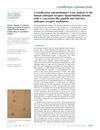
November 2008 in “Acta crystallographica” Scientists successfully created and analyzed the structure of a part of the human androgen receptor with specific modulators and a peptide to understand how it binds differently in various tissues.
October 2023 in “Open Repository of the University of Porto (University of Porto)”