 4 citations
,
November 2021 in “Journal of Cosmetic Dermatology”
4 citations
,
November 2021 in “Journal of Cosmetic Dermatology” QR678 and QR678 Neo treatments, combined with corticosteroid injections, work better for alopecia areata than corticosteroid injections alone.
 April 2026 in “Inflammation and Regeneration”
 AKR1C enzymes in scalp glands decrease with age, possibly affecting hair loss.
143 citations
,
May 2002 in “PubMed” LGD1069 effectively prevents breast tumors in mice without toxicity.
Polyglutamic acid is a valuable, sustainable ingredient for skincare and haircare products.
29 citations
,
July 2008 in “British Journal of Dermatology” The patient had paraneoplastic pemphigus without mucosal involvement.
16 citations
,
July 1996 in “Journal of Investigative Dermatology” 2 citations
,
July 2025 in “Scientific Reports” Acinetobacter strain A1-4-2 can safely clean water pollutants.
 April 2017 in “Journal of Investigative Dermatology”
 The document concludes that various topical treatments show promise for skin conditions like atopic dermatitis, psoriasis, and hair loss.
 February 2026 in “International Journal of Nanomedicine”
 Engineered exosomes with EGF and FGF improved hair growth in mice with hair loss.
July 2026 in “Journal of the American Academy of Dermatology” GLP-1RA medications may increase the risk of hair loss, especially in non-diabetic people.
January 2009 in “ScholarlyCommons (University of Pennsylvania)” The P133R mutation in AKR1D1 enzyme causes harmful bile acid buildup, explaining related health issues.
 April 2021 in “Journal of Investigative Dermatology”
 PRP treatment helps hair growth and reduces hair loss in women, but more research needed.
 8 citations
,
June 2019 in “Scientific Reports”
8 citations
,
June 2019 in “Scientific Reports” Increased PPARGC1α relates to hair thinning in common baldness.
 July 2026 in “Zenodo (CERN European Organization for Nuclear Research)”
 Biochanin A from soy is a promising and safe candidate for treating hair loss.
 May 2023 in “Elsevier eBooks”
 The document's conclusion cannot be provided because the document is not readable or understandable.
 24 citations
,
March 2017 in “Archives of Gynecology and Obstetrics”
24 citations
,
March 2017 in “Archives of Gynecology and Obstetrics” The study found that women with hyperandrogenic PCOS have higher levels of AKT1 and AKT2 proteins in their cells, which may lead to cell dysfunction.
 April 2021 in “Journal of Investigative Dermatology”
 An AI photographic device effectively tracked hair growth improvements in women treated for hair loss.
January 2022 in “SSRN Electronic Journal” LncRNA RP11-818024.3 helps hair growth and recovery in hair loss by boosting cell survival and reducing cell death.
 1 citations
,
September 2022 in “Journal of The American Academy of Dermatology”
1 citations
,
September 2022 in “Journal of The American Academy of Dermatology” Baricitinib helps grow eyebrows and eyelashes in severe alopecia areata patients.
November 2022 in “bioRxiv (Cold Spring Harbor Laboratory)” Prostaglandin E2 helps prevent hair loss from radiotherapy by protecting hair cells.

The document cannot be summarized as it is not provided or is unclear.
 20 citations
,
September 2005 in “Endocrinology”
20 citations
,
September 2005 in “Endocrinology” Certain changes to the B-ring of androgen receptor ligands can increase their effectiveness for potential treatments of muscle and bone conditions.
6 citations
,
August 2024 in “Steroids” April 2019 in “Journal of the Endocrine Society” A 12-year-old boy with PAIS successfully developed male characteristics using high-dose testosterone and anastrozole.
 September 2023 in “Journal of The American Academy of Dermatology”
 Baricitinib treatment can help regrow scalp hair and eyebrows or eyelashes in people with severe alopecia areata.
 1 citations
,
February 2009 in “Clinical Genetics”
1 citations
,
February 2009 in “Clinical Genetics” New genes linked to male pattern baldness were found on chromosome 20p11.
April 2025 in “Experimental Eye Research” The Oat mouse model shows mild retinal degeneration, useful for testing treatments.
4 citations
,
November 2023 in “SKIN The Journal of Cutaneous Medicine” Ritlecitinib is safe for treating alopecia areata for up to 48 weeks.
 10 citations
,
November 2015 in “Experimental Dermatology”
10 citations
,
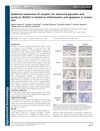
November 2015 in “Experimental Dermatology” Skin RAGE levels are linked to inflammation and cell death.

The patch effectively promotes hair growth for alopecia areata without pain.