January 2009 in “ScholarlyCommons (University of Pennsylvania)” The P133R mutation in AKR1D1 enzyme causes harmful bile acid buildup, explaining related health issues.
ANE syndrome is caused by a mutation in the RBM28 protein that disrupts ribosome assembly.
3 citations
,
February 1983 in “Journal of Investigative Dermatology” Hair plucking quickly increases antizyme, reducing a specific enzyme activity in rats.
 7 citations
,
January 2018 in “Neurodegenerative Diseases”
7 citations
,
January 2018 in “Neurodegenerative Diseases” Researchers found a new ABCD1 gene mutation linked to a rare brain and nerve disorder with unusual brain changes.
26 citations
,
September 2009 in “Clinical genetics” Arab APS1 patients have unique and recurrent AIRE gene mutations.
14 citations
,
August 2014 in “The FASEB Journal” CAP1/Prss8 does not activate PAR2 or inhibit PN-1.
March 2008 in “British Journal of Pharmacology” Enzymes play crucial roles in metabolism, health, and disease management.
20 citations
,
October 2017 in “Stem Cell Reports” Alkaline Ceramidase 1 prevents early hair loss in mice by keeping hair follicle stem cells balanced.
39 citations
,
August 1998 in “FEBS Letters” Two new enzymes, PAD-R11 and PAD-R4, were cloned and showed activity, with PAD-R11 resembling epidermal enzymes.
 56 citations
,
December 2011 in “The Plant Journal”
56 citations
,
December 2011 in “The Plant Journal” AGD1 is important for root hair development in Arabidopsis, working with phosphoinositide signaling and the actin cytoskeleton.
305 citations
,
March 2008 in “AJP Endocrinology and Metabolism” SSAT is a key enzyme affecting cell growth and metabolism, with potential but risky use in disease treatment.
32 citations
,
January 2000 in “International Journal of Cancer” Transglutaminase-3 is often reduced in esophageal cancer.
8 citations
,
June 2023 in “European Journal of Endocrinology” The inhibitor affects androgen metabolism but not ovarian function.
January 2016 in “Zurich Open Repository and Archive (University of Zurich)” Dietary L-serine supplementation can reduce symptoms of HSAN1 by lowering harmful 1-deoxySL levels.
10 citations
,
May 1974 in “American journal of diseases of children” The girl had a rare disorder causing mental and physical symptoms, with weak hair and unclear neurological issues.
 November 2025 in “Molecular and Cellular Biomedical Sciences”
 There is no significant link between the MMP-1 rs1799750 polymorphism and androgenetic alopecia in the Indonesian population.
 June 2006 in “Annales de Dermatologie et de Vénéréologie”
 Tranexamic acid effectively reduced swelling episodes in a girl with a rare form of hereditary angioneurotic edema.
4 citations
,
November 2024 in “Journal of Advanced Research” Targeting NMMHC IIA may help treat blood-brain barrier damage.
May 2010 in “Europe PMC (PubMed Central)” Near-infrared probes can safely and effectively image cysteine protease activity for disease diagnosis.
 September 2024 in “Journal of the American Academy of Dermatology”
 AH-001 could be a safer and more effective treatment for hair loss.
15 citations
,
August 1991 in “American Journal of Medical Genetics” A special diet can fix hair problems in argininosuccinase deficiency.
612 citations
,
February 2004 in “Nature” OXI1 kinase is essential for plant defense and root hair growth in Arabidopsis.
35 citations
,
July 2010 in “The FEBS journal” The study found a specific peptide that helps detect TGase 3 activity in skin and hair follicles.
15 citations
,
August 2022 in “The Application of Clinical Genetics” ABCD1 gene mutations cause adrenomyeloneuropathy, leading to symptoms like limb weakness and spasticity, with management focusing on rehabilitation and spasticity treatment.
 January 2014 in “Springer eBooks”
 Inflammasome proteins can indicate the severity and treatment response of various diseases and injuries.
42 citations
,
May 1997 in “The Journal of Biochemistry” PAD type III enzyme is specific to rat skin and hair follicles.
7 citations
,
May 2022 in “Cancers” UC.145 may be a new biomarker for predicting gastric cancer.
 October 2024 in “Tikrit Journal of Pure Science”
 High Geh gene expression in Staphylococcus aureus contributes to acne.
 19 citations
,
November 1971 in “Clinica Chimica Acta”
19 citations
,
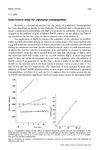
November 1971 in “Clinica Chimica Acta” The document concludes that measuring γ-glutamyl transpeptidase activity is more accurate with a higher substrate concentration and using diluted acetic acid to stop the reaction.
 April 2023 in “Journal of Investigative Dermatology”
 Using DNase enzymes to break down harmful NETs could be a new treatment for Stevens-Johnson syndrome and toxic epidermal necrolysis.