 1 citations
,
July 2023 in “Al-Azhar Medical Journal”
1 citations
,
July 2023 in “Al-Azhar Medical Journal” Higher antigliadin antibodies are linked to more severe alopecia areata, suggesting screening for celiac disease in these patients.
63 citations
,
May 2015 in “PloS one” GALT5 and GALT2 are important for plant growth and development because they help with protein glycosylation.
31 citations
,
December 1997 in “Developmental Medicine & Child Neurology” Biotinidase deficiency can cause vision and walking problems in children and can improve with biotin treatment.
February 2023 in “Materials today bio” The treatment effectively promotes hair regrowth in androgenetic alopecia without causing skin irritation.
32 citations
,
November 2020 in “UNC Libraries” A point mutation in the androgen receptor gene causes complete androgen insensitivity.
January 2020 in “International journal of scientific and research publications” Lower SOD enzyme levels are linked to more severe hair loss in men.
46 citations
,
February 1983 in “The Journal of Dermatology” Hair regrowth slows with age due to changes in enzyme activity.
 May 2025 in “International Journal of Science and Research (IJSR)”
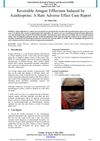
 Stopping azathioprine led to full hair regrowth and recovery in 2.5 months.
5 citations
,
September 2024 in “Biomolecules and Biomedicine” Total glucosides of paeony may help treat alopecia areata by reducing inflammation and hair loss.
3 citations
,
July 2023 in “Cells” MG53 helps reduce skin damage caused by nitrogen mustard.
September 2024 in “Annals of Dermatology” A new diagnostic model can help better diagnose and understand Alopecia Areata.
February 2020 in “Benha Journal of Applied Sciences” Higher Galectin-3 levels are linked to insulin resistance and may predict androgenetic alopecia severity.
 6 citations
,
March 2003 in “Archiv Der Pharmazie”
6 citations
,
March 2003 in “Archiv Der Pharmazie” Scientists made new substances that can block an enzyme linked to prostate issues and hair loss, with potential for creating a new treatment.
 March 2026 in “Cosmetics”
 Using enzymes with laser hair removal may reduce unwanted hair growth better than laser alone.
The conclusion is that a treatment called cp-asiAR can reduce hair loss and promote hair growth, making it a potential new therapy for androgenetic alopecia.
 December 2022 in “Small methods”
 A new hair loss treatment using dissolving microneedles was found to speed up hair growth and was more effective than daily use of common hair growth drugs.
 16 citations
,
January 2023 in “Acta Biomaterialia”
16 citations
,
January 2023 in “Acta Biomaterialia” The hydrogel quickly stops bleeding and helps heal infected wounds.
23 citations
,
November 2021 in “Frontiers in Chemistry” Nanozymes could improve disease treatment and detection.
2 citations
,
January 2025 in “Journal of Nanobiotechnology” A new engineered treatment shows promise in curing heart fibrosis.
 April 2026 in “Clinical Journal of Gastroenterology”
 Upadacitinib can cause hypersensitivity that worsens ulcerative colitis symptoms.
March 2021 in “Medico-Legal Update” The androgen receptor gene doesn't affect women with recurrent spontaneous abortions, but having a mutant genotype might protect against it.
 22 citations
,
March 2017 in “Scientific reports”
22 citations
,
March 2017 in “Scientific reports” Double-stranded RNA causes inflammation in hair follicle cells, which may help understand and treat alopecia areata.
August 2026 in “Pharmacological Research - Modern Chinese Medicine” Agrimonia pilosa extract and agrimonolide reduce inflammation and speed up wound healing.
2 citations
,
September 2017 in “Journal of Investigative Dermatology” Notch1 signaling is impaired in hidradenitis suppurativa, affecting skin and hair cells.
 8 citations
,
February 2015 in “Cellular immunology”
8 citations
,
February 2015 in “Cellular immunology” Deleting Snai2 and Snai3 causes fatal autoimmunity.
November 2024 in “Journal of Investigative Dermatology” Targeting PTEN can improve healing in venous leg ulcers.
54 citations
,
December 2011 in “American Journal Of Pathology” A Gsdma3 mutation causes hair loss due to stem cell damage from skin inflammation.
8 citations
,
March 2012 in “Mass spectrometry letters” The S9 fraction with GC-IDMS is effective for measuring 5α-reductase activity.
 2 citations
,
January 2025 in “Pharmaceutical Research”
2 citations
,
January 2025 in “Pharmaceutical Research” Angelica gigas Nakai root extracts may help with cancer, pain, memory loss, and metabolic issues.
 May 2026 in “BMC Medicine”
 ACOD1 deficiency worsens hair loss by causing cell aging and mitochondrial problems, but 4-OI may help.