Granzyme B accelerates skin aging and impairs healing by breaking down important skin components.
 April 2018 in “Journal of Investigative Dermatology”
 High amphiregulin in the skin is a bad sign for acute graft-versus-host disease.
14 citations
,
August 2014 in “The FASEB Journal” CAP1/Prss8 does not activate PAR2 or inhibit PN-1.
22 citations
,
February 2024 in “Heliyon” Exploring fermented foods from various regions can lead to discovering new fibrinolytic enzymes.
RNase L hinders hair follicle regeneration by altering immune signals.
 2 citations
,
January 2023 in “Bioresource Technology Reports”
2 citations
,
January 2023 in “Bioresource Technology Reports” Enzymes can release hydrocarbons from Botryococcus braunii without harming cells, suggesting potential for continuous extraction.
 May 2026 in “Nature Communications”
 The new treatment effectively heals drug-resistant bacteria-infected wounds.
 57 citations
,
March 2024 in “Nano-Micro Letters”
57 citations
,
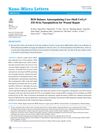
March 2024 in “Nano-Micro Letters” The nanoplatform helps heal wounds by balancing bacteria-killing and inflammation-reducing functions.
 8 citations
,
October 2019 in “Immunological investigations”
8 citations
,
October 2019 in “Immunological investigations” The AIRE gene variant rs2075876 is linked to a higher risk of alopecia areata in males.
53 citations
,
June 1983 in “Journal of Investigative Dermatology” The enzyme is crucial for skin cell development and can be activated without proteolytic activation.
 1 citations
,
November 2005 in “Dermatologic Surgery”
1 citations
,
November 2005 in “Dermatologic Surgery” Aminoguanidine increases VEGF in stored hair micrografts, potentially improving their viability after transplant.
 January 2014 in “Springer eBooks”
 Inflammasome proteins can indicate the severity and treatment response of various diseases and injuries.
 1 citations
,
November 2023 in “Research Square (Research Square)”
1 citations
,
November 2023 in “Research Square (Research Square)” DiZyme accurately predicts nanozyme activities to aid in discovering new applications.
 February 2025 in “Journal of Clinical Investigation”
 RNase L hinders hair growth by altering immune signals.
10 citations
,
June 2022 in “Biomedicine & Pharmacotherapy” ARTS helps stop tumors by promoting cell death.

Arginine deficiency hinders hair growth in androgenetic alopecia, but restoring it can promote hair regeneration.
 March 2018 in “International Pharmacy Acta”
 New niosomal formulation effectively delivers aminexil through rat skin.
 October 2024 in “Small Methods”
 Platinum nanozyme microneedles can effectively and safely promote hair growth for androgenetic alopecia.
 3 citations
,
November 2005 in “Dermatologic Surgery”
3 citations
,
November 2005 in “Dermatologic Surgery” Aminoguanidine increases a specific growth signal in stored hair grafts, which may help them survive better after being transplanted.
July 2026 in “Macromolecular Bioscience” Sulfated glycosaminoglycans from Acipenser baerii cartilage improve wound healing and fibroblast function.
 31 citations
,
January 2003 in “Dermatology”
31 citations
,
January 2003 in “Dermatology” Steroidogenic isoenzymes may help improve treatments for common hair loss.
December 2015 in “PLOS ONE” March 2026 in “ACS Applied Materials & Interfaces” MCP@G improves diabetic wound healing by reducing stress and promoting tissue repair.
 January 2026 in “Beilstein Journal of Organic Chemistry”
 A new, efficient method creates sulfinimidate esters from sulfenamides and alcohols without metals.
 January 2022 in “Current Enzyme Inhibition”
 New nonsteroidal molecules can potentially increase dihydrotestosterone in neurons by blocking certain enzymes, without affecting prostate and seminal vesicle weight.
 8 citations
,
July 2024 in “Scientific Reports”
8 citations
,
July 2024 in “Scientific Reports” Salicylate helps wounds heal without scarring in mice.
Problems with arginine processing in hair follicles might contribute to common hair loss, and arginine supplements could help treat it.
11 citations
,
October 2024 in “Cell Death Discovery” 4-aminopyridine helps heal burn wounds faster by reducing inflammation and promoting new blood vessel growth.
37 citations
,
January 2006 in “Carcinogenesis” Antizyme slows skin tumor growth by reducing cell growth in mice.
 75 citations
,
November 1965 in “Textile research journal”
75 citations
,
November 1965 in “Textile research journal” Papain and bisulfite break down human hair by dissolving parts of it.