45 citations
,
May 2022 in “Biomedicines” Analyzing follicular fluid can help predict and improve outcomes for women with PCOS undergoing fertility treatments.
14 citations
,
December 2009 in “Der Hautarzt”  8 citations
,
October 2021 in “Microbiology spectrum”
8 citations
,
October 2021 in “Microbiology spectrum” Researchers identified five new potential targets for leishmaniasis treatment, suggesting repurposing existing drugs could be effective.
8 citations
,
January 2021 in “Fermentation” Probiotics and synbiotics might help manage hirsutism by improving insulin resistance.
7 citations
,
June 2024 in “iScience” Androgens increase cervical cancer risk and affect its development.
5 citations
,
April 2024 in “Biology” Improving human hair follicle models is crucial for better hair loss treatments.
 2 citations
,
August 2019 in “Journal of skin and stem cell”
2 citations
,
August 2019 in “Journal of skin and stem cell” The study concludes that regulating apoptosis could lead to new treatments for various skin and hair conditions.
 1 citations
,
June 2023 in “Reproduction”
1 citations
,
June 2023 in “Reproduction” Microglia, the brain's immune cells, may contribute to Polycystic Ovary Syndrome (PCOS) by altering the female brain's structure and function, with kisspeptin neurons and GABA neurotransmitters also playing a role.
January 2026 in “Neurochemistry International” 24-Hydroxycholesterol reduces DHT formation in brain cancer cells, linking cholesterol and hormone metabolism.
 October 2024 in “Archives of Dermatological Research”
 Male and female pattern hair loss have different molecular pathways, suggesting unique treatment targets for each sex.
 June 2024 in “Computational and Structural Biotechnology Journal”
 Multi-omics techniques help understand the molecular causes of androgenetic alopecia.
 January 2024 in “Skin appendage disorders”
 Environmental pollutants can damage hair health and cause hair loss.
 April 2018 in “Gynäkologische Endokrinologie”
 Testosterone in older women can increase bone density, muscle mass, fat mass, improve memory, and boost libido, but may cause nipple color changes.
April 2022 in “Medical Molecular Morphology”  416 citations
,
September 1997 in “Journal of Investigative Dermatology”
416 citations
,
September 1997 in “Journal of Investigative Dermatology” People with hair loss have more androgen receptors and enzymes in certain follicles, with men and women showing different patterns.
94 citations
,
August 2002 in “Experimental Dermatology” 17α-estradiol boosts aromatase activity in female hair follicles, potentially helping with hair loss.
 77 citations
,
April 2009 in “British Journal of Dermatology”
77 citations
,
April 2009 in “British Journal of Dermatology” Aromatase gene variation may increase female hair loss risk.
 46 citations
,
May 2012 in “Molecular and Cellular Endocrinology”
46 citations
,
May 2012 in “Molecular and Cellular Endocrinology” Human skin produces sex hormones like estrogen and testosterone, influenced by ARO and StAR, which may affect skin elasticity and hair growth.
44 citations
,
December 2005 in “The Journal of Steroid Biochemistry and Molecular Biology” Combining 5α-reductase and aromatase inhibitors may better reduce estrogen levels.
 37 citations
,
September 2018 in “The Journal of Clinical Endocrinology and Metabolism”
37 citations
,
September 2018 in “The Journal of Clinical Endocrinology and Metabolism” Intravaginal testosterone cream improves sexual satisfaction and reduces vaginal discomfort in postmenopausal women on breast cancer treatment without affecting hormone levels.
 34 citations
,
November 2013 in “Breast Cancer Research and Treatment”
34 citations
,
November 2013 in “Breast Cancer Research and Treatment” Aromatase inhibitor therapy for breast cancer increases the risk of hair loss and thinning.
 19 citations
,
May 2013 in “Annals of Oncology”
19 citations
,
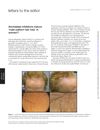
May 2013 in “Annals of Oncology” Aromatase inhibitors cause male pattern hair loss in women.
 15 citations
,
June 2011 in “British Journal of Dermatology”
15 citations
,
June 2011 in “British Journal of Dermatology” No link found between aromatase gene and female hair loss.
13 citations
,
December 2010 in “Pharmacology Biochemistry and Behavior” Inhibiting certain enzymes made female rats more sensitive to low-level pain.
11 citations
,
April 2018 in “Epilepsy research” Letrozole reduces seizures but not brain damage in mice.
9 citations
,
December 2009 in “Cancer Research” Both vaginal testosterone cream and Estring effectively manage vaginal dryness in women with early-stage breast cancer on aromatase inhibitors.
 4 citations
,
May 2019 in “Journal of Clinical Oncology”
4 citations
,
May 2019 in “Journal of Clinical Oncology” Some breast cancer treatments cause hair loss similar to male pattern baldness, which can be improved with minoxidil.
1 citations
,
November 2024 in “Expert Opinion on Drug Safety” Aromatase inhibitors can cause various adverse reactions, so monitoring is crucial.
 1 citations
,
September 2020 in “Pediatric Dermatology”
1 citations
,
September 2020 in “Pediatric Dermatology” Two teenage boys lost hair after taking a drug for growth, which was not a known side effect for kids.
 February 2026 in “Revista Eletrônica Polidisciplinar Voos.”
 A balanced approach using dutasteride and Serenoa repens can improve hair transplant success by protecting follicles and minimizing side effects.