June 2025 in “British Journal of Dermatology” Hair transplantation has evolved significantly, becoming more effective and popular despite challenges.
 October 2021 in “Indian Journal of Plastic Surgery”
 Hair transplant techniques have improved and become less invasive over time, but there are concerns about unregulated centers. The market is growing, with potential for more growth in India due to increasing hair loss cases. New technologies like robotic transplants are promising for the future. Surgeons are encouraged to prioritize patient safety and understand the science behind their techniques.
 January 2026 in “Cosmetics”
 New regenerative treatments show promise in improving hair growth for androgenetic alopecia.

Advancements in diagnostics, treatments, and technology have improved hair loss detection and restoration, with some types being reversible.
April 2024 in “Surgical Techniques Development” The 11th AICPE Congress in Rimini was a major event in European aesthetic plastic surgery.
 June 2023 in “Journal of Cosmetic Dermatology”
 AI and AR are improving cosmetic dermatology but face challenges like data quality and ethical concerns.
 January 2017 in “Journal of Investigative Dermatology Symposium Proceedings”
 The 2015 Hair Research Congress concluded that stem cells, maraviroc, and simvastatin could potentially treat Alopecia Areata, topical minoxidil, finasteride, and steroids could treat Frontal Fibrosing Alopecia, and PTGDR2 antagonists could also treat alopecia. They also found that low-level light therapy could help with hair loss, a robotic device could assist in hair extraction, and nutrition could aid hair growth. They suggested that Alopecia Areata is an inflammatory disorder, not a single disease, indicating a need for personalized treatments.
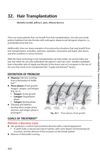 January 2018 in “Georg Thieme Verlag eBooks”
 Hair transplantation is a surgical procedure to move hair to bald areas, requires good donor hair, and results show in about a year.
 48 citations
,
May 2023 in “Nature Communications”
48 citations
,
May 2023 in “Nature Communications” Platelet-derived chemokines help muscle healing by attracting neutrophils to injured areas.
 March 2014 in “Journal of The American Academy of Dermatology”
 Reflectance confocal microscopy can noninvasively diagnose onychomatricoma by showing unique features different from healthy nails or nail fungus.
AI-assisted surgical robots improve surgery precision and safety.
 December 2025 in “International Research Journal on Advanced Engineering and Management (IRJAEM)”
 AI improves cosmetic surgery but requires ethical and legal oversight to ensure safe use.
 2 citations
,
September 2022 in “Jelenkori Társadalmi és Gazdasági Folyamatok”
2 citations
,
September 2022 in “Jelenkori Társadalmi és Gazdasági Folyamatok” Collaborative robots in industry need to meet safety and legal standards.
 January 2024 in “Wiadomości Lekarskie”
 Glioma treatment may improve with new therapies and technologies.
 January 2024 in “Wiadomości Lekarskie”
 Shifting attention can reduce physical pain.
 223 citations
,
October 2020 in “Microsystems & Nanoengineering”
223 citations
,
October 2020 in “Microsystems & Nanoengineering” Microtechnology methods improve organoid production for medical research.
 38 citations
,
February 2016 in “Surgery Journal”
38 citations
,
February 2016 in “Surgery Journal” Facial plastic surgery has evolved to focus on less invasive techniques and innovative technologies for cosmetic and reconstructive procedures.
 32 citations
,
July 2011 in “Facial Plastic Surgery”
32 citations
,
July 2011 in “Facial Plastic Surgery” New hair transplant methods offer more natural results and better graft survival, with ongoing research to increase donor hair options.
 22 citations
,
September 2018 in “Medical Clinics of North America”
22 citations
,
September 2018 in “Medical Clinics of North America” Facial aging is caused by natural processes and external factors, and can be managed with preventative measures and a variety of treatments tailored to individual needs.
 17 citations
,
May 2015 in “Aesthetic Plastic Surgery”
17 citations
,
May 2015 in “Aesthetic Plastic Surgery” FUE hair transplantation using a micromotor is effective and gives natural results with few complications.
 16 citations
,
January 2014 in “Dermatology online journal”
16 citations
,
January 2014 in “Dermatology online journal” The document concludes that Follicular Unit Extraction is an advanced, less invasive hair transplant method with fewer side effects than traditional methods.
 December 2023 in “Facial Plastic Surgery”
 Follicular unit excision (FUE) is a popular hair transplant method that avoids a linear scar but has potential challenges and side effects if not done properly.
 9 citations
,
January 2020 in “IEEE Access”
9 citations
,
January 2020 in “IEEE Access” The KEBOT system is a highly accurate AI tool for analyzing hair transplants.
12 citations
,
November 2023 in “Medicine” AI in dermatology is growing rapidly, showing promise in diagnosing skin conditions as accurately as dermatologists.
1 citations
,
January 2020 FUE is a preferred hair restoration method because it avoids large scars and offers less pain.
 January 2022 in “Sustainable development goals series”
 The document concludes that significant investment in agricultural innovation is necessary to achieve global food security and nutrition.
192 citations
,
January 2018 in “Burns & Trauma” Current skin substitutes help heal severe burns but don't fully replicate natural skin features.
8 citations
,
January 2014 in “Journal of Stem Cell Research & Therapy” Stem cell therapy improves healing and reduces pain in cutaneous radiation syndrome.
 7 citations
,
November 2021 in “Clinical, Cosmetic and Investigational Dermatology”
7 citations
,
November 2021 in “Clinical, Cosmetic and Investigational Dermatology” The new hair graft device is faster, more efficient, and reduces damage to hair follicles.
Hair transplantation helps restore hair and improve appearance, especially for women.