Arabidopsis Formin 2 stabilizes actin filaments, affecting cell-to-cell movement and virus susceptibility.
November 2024 in “DELOS Desarrollo Local Sostenible” Thunbergia grandiflora and Russelia equisetiformis help each other grow by changing their shapes.
2 citations
,
July 2025 in “Scientific Reports” Acinetobacter strain A1-4-2 can safely clean water pollutants.
19 citations
,
June 2010 in “Journal of acupuncture and meridian studies” A plant extract was found to effectively block an enzyme related to male hormone-related diseases.
 October 2024 in “Journal of Plant Growth Regulation”
 Fusarium sp. strain K-23 helps Arabidopsis plants grow better in salty soil by promoting root hair growth.
4 citations
,
January 2020 82 citations
,
January 2011 in “New Phytologist” VILLIN4 helps root hair growth by organizing actin with calcium.
 1 citations
,
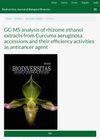
February 2021 in “Biodiversitas”
1 citations
,
February 2021 in “Biodiversitas” Curcuma aeruginosa rhizome extracts show potential as anticancer agents, with varying effectiveness against breast cancer cells.
 3 citations
,
December 2021 in “Journal of medicinal plants”
3 citations
,
December 2021 in “Journal of medicinal plants” Halocnemum strobilaceum has potential health benefits and uses, including anticancer and antimicrobial properties.
 5 citations
,
January 2010 in “Medicinal Plants - International Journal of Phytomedicines and Related Industries”
5 citations
,
January 2010 in “Medicinal Plants - International Journal of Phytomedicines and Related Industries” Tridax procumbens has medicinal properties.
 188 citations
,
May 2009 in “Plant physiology”
188 citations
,
May 2009 in “Plant physiology” Researchers found 19 genes important for root hair growth in a plant called Arabidopsis.
 3 citations
,
September 2018 in “MOJ Toxicology”
3 citations
,
September 2018 in “MOJ Toxicology” Alpinia zerumbet is a promising medicinal herb with various health benefits.

Eclipta alba L. (Urang-Aring) can help treat hair loss.
 February 2026 in “IOP Conference Series Earth and Environmental Science”
 Candlenut plants in Karo have common traits and varied kinship, with MTB1 and MTB2 being closest.
 17 citations
,
February 2009 in “Journal of Ethnopharmacology”
17 citations
,
February 2009 in “Journal of Ethnopharmacology” Asiasari radix extract may relieve certain types of pain by affecting GABA and NMDA receptors.
Artemisia maritima L. has strong medicinal potential, especially for treating infections and inflammation.
 11 citations
,
June 2017 in “Journal of cell science”
11 citations
,
June 2017 in “Journal of cell science” AGD1's PH domain is essential for its role in root hair growth and polarity.
 8 citations
,
February 2022 in “Molecules”
8 citations
,
February 2022 in “Molecules” Asparagus racemosus root extract reduced sebum and pore size in men but not in women.
 July 2026 in “bioRxiv (Cold Spring Harbor Laboratory)”
 ACA2 is crucial for root hair growth by controlling calcium levels in cells.
 16 citations
,
September 2015 in “Journal of Ethnopharmacology”
16 citations
,
September 2015 in “Journal of Ethnopharmacology” The document concludes that "Dictamnus" has a rich cultural history and potential as a herbal medicine, warranting more research into its effects and safety.
January 2008 in “中山醫學大學醫學研究所學位論文” Danthron from Rhubarb causes melanoma cells to stop growing and die.
Plant roots respond to fungus smells by possibly using certain proteins and a plant hormone to change root growth, but more research is needed.
 January 2006 in “The Journal of Korean Medicine Ophthalmology and Otolaryngology and Dermatology”
 Rubus coreanum may help hair growth but not through the tested mechanisms, and none of the herbal extracts help with acne.
Medicinal plants are important for local health in La Tranca Arriba.
 December 2022 in “Frontiers in plant science”
 CCDC22 and CCDC93 are essential for root and root hair growth in Arabidopsis.
 33 citations
,
February 2016 in “Journal of Experimental Botany”
33 citations
,
February 2016 in “Journal of Experimental Botany” ROOT HAIR SPECIFIC 10 (RHS10) reduces the length of root hairs in Arabidopsis plants.
 22 citations
,
January 2009 in “Medical mycology”
22 citations
,
January 2009 in “Medical mycology” A family got a fungal infection from a boy who had contact with rabbits, but they all recovered with treatment.
 March 2022 in “Journal of Survey in Fisheries Sciences”
 Asteraceae plants have important medicinal uses but face challenges in sustainable use.
 2 citations
,
August 2019 in “BMC Complementary and Alternative Medicine”
2 citations
,
August 2019 in “BMC Complementary and Alternative Medicine” Asiasari radix extract may be a potential treatment for melanoma because it selectively triggers cell death in melanoma cells by affecting p53 regulation.
September 2025 in “Radboud University Press eBooks” AHR ligands could treat inflammatory skin diseases.