 1 citations
,
March 2005 in “International Journal of Cosmetic Science”
1 citations
,
March 2005 in “International Journal of Cosmetic Science” Twisting hair weakens it, but strength can be recovered at low twist levels.
January 2026 in “Pattern Recognition” The new method improves accuracy in segmenting scalp tissue layers.

A portable imaging system shows promise for diagnosing skin diseases and checking laser treatment effects.

New imaging tools help doctors better examine hair and scalp health without surgery.
 May 2023 in “Experimental Dermatology”
 RCM and OCT are effective for diagnosing and monitoring hair-related skin diseases but lack standardized protocols and need more research.
 April 2023 in “Journal of Investigative Dermatology”
 The research shows that skin cancer likely originates from hair follicles and that certain cell populations expand to promote skin cancer growth.
 January 2023 in “TNOA journal of ophthalmic science and research”
 Minoxidil may cause vision problems.
 November 2021 in “International Journal of Research in Medical Sciences & Technology”
 Skin surface chemistry and OCT can improve skin disease diagnosis.
 November 2021 in “Austin therapeutics”
 Current treatments for hair loss from chemotherapy are limited, but new methods are being researched.
Human hair follicle cells can be turned into stem cells that may help clone hair for treating hair loss or burns.

Canine fetal hair follicle stem cells show pluripotency, with higher S100 protein expression at 40 days.

Glycyrrhizic acid and licorice extract can significantly reduce unwanted hair growth.
 September 2014 in “Proceedings of SPIE, the International Society for Optical Engineering/Proceedings of SPIE”
 OCT can effectively examine and reveal details about human hair and scalp conditions.
January 2014 in “Institutional Repositories DataBase (IRDB)” Fibroblast spheres can form stem cells, but marker distribution needs more study.
 February 2026 in “Inflammopharmacology”
 Pistacia atlantica leaf ointment effectively heals wounds like phenytoin, with added antibacterial and anti-inflammatory benefits.
July 2025 in “Journal of Investigative Dermatology” Some sunscreen ingredients may be linked to hair loss, but more research is needed.
 February 2025 in “FASEB BioAdvances”
 Verteporfin reduces growth and stem cell traits in rat hair follicle cells by blocking the Hippo pathway.
 February 2025 in “Natural Product Communications”
 Aloe vera, Centella asiatica, Green Tea, and Pueraria mirifica extracts together boost hair growth by enhancing stem cell properties.

Various substances, quitting smoking, and certain topical applications can enhance the survival of skin flaps used in surgery. Oxygen-free radicals play a role in tissue injury, but certain treatments can have beneficial effects.
February 2015 in “Rivm (National Institute for Public Health and the Environment)” Cosmetics in the Netherlands were mostly safe but sometimes caused allergic reactions, leading to potential bans on certain ingredients.
January 2013 in “edoc (University of Basel)” TRF1 is crucial for creating and maintaining stem cells and marks both pluripotent and adult stem cells.
 March 2005 in “International Journal of Cosmetic Science”
 DVI provides detailed 3D imaging of hair and shows how various products protect and enhance hair.
 March 2005 in “International Journal of Cosmetic Science”
 A new method helps understand hair shine and various products improve hair care.
December 2004 in “PLoS ONE” The Foxn1(-/-) phenotype disrupts hair growth and affects skin stem cells.
OCT can effectively diagnose different stages of hair loss non-invasively.
 January 2022 in “Social Science Research Network”
 A special coating was made for artificial hair fibers that can slowly release silver ions for up to 56 days, providing long-term protection against bacteria and inflammation.
OCT4B1 and SOX-2 levels are higher in Crohn's and ulcerative colitis patients, possibly aiding tissue repair.
 20 citations
,
February 2004 in “Clinical and Experimental Ophthalmology”
20 citations
,
February 2004 in “Clinical and Experimental Ophthalmology” Eye exams are crucial for kids with 13q deletion syndrome, tamoxifen can cause vision loss, Propecia may lead to cataracts, Lipoid Proteinosis causes skin bumps, and OCT is useful for diagnosing macular diseases.
 6 citations
,
February 2004 in “Clinical and Experimental Ophthalmology”
6 citations
,
February 2004 in “Clinical and Experimental Ophthalmology” The document concludes that careful diagnosis is crucial for chromosome 13q deletion syndrome, tamoxifen can cause reversible eye damage, finasteride may be linked to cataracts, and OCT is useful for diagnosing macular diseases.
 13 citations
,
February 2004 in “Clinical and Experimental Ophthalmology”
13 citations
,
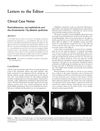
February 2004 in “Clinical and Experimental Ophthalmology” A baby boy with 13q deletion syndrome had eye cancer, a woman's vision improved after stopping a breast cancer drug, a man developed cataracts from using Propecia, and a rare skin disorder called Lipoid Proteinosis was discussed. Also, a tool called OCT is useful for diagnosing macular diseases.