 January 2025 in “BMC Genomics”
 Long non-coding RNAs help regulate wool fineness in Gansu alpine fine-wool sheep.
9 citations
,
October 1947 in “The Lancet” 1 citations
,
November 1947 in “The Lancet”  November 2022 in “Gigascience”
 A specific genetic deletion in goats affects cashmere yield and thickness.
 July 2022 in “Journal of Investigative Dermatology”
 IL-15 helps maintain hair growth and protects the immune status of hair follicles.
 1 citations
,
March 2023 in “bioRxiv (Cold Spring Harbor Laboratory)”
1 citations
,
March 2023 in “bioRxiv (Cold Spring Harbor Laboratory)” NAC1 controls certain enzymes that reduce root hair growth in Arabidopsis.
 4 citations
,
June 2014 in “The Journal of Dermatology”
4 citations
,
June 2014 in “The Journal of Dermatology” Elkonyxis, a rare nail condition, improved when patients stopped their nail-picking habits.
1 citations
,
October 2024 in “Medicina” CLEC4D gene variants may increase the risk of alopecia areata in Jordanians.
 January 1982 in “Journal of The American Academy of Dermatology”
 Experts discussed treatments for skin conditions in children, emphasizing hydration, cautious medication use, and early intervention for infections.
 26 citations
,
June 2018 in “The journal of immunology/The Journal of immunology”
26 citations
,
June 2018 in “The journal of immunology/The Journal of immunology” AIRE-deficient rats developed severe autoimmune disease similar to APECED, useful for testing treatments.
May 2018 in “Dermatologic Surgery” September 2017 in “The journal of investigative dermatology/Journal of investigative dermatology” N-acetyl-GED may help prevent and partially reverse a process that leads to scarring hair loss.
5 citations
,
April 2019 in “Veterinary Dermatology” Cats infested with Lynxacarus radovskyi can lose hair without inflammation, treatable with selamectin.
 February 2026 in “Journal of Integrative Neuroscience”
 NGF-modified hair follicle stem cells may help treat Alzheimer's by improving brain function and reducing harmful proteins.
May 2015 in “Cancer research” After chemotherapy for early breast cancer, 33.4% of patients had long-term significant hair loss, with some hair regrowth over time, but treatments for hair loss were largely ineffective.
 14 citations
,
August 2019 in “Clinical and Experimental Dermatology”
14 citations
,
August 2019 in “Clinical and Experimental Dermatology” Combining light therapy, acid, and microneedling improves hair regrowth in stubborn hair loss cases.
February 2018 in “bioRxiv (Cold Spring Harbor Laboratory)” Rodent spiny hair traits are due to genetic factors other than the Edar gene.
 December 1997 in “Proceedings of SPIE, the International Society for Optical Engineering/Proceedings of SPIE”
 Low-energy laser therapy can improve scalp alopecia treatment when combined with classical methods.
December 2019 in “Thèses en ligne de l'Université Toulouse III (Université Toulouse III)” EGM2 and SOX2 help form beige adipocytes by maintaining ASC immaturity and activating brown adipocytes.
 4 citations
,
March 2017 in “Al-Mi’galaẗ al-sa'udiyaẗ lī-ulum al-ḥayaẗ”
4 citations
,
March 2017 in “Al-Mi’galaẗ al-sa'udiyaẗ lī-ulum al-ḥayaẗ” Leonuri Herba alkaloids may help treat hormone-induced enlarged prostate in rats.
26 citations
,
September 2009 in “Clinical genetics” Arab APS1 patients have unique and recurrent AIRE gene mutations.
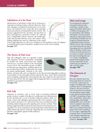 May 2015 in “Journal of Investigative Dermatology”
 Melanoma risk tools need improvement, a gene mutation causes a hair disorder that might be treated by managing cell stress, a potential therapy for a skin-ear disorder involves blocking cell channels, skin wrinkling may indicate lung aging regardless of smoking, and oxidative stress might contribute to common baldness.
May 2025 in “OPAL (Open@LaTrobe) (La Trobe University)” Linoleic acid and magnesium are key in alopecia areata progression, and tofacitinib can help by affecting their pathway.
June 2005 in “Journal of Investigative Dermatology” A bull with a gene mutation was asymptomatic, synthetic retinoids cause hair loss, and new therapeutic targets were identified for skin diseases.
 April 2023 in “The journal of investigative dermatology/Journal of investigative dermatology”
 The research identified unique metabolic activities in immune cells associated with hair loss in Alopecia Areata.
15 citations
,
March 2008 in “The Journal of Dermatology” Topical squaric acid dibutylester worsened discoid lupus erythematosus in a patient.
August 2024 in “British Journal of Dermatology” Rezpegaldesleukin shows promise for treating severe alopecia areata.
1 citations
,
January 2020 in “IRIS UNIMORE (University of Modena and Reggio Emilia)” Aminexil clinical 5 effectively reduces hair loss and is well-tolerated.
 10 citations
,
May 2012 in “Cell Adhesion & Migration”
10 citations
,
May 2012 in “Cell Adhesion & Migration” ILK and ELMO2 help cells move and stick together, important for wound healing and hair growth.