7 citations
,
May 2025 in “Journal of Biomedical Science” Keratin 6A increases skin inflammation, suggesting it could be a target for treating certain skin diseases.
8 citations
,
November 2024 in “EMBO Molecular Medicine” Targeting JAK-STAT1 can reduce inflammation and promote hair growth in conditions linked to EGFR deficiency.
January 2009 in “ScholarlyCommons (University of Pennsylvania)” The P133R mutation in AKR1D1 enzyme causes harmful bile acid buildup, explaining related health issues.
612 citations
,
February 2004 in “Nature” OXI1 kinase is essential for plant defense and root hair growth in Arabidopsis.
74 citations
,
September 2003 in “The Journal of Immunology” Activating PKCα in skin causes cell death and inflammation through different pathways.
 November 2023 in “Cell Proliferation”
 A protein from fat-derived stem cells, DKK1, is linked to hair loss and blocking it may help treat alopecia areata.
 45 citations
,
January 2012 in “The Journal of Steroid Biochemistry and Molecular Biology”
45 citations
,
January 2012 in “The Journal of Steroid Biochemistry and Molecular Biology” Too much AKR1C3 enzyme causes resistance to finasteride by increasing testosterone.
 June 2026 in “HAL (Le Centre pour la Communication Scientifique Directe)”
 SH-1 effectively treats hair loss without side effects.
April 2019 in “The journal of investigative dermatology/Journal of investigative dermatology” Blocking JAK1 or JAK3 helps reverse hair loss in a mouse model of alopecia areata.
 2 citations
,
December 2023 in “Journal of clinical immunology”
2 citations
,
December 2023 in “Journal of clinical immunology” Ruxolitinib significantly improves multiple autoimmune conditions in APS-1 patients.
1 citations
,
August 2021 in “Journal of Investigative Dermatology” ASLAN004 was safe and well-tolerated, supporting further development for treating certain diseases.
 February 2025 in “PubMed”
 CS12192 effectively treats alopecia areata with better safety than current options.
 April 2023 in “The journal of investigative dermatology/Journal of investigative dermatology”
 HPV8 causes hair follicle stem cells to grow, leading to skin lesions.
 23 citations
,
June 2010 in “Journal of Investigative Dermatology”
23 citations
,
June 2010 in “Journal of Investigative Dermatology” A mutation in the Soat1 gene causes hair structure defects and other health issues in AKR/J mice.
 February 2025 in “International Journal of Molecular Sciences”
 RIPK1 inhibitors may help prevent alopecia areata by reducing immune cell activity.
11 citations
,
February 2022 in “JAAD case reports” Abrocitinib, a JAK inhibitor, may help treat atopic dermatitis and alopecia universalis together.
1 citations
,
May 2026 in “Journal of Dermatological Treatment” JAK1 inhibitor may effectively treat alopecia areata when TNF-α inhibitors and corticosteroids fail.
 March 2026 in “Clinical Cosmetic and Investigational Dermatology”
 Upadacitinib improved multiple immune-related conditions in one patient.
July 2025 in “Journal of Investigative Dermatology”  November 2022 in “Journal of Investigative Dermatology”
 Short-term treatment with ROCKi increases skin cell growth without changing stem cell features.
 92 citations
,
January 2012 in “International Journal of Biological Sciences”
92 citations
,
January 2012 in “International Journal of Biological Sciences” The document introduced a new naming system for keratin-associated proteins to improve clarity and communication across species.
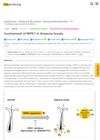
RIPK1 inhibitors might help prevent alopecia areata.
71 citations
,
May 2024 in “New England Journal of Medicine” Ruxolitinib may effectively treat APS-1 by reducing harmful immune responses.
505 citations
,
October 2011 in “Journal of clinical oncology” MK-2206 was safe and effectively blocked AKT signaling in cancer patients, warranting more trials.
 June 2026 in “bioRxiv (Cold Spring Harbor Laboratory)”
 AQB reduces harmful skin changes in systemic sclerosis.
8 citations
,
June 2023 in “European Journal of Endocrinology” The inhibitor affects androgen metabolism but not ovarian function.
 February 2025 in “PubMed”
 Switching JAK inhibitors can lead to significant hair regrowth in severe alopecia cases.
35 citations
,
June 2012 in “PloS one” Keratin 15 expression in skin cells is regulated by two mechanisms involving PKC/AP-1 and FOXM1.
April 2010 in “Cancer Research” Mcl-1 can activate Wnt signaling in skin cells, promoting growth and possibly cancer.
 August 1994 in “Molecular Endocrinology”
 Changing protein kinase levels in pituitary cells affects calcium flow and beta-endorphin release.