14 citations
,
November 2024 in “International Journal of Molecular Sciences” YAP and TAZ proteins control skin cell growth and repair.
 3 citations
,
May 2022 in “Oncogene”
3 citations
,
May 2022 in “Oncogene” Vav2 and Vav3 proteins help control skin stem cell numbers and activity in both healthy and cancerous cells.
45 citations
,
April 2001 in “The journal of investigative dermatology/Journal of investigative dermatology” Different Myc family proteins are located in various parts of the hair follicle and may affect stem cell behavior.
 10 citations
,
October 2016 in “Monoclonal antibodies in immunodiagnosis and immunotherapy”
10 citations
,
October 2016 in “Monoclonal antibodies in immunodiagnosis and immunotherapy” Researchers created specific antibodies that detect a protein important in development and various conditions, and can be used for research and diagnosis.
 November 2023 in “Advanced Science”
 A specific hair protein variant increases the spread of breast cancer and is linked to worse survival rates.
 13 citations
,
November 2010 in “Experimental Dermatology”
13 citations
,
November 2010 in “Experimental Dermatology” Vitamin C derivative reduces hair loss-related protein in cells.
December 2012 in “Expert review of dermatology” New findings suggest the protein linked to Birt–Hogg–Dubé syndrome is important in cell signaling and could affect treatment understanding.
May 2004 in “Journal of steroid biochemistry and molecular biology/The Journal of steroid biochemistry and molecular biology” Vitamin D affects Msx1 protein expression and may influence mineralized tissue health.
 2 citations
,
March 2021 in “bioRxiv (Cold Spring Harbor Laboratory)”
2 citations
,
March 2021 in “bioRxiv (Cold Spring Harbor Laboratory)” Hairless mammals have genetic changes in both their protein-coding and regulatory sequences related to hair.
1 citations
,
January 2021 in “Springer Proceedings in Materials” Researchers developed a new method to clearly see and label hair proteins with minimal errors using advanced freezing and microscopy techniques.
 9 citations
,
January 2018 in “Acta dermato-venereologica”
9 citations
,
January 2018 in “Acta dermato-venereologica” A substance called poly(I:C) increases a protein called carbonic anhydrase II in skin cells, which might help with skin defense and healing.
 August 2012 in “Nature Cell Biology”
 The tumor suppressor BRCA2 helps in cell division by bringing key proteins to the area where cells split.
 18 citations
,
October 2021 in “Frontiers in Physiology”
18 citations
,
October 2021 in “Frontiers in Physiology” Lipocalin-Type Prostaglandin D2 Synthase (L-PGDS) is a protein that plays many roles in the body, including sleep regulation, pain management, food intake, and protection against harmful substances. It also affects fat metabolism, glucose intolerance, cell maturation, and is involved in various diseases like diabetes, cancer, and arthritis. It can influence sex organ development and embryonic cell differentiation, and its levels can be used as a diagnostic marker for certain conditions.
2 citations
,
December 2019 in “Nanoscience and Nanotechnology Letters” SVF and PRP promote hair growth by boosting specific proteins in the Wnt/β-catenin pathway.
 242 citations
,
February 2016 in “Science”
242 citations
,
February 2016 in “Science” Hair loss and aging are caused by the breakdown of a key protein in hair stem cells.
 88 citations
,
May 2005 in “Journal of Dermatological Science”
88 citations
,
May 2005 in “Journal of Dermatological Science” Versican, a protein, is less present in thinning hair follicles and this decrease might contribute to common hair loss in men.
 68 citations
,
May 2018 in “PLOS Biology”
68 citations
,
May 2018 in “PLOS Biology” Cyclosporine A may help treat hair loss by blocking a protein that inhibits hair growth.
 65 citations
,
February 2009 in “The journal of investigative dermatology/Journal of investigative dermatology”
65 citations
,
February 2009 in “The journal of investigative dermatology/Journal of investigative dermatology” Anti-acne medications may work by reducing the activity of a protein involved in acne development.
 15 citations
,
May 2017 in “Lasers in Medical Science”
15 citations
,
May 2017 in “Lasers in Medical Science” Low-level laser treatment helps mice grow hair by increasing certain protein levels linked to hair growth.
 14 citations
,
January 2017 in “Pharmacological Reports”
14 citations
,
January 2017 in “Pharmacological Reports” TP0427736 may help treat hair loss by blocking a specific protein and promoting hair growth.
 8 citations
,
July 2022 in “Frontiers in plant science”
8 citations
,
July 2022 in “Frontiers in plant science” pH changes are crucial for root hair growth because they affect enzymes and proteins that control the cell wall and growth.
 6 citations
,
January 2020 in “International Journal of Biological Sciences”
6 citations
,
January 2020 in “International Journal of Biological Sciences” Septin4 helps kill colon cancer cells by working with the protein BAX.
February 2019 in “International Journal of Dermatology and Clinical Research” Nε-(carboxymethyl) lysine delays hair growth by blocking a key protein.
 24 citations
,
December 2014 in “International Journal of Molecular Medicine”
24 citations
,
December 2014 in “International Journal of Molecular Medicine” Eclipta alba extract helps increase hair growth and decrease hair loss-related protein in mice.
46 citations
,
July 2015 in “Wound repair and regeneration” Keloid scars may form due to changes in skin cell characteristics and specific protein signaling.
May 2006 in “The Journal of Cell Biology” Keratin 17 is crucial for cell growth in wound healing by aiding protein synthesis.
 1 citations
,
June 2023 in “Journal of steroid biochemistry and molecular biology/The Journal of steroid biochemistry and molecular biology”
1 citations
,
June 2023 in “Journal of steroid biochemistry and molecular biology/The Journal of steroid biochemistry and molecular biology” Vitamin D helps skin stem cells heal wounds by working with a key skin protein.
January 2024 in “International journal of molecular sciences” A brain-made hormone can protect against memory-related brain damage caused by harmful proteins.

Plant roots respond to fungus smells by possibly using certain proteins and a plant hormone to change root growth, but more research is needed.
 4 citations
,
November 1968 in “Textile research journal”
4 citations
,
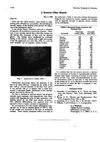
November 1968 in “Textile research journal” Hair fibers may have a unique, non-protein sheath not previously identified.