December 1963 in “Medical Entomology and Zoology” Wnt1a from stem cells boosts hair growth and regeneration in mice.
2 citations
,
May 2023 in “Indian Journal of Dermatology Venereology and Leprology” A new genetic mutation in the CAST gene may link PLACK syndrome to alopecia areata.
 August 2018 in “Journal of the American Academy of Dermatology”
 Tofacitinib is a potential alternative treatment for alopecia totalis, especially in patients with a shorter duration of the condition and more preserved hair follicles, but the overall response rate is low.
 August 2024 in “Life Science Alliance”
 Helminth protein helps wounds heal better by reducing scarring and promoting tissue growth.
1 citations
,
August 2022 in “Pigment Cell & Melanoma Research” New mouse models help study melanocytic cells for melanoma research.
 September 2017 in “Journal of Investigative Dermatology”
 Finasteride helps female-pattern hair loss.
19 citations
,
September 2013 in “Molecular Medicine Reports” Human hair follicle stem cells can become smooth muscle cells using specific growth factors.
2 citations
,
August 2020 in “CRC Press eBooks” Tabby mutations in mice affect hair follicle development and help study genetic mapping and certain medical conditions.
5 citations
,
November 2024 in “Biomedicine & Pharmacotherapy” The chitosan-peptide system helps cartilage regeneration using fat-derived cells.
January 2025 in “SSRN Electronic Journal” 14 citations
,
January 2005 in “Cell Stress and Chaperones” 5 citations
,
August 2023 in “G3 Genes Genomes Genetics” The improved genome of the African spiny mouse will help understand its tissue regeneration abilities.
 24 citations
,
May 2019 in “PLOS ONE”
24 citations
,
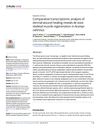
May 2019 in “PLOS ONE” The African spiny mouse can fully regenerate its muscle without scarring, unlike the common house mouse.
 April 2019 in “Journal of Investigative Dermatology”
 Removing REDD1 in mice increases skin fat by making fat cells larger and more numerous.
10 citations
,
January 2009 Collagen XVIII affects wound healing, hair growth, and bone development, with its absence speeding up processes and overexpression causing delays and abnormalities.
18 citations
,
October 2009 in “Endocrinology” Different Hairless isoforms affect Vitamin D receptor activity in hair regulation, with one repressing and the other stimulating it.
 January 2025 in “Nature Communications”
 CPK1 helps root hair growth in Arabidopsis by activating channels for calcium signaling.

mEphA1 receptor tyrosine kinase is important for skin and hair development and may play a role in certain diseases.
October 2025 in “Phytochemistry Letters” 23 citations
,
July 2022 in “Nature Cell Biology” Targeting THY1 can improve skin repair and healing.
40 citations
,
March 1991 in “Journal of Investigative Dermatology” 79 citations
,
October 2003 in “PubMed” Overexpression of PKCepsilon leads to increased TNFalpha, promoting metastatic squamous cell carcinoma in mice.
April 2017 in “Journal of Investigative Dermatology” Reduced Stx17 expression may contribute to Alopecia Areata.
 April 2023 in “The journal of investigative dermatology/Journal of investigative dermatology”
 Lack of TG2 increases fat storage and lowers cell cleanup in skin oil cells.
2 citations
,
January 2018 in “Open journal of stomatology” Tongue cancer cells show more plectin-1 than non-cancer cells, but both have similar levels of trichohyalin.
 January 2026 in “Dermatology Reports”
 Upadacitinib improved symptoms and hair regrowth in a teen with multiple autoimmune conditions.
May 2025 in “Journal of the European Academy of Dermatology and Venereology” Ritlecitinib is effective for long-term hair regrowth in alopecia areata, especially in females and early treatment.
91 citations
,
March 1994 in “Journal of Investigative Dermatology” 19 citations
,
January 2015 in “Development” Hoxc8 gene helps start mammary gland development by controlling specific signals.
 7 citations
,
January 2016 in “Laboratory Investigation”
7 citations
,
January 2016 in “Laboratory Investigation” TR3 is mainly found in hair follicle stem cells and may be involved in hair loss.