 January 2024 in “Wiadomości Lekarskie”
 Thyroid disorders, especially autoimmune ones, are very common in the studied group.
1 citations
,
November 2018 in “immuneACCESS” Expanded CD8+ T cells are linked to Alopecia Areata and may cause relapse after treatment.
5 citations
,
January 2020 in “Acta dermatovenerologica Alpina, Pannonica et Adriatica (Tiskana izd.)” Injecting platelet-rich plasma or applying it with a laser or microneedling can treat hair loss effectively. The laser and microneedling methods cause less pain.
9 citations
,
January 2011 in “American Journal of Dermatopathology” Pilomatrixoma involves abnormal hair keratin production and cell death, causing debris and cysts.
 29 citations
,
October 2012 in “Anais Brasileiros De Dermatologia”
29 citations
,
October 2012 in “Anais Brasileiros De Dermatologia” Diagnosing hair loss disorders needs clinical, dermoscopic, and histological differences, and checking menstrual cycle, weight changes, drug therapy, and nail changes.

Traumatic anserine folliculosis is a harmless skin condition in young males that needs correct diagnosis to avoid unnecessary treatments.
October 2018 in “Clinical approaches and procedures in cosmetic dermatology” Hyaluronic acid fillers are a safe and popular choice for enhancing lips, with manageable side effects and complications.
 January 2025 in “International Journal of Homoeopathic Sciences”
 Homeopathic treatment may help manage alopecia areata effectively.
 April 2024 in “Research Square (Research Square)”
 A 27-year-old with APS-1 showed improvement in symptoms after treatment.
3 citations
,
October 2022 in “Journal of Cosmetic Dermatology” CAR is a useful marker for assessing alopecia areata severity.
 25 citations
,
March 2013 in “British Journal of Dermatology”
25 citations
,
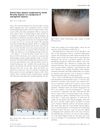
March 2013 in “British Journal of Dermatology” Woman has discoid lupus, frontal fibrosing, and androgenetic alopecia.
5 citations
,
March 2013 in “Journal of Cutaneous Pathology” Granulomatous alopecia may be a distinct subtype of alopecia areata.
 8 citations
,
April 2023 in “Advanced materials”
8 citations
,
April 2023 in “Advanced materials” Using blood-based implants improves skin healing and reduces scarring.
 April 2021 in “BMJ Case Reports”
 Accurate diagnosis of pseudolymphomatous folliculitis is crucial to avoid mistaking it for more serious conditions.
 24 citations
,
January 2008 in “KARGER eBooks”
24 citations
,
January 2008 in “KARGER eBooks” The document concludes that ongoing research using animal models is crucial for better understanding and treating Alopecia Areata.
Placental components enhance blood vessel growth.
19 citations
,
July 2004 in “Clinical and experimental dermatology” Acneiform follicular mucinosis can be controlled with systemic corticosteroids.
77 citations
,
June 2002 in “Journal of Investigative Dermatology” CD44 variant changes start alopecia areata, but don't maintain it.
 August 2015 in “Dermatología Argentina”
 Frontal fibrosing alopecia causes hairline recession and eyebrow loss in postmenopausal women.
 1 citations
,
March 2004 in “Journal of the American Academy of Dermatology”
1 citations
,
March 2004 in “Journal of the American Academy of Dermatology” Certain genes are linked to the risk of developing Alopecia Areata.
3D-ultrasound can non-invasively detect and predict alopecia areata phases and outcomes.
 10 citations
,
June 2019 in “Case reports in dermatology”
10 citations
,
June 2019 in “Case reports in dermatology” LALPS causes non-scarring hair loss along the Blaschko line, with unique trichoscopic findings.
 July 2023 in “Deleted Journal”
 Alopecia areata is the most common type of baldness treated with corticosteroids and minoxidil.
12 citations
,
June 2017 in “Dermatologic therapy” Higher concentrations of dithranol can help regrow hair in severe alopecia areata.
1 citations
,
June 2024 in “Frontiers in Physiology” Endoplasmic reticulum stress plays a key role in developing atherosclerosis.
 1 citations
,
June 2014 in “International Journal of Dermatology”
1 citations
,
June 2014 in “International Journal of Dermatology” Pregnancy can trigger follicular mucinosis, which may resolve after delivery.
 April 2026 in “Ankara Eğitim ve Araştırma Hastanesi Tıp Dergisi”
 Severe acne patients have higher inflammatory markers than healthy people.
 May 2015 in “Journal of The American Academy of Dermatology”
 Both azathioprine and betamethasone treatments help with hair regrowth in alopecia areata, but azathioprine may have fewer side effects.
15 citations
,
March 2018 in “Cancer Medicine” Alopecia areata patients have varied cancer risks, with some cancers being lower and others higher.
 January 1986 in “Journal of Steroid Biochemistry”
 Lower testosterone levels in men may be linked to a higher risk of severe coronary artery disease.