 June 2025 in “Biomolecules”
 RORA affects hair follicle stem cells' structure and movement, potentially helping treat hair loss.
 February 2026 in “Frontiers in Immunology”
 Tralokinumab for atopic dermatitis may cause eye issues and skin reactions, needing careful monitoring.
 October 2021 in “International journal of basic and clinical pharmacology”
 Excessive eyelash growth from erlotinib may indicate positive tumor response and help treat madarosis.
11 citations
,
February 2022 in “JAAD case reports” Abrocitinib, a JAK inhibitor, may help treat atopic dermatitis and alopecia universalis together.
 144 citations
,
March 2013 in “Circulation Research”
144 citations
,
March 2013 in “Circulation Research” K_ATP channel gene mutations are linked to heart diseases, but more research is needed to understand the connection and treatment potential.
39 citations
,
June 2019 in “Frontiers in Endocrinology” Lenvatinib and sorafenib are generally safe but need dose adjustments due to side effects.
 October 2025 in “Proceedings of the National Academy of Sciences”
 Phospholipids help plant proteins move by regulating receptor interactions.
76 citations
,
January 1998 in “Mammalian Genome”  November 2024 in “SKIN The Journal of Cutaneous Medicine”
 Ritlecitinib provides new treatment options for diverse alopecia areata patients.
10 citations
,
August 2016 in “Dermatology Online Journal” Nilotinib can cause skin issues like red bumps and hair loss.
10 citations
,
August 2020 in “Acta histochemica” All-trans-retinoic acid stops mink hair growth by affecting cell growth and causing cell death.
November 2015 in “Journal of the Korea Academia-Industrial cooperation Society” The new assay can help develop products for hair re-growth.
 November 2023 in “The journal of investigative dermatology/Journal of investigative dermatology”
 Cancer treatment drugs can cause permanent hair loss by damaging hair follicle stem cells, but a specific inhibitor might reverse this effect.
4 citations
,
April 2025 in “Antioxidants” Alpha-ketoglutarate protects rabbit skin cells from oxidative damage by activating a specific cell pathway.
6 citations
,
June 2023 in “Experimental Dermatology” Targeting mitophagy may help treat alopecia areata by reducing inflammasome activation.
 September 2019 in “Journal of Investigative Dermatology”
 Abrocitinib at 100 mg and 200 mg daily may significantly improve moderate-to-severe atopic dermatitis in patients 12 years and older.
248 citations
,
September 2006 in “PLANT PHYSIOLOGY” Extracellular ATP is crucial for plant root growth and signaling.
January 2005 in “Enlighten: Publications (The University of Glasgow)” Melanocyte pathology requires keratinocyte hyperplasia and regulation dysfunction.
14 citations
,
August 2014 in “The FASEB Journal” CAP1/Prss8 does not activate PAR2 or inhibit PN-1.
April 2026 in “Future Medicinal Chemistry” PROTACs have become a breakthrough in medicine by effectively targeting and degrading specific proteins to treat diseases.
 489 citations
,
November 2021 in “Signal Transduction and Targeted Therapy”
489 citations
,
November 2021 in “Signal Transduction and Targeted Therapy” The JAK/STAT pathway is important in cell processes and disease, and JAK inhibitors are promising for treating related conditions.
 12 citations
,
February 2014 in “PLoS ONE”
12 citations
,
February 2014 in “PLoS ONE” Topical rapamycin may effectively treat fibrous papules on the face.
32 citations
,
July 2018 in “FEBS letters” A specific protein complex increases the activity of a plant enzyme, but this action is not required for plant root hair growth.
 June 2023 in “Fundamental & clinical pharmacology”
 JAK inhibitors help treat some diseases but may increase risks of blood clots and cancer in certain patients.
September 2024 in “Dermatologica Sinica” Ponatinib can cause a rare skin reaction that resolves with topical treatment and temporary drug discontinuation.
January 2018 in “Figshare” Ruxolitinib and tofacitinib are effective and safe for treating severe alopecia areata.
 November 2022 in “The journal of investigative dermatology/Journal of investigative dermatology”
 Targeted cancer therapies can cause skin side effects, but activating SOS in the skin may help reduce them.
January 2023 in “Cutaneous and Ocular Toxicology” July 2022 in “Journal of Investigative Dermatology” Arg1+ macrophages may play a role in Alopecia Areata, offering new treatment targets.
 April 2024 in “JEADV clinical practice”
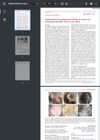
 Upadacitinib significantly improved both rheumatoid arthritis and alopecia areata in a patient.