 211 citations
,
February 2009 in “European journal of pharmaceutics and biopharmaceutics”
211 citations
,
February 2009 in “European journal of pharmaceutics and biopharmaceutics” Hair follicles help absorb and store topical compounds, aiding targeted drug delivery.
December 2020 in “Galen Medical Journal” Alopecia patients have more mast cells in their scalps, especially in severe cases and older age, with alopecia areata showing the highest increase.
 December 2010 in “Faculty Opinions – Post-Publication Peer Review of the Biomedical Literature”
 New cells join the hair's dermal papilla during the growth phase, possibly affecting hair thickness.
12 citations
,
August 2002 in “Archives of Dermatology” July 2024 in “LA Referencia (Red Federada de Repositorios Institucionales de Publicaciones Científicas)” Adipose tissue and eccrine gland displacement are common in certain alopecias but don't help differentiate between them.
 18 citations
,
January 2008 in “Journal of The American Academy of Dermatology”
18 citations
,
January 2008 in “Journal of The American Academy of Dermatology” Certain proteins and their receptors are more active during the growth phase of human hair and could be targeted to treat hair disorders.
87 citations
,
January 1999 in “British Journal of Dermatology” Trichoblastic fibroma and basal cell carcinoma are similar but different from trichoepithelioma.
March 2026 in “Journal of Investigative Dermatology” Folliculin slows hair growth, and blocking it might help treat hair loss.
34 citations
,
January 1998 in “Archiv für Pathologische Anatomie und Physiologie und für Klinische Medicin” Trichoblastomas may mimic fetal skin development by having many Merkel cells, unlike adult skin.
21 citations
,
June 2004 in “Experimental Dermatology” Ber‐EP4 marks cells related to the secondary hair germ in hair follicles.
January 1992 in “Biology of the Cell” Retinoic acid receptors are important for hair follicle development.
3 citations
,
March 1966 in “Archives of Dermatology” Nevoid basal cell carcinomas start in the skin's top layer and hair follicles.
25 citations
,
October 1962 in “Journal of Ultrastructure Research” The hair follicle structure is more complex than thought, with new findings on protein formation.
May 2025 in “Indian Dermatology Online Journal” Trichoscopy is crucial for diagnosing rare genetic hair disorders.
 March 2024 in “IP Indian journal of clinical and experimental dermatology”
 Giant solitary trichoepithelioma is a rare, usually non-cancerous hair follicle tumor that can sometimes turn into skin cancer.
 September 2025 in “Dermatology Online Journal”
 Biopsy is crucial for diagnosing unusual hair loss causes like lymphoma.
January 2022 in “Clinical Cases in Dermatology” A 47-year-old man was diagnosed with a specific type of hair loss and advised to use certain medications and avoid hair transplants.
 July 2014 in “Plastic and Reconstructive Surgery”
 Hair follicles stored in a special medium had the highest survival rate, and "plucked" follicles and follicular units showed better growth after transplant.
 June 2023 in “Medeniyet medical journal”
 People with alopecia areata have similar retinal structures but thicker choroidal regions compared to those without the condition.
 1 citations
,
March 2014 in “Turkderm”
1 citations
,
March 2014 in “Turkderm” Trichoscopy helps tell different hair loss types apart using specific scalp and hair patterns.
33 citations
,
January 2000 in “Acta Oto-Laryngologica” Epidermal growth factor increases extra hair cells in newborn rat ears.
7 citations
,
January 2015 in “PubMed” Ultrasound biomicroscopy is useful for viewing hair follicles in alopecia areata.
 April 2025 in “Veterinary Dermatology”
 Dermoscopy is useful for identifying skin lesions in dogs, with specific features distinguishing infundibular keratinising acanthomas from follicular cysts.
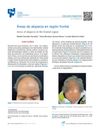 January 2025 in “Revista del Centro Dermatológico Pascua”
 Early diagnosis and treatment can help manage fibrosing alopecia in older women.
 2 citations
,
August 2022 in “BMC veterinary research”
2 citations
,
August 2022 in “BMC veterinary research” Hair follicle stem cells from Arbas Cashmere goats can become fat, nerve, and liver cells.
 April 2023 in “Journal of Investigative Dermatology”
 The study found that aging hair follicle stem cells change behavior, leading to hair loss, but drugs targeting these cells may help restore hair growth.
 December 2023 in “International Journal of Medical Arts”
 Transplanted hair follicles show significant changes after FUE, needing more research.
 January 2022 in “Autopsy and Case Reports”
 A man had a non-cancerous neck tumor related to hair follicles removed with no return of the tumor.
 December 2013 in “Open Access Macedonian Journal of Medical Sciences”
 A woman's excessive hair growth and high testosterone were caused by a rare ovarian tumor, which was successfully treated with surgery.