85 citations
,
November 2004 in “Journal of the American Academy of Dermatology” The 308-nm excimer laser helps hair regrowth in some alopecia areata cases but not all.
 3 citations
,
June 2022 in “Dermatology and therapy”
3 citations
,
June 2022 in “Dermatology and therapy” A new botanical treatment improved hair growth and symptoms in lichen planopilaris patients.
 September 2024 in “Portuguese Journal of Dermatology and Venereology”
 CCCA and LPP may be related hair loss conditions influenced by genetics and environment, needing early treatment.
 September 2022 in “Tropical grasslands-Forrajes tropicales”
 Leucaena feed helps farmers grow larger cattle herds and is good for fattening, but its safety for breeding cows is unclear.
May 2026 in “Phytomedicine” 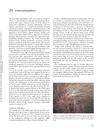 April 2012 in “Informa Healthcare eBooks”
 Lichen planopilaris is a rare, chronic condition causing hair loss, mainly in middle-aged women, and early treatment is important to prevent permanent baldness.
5 citations
,
November 2009 in “New Zealand journal of psychology” Future anxiety about male pattern baldness is linked to personality traits and social perceptions.
22 citations
,
July 2017 in “Australasian journal of dermatology” Hair transplantation can effectively restore hair in patients with stable lichen planopilaris or frontal fibrosing alopecia.
10 citations
,
January 2016 in “ACG Case Reports Journal” Long-term Cape Aloe use causes harmless colon pigmentation that can help detect polyps.
 May 2022 in “Journal of pharmacognosy and phytochemistry”
 The evaluation of Creeping Daisy leaves found important characteristics and compounds that support its use in medicine.
36 citations
,
July 1996 in “The journal of investigative dermatology/Journal of investigative dermatology” Mice with the 'lanceolate hair' mutation have abnormal hair and skin similar to human Netherton's syndrome.
June 2025 in “British Journal of Dermatology” A rare dual diagnosis of alopecia areata and lichen planopilaris requires thorough evaluation for effective treatment.
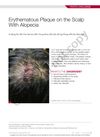
The woman has a scalp condition causing hair loss.
 1 citations
,
July 2018 in “Elsevier eBooks”
1 citations
,
July 2018 in “Elsevier eBooks” FAPD and possibly CCCA may be AGA subtypes, and treatments combining antiandrogens, hair growth agents, hair transplants, and anti-inflammatories could be effective.
 7 citations
,
August 2021 in “Journal of the European Academy of Dermatology and Venereology”
7 citations
,
August 2021 in “Journal of the European Academy of Dermatology and Venereology” Early treatment of fibrosing alopecia in a pattern distribution may improve outcomes.
9 citations
,
July 1993 in “Archives of dermatology” Pityriasis amiantacea is a scalp condition with thick, greasy scales and sometimes hair loss.
 18 citations
,
November 2012 in “Australasian Journal of Dermatology”
18 citations
,
November 2012 in “Australasian Journal of Dermatology” A 66-year-old man with a rare case of male frontal fibrosing alopecia did not regrow hair despite treatment.
 29 citations
,
January 2003 in “Dermatology”
29 citations
,
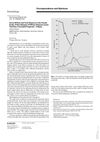
January 2003 in “Dermatology” The condition called 'acute diffuse and total alopecia of the female scalp' is actually a known condition named alopecia areata incognita.
 May 2024 in “AlQalam Journal of Medical and Applied Sciences”
 Salmon patches on the neck may relate to the severity and recurrence of alopecia areata.
 January 2025 in “FASKES Jurnal Farmasi Kesehatan dan Sains”
 Erythrina subumbrans leaves may help treat hair loss.
 1 citations
,
December 2017 in “Anais Brasileiros de Dermatologia”
1 citations
,
December 2017 in “Anais Brasileiros de Dermatologia” Frontal fibrosing alopecia can mimic traction alopecia but has distinct features like facial papules and eyebrow thinning.
Lichen planopilaris and frontal fibrosing alopecia are likely the same disease with different clinical appearances.
 February 2013 in “Journal of the American Academy of Dermatology”
 A woman's hair loss looked like a different condition due to her hairstyle, and treatment stopped further hair loss but didn't regrow hair.
 January 2021 in “International journal of dermatology, venereology and leprosy sciences”
 Trichoscopy shows black dots, yellow dots, and empty follicles are common in Alopecia Areata, with broken and exclamation mark hair as typical patterns.
February 2026 in “International Journal of Dermatology” Experts recommend specific treatments for alopecia areata based on age and severity, emphasizing the need for better treatments and acknowledging its psychological impact.
2 citations
,
May 2017 in “Journal of the American Academy of Dermatology” Tofacitinib helped a 19-year-old regrow hair after other treatments failed.
 28 citations
,
March 2017 in “African Journal of Traditional Complementary and Alternative Medicines”
28 citations
,
March 2017 in “African Journal of Traditional Complementary and Alternative Medicines” Linseed oil effectively speeds up burn wound healing.
275 citations
,
November 2002 in “International Journal of Dermatology” Alopecia areata mainly affects young people and has significant psychological impacts, especially in males.
 3 citations
,
February 2022 in “Frontiers in Genetics”
3 citations
,
February 2022 in “Frontiers in Genetics” The LncRNA AC010789.1 slows down hair loss by promoting hair follicle growth and interacting with miR-21 and the Wnt/β-catenin pathway.