 December 2024 in “Journal of Population Therapeutics and Clinical Pharmacology”
 Rosemary and kalonji seeds can improve hair health and treat hair conditions.
 November 2024 in “Journal of Young Pharmacists”
 Siddha medicine helped a child regrow hair lost from alopecia areata.
 August 2024 in “World Journal of Biology Pharmacy and Health Sciences”
 Ayurvedic treatment effectively manages alopecia areata with fewer side effects and relapses.
 July 2024 in “International Journal of Dermatology Venereology and Leprosy Sciences”
 Minoxidil can help regrow hair in people with alopecia areata.
 February 2024 in “International Journal of Research Publication and Reviews”
 Ayurvedic treatment can effectively reduce symptoms of alopecia areata.
 January 2024 in “International Journal of Homoeopathic Sciences”
 Individualized homeopathic treatment can effectively treat alopecia areata.
 December 2023 in “Medical & Clinical Case Reports Journal”
 Ayurvedic treatment, including leech therapy, can effectively regrow hair in alopecia areata.
 August 2023 in “International journal of research in Ayurveda and pharmacy”
 Ayurveda can prevent hair fall and promote regrowth using herbs and lifestyle changes.
 June 2023 in “Dermatology and therapy”
 Doctors in the Middle East need better treatments and more knowledge about new therapies for hair loss condition Alopecia Areata.
 January 2023 in “International journal of homoeopathic sciences”
 The document says homoeopathic treatments are good for hair regrowth in alopecia areata but doesn't give proof.
 November 2022 in “Journal of The Pakistan Dental Association”
 Oral ulcers are common in SLE patients and often link to other symptoms.
March 2022 in “Biomedical Journal of Scientific & Technical Research” Improving mitochondrial health may help alleviate symptoms like chronic fatigue and depression.
 January 2022 in “The Egyptian Journal of Hospital Medicine”
 Higher IL-21 levels may help predict alopecia areata activity.
 November 2021 in “International Journal for Research in Applied Science and Engineering Technology”
 Lyophilized platelet-rich plasma is beneficial and effective for various medical treatments, including tissue regeneration and hair regrowth.
 August 2021 in “Benha Journal of Applied Sciences”
 Stress can trigger and worsen vitiligo.
 September 2020 in “Research Square (Research Square)”
 Certain genes influence immunoglobulin levels in Chinese Holstein cows, which can improve calf health.
 February 2020 in “Drug Analytical Research”
 Magistral pharmacies had issues with production quality and dosage accuracy.
 January 2020 in “Journal of Cutaneous and Aesthetic Surgery”
 The congress was praised for its organization and educational value.
 December 2019 in “Buletin de psihiatrie integrativă”
 Skin treatments can improve both skin health and emotional well-being, but they require careful management of patient expectations and potential addiction risks.
 January 2019 in “Elsevier eBooks”
 Different hair disorders have specific treatments and outcomes, with some resolving on their own and others requiring medication or emotional support.
 July 2018 in “Elsevier eBooks”
 Some drugs can cause reversible hair loss, but certain chemotherapy drugs may lead to permanent hair loss; drugs can also change hair color and texture.
 November 2017 in “Pediatrics in Review”
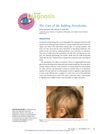
 A 4-year-old girl with hair loss was diagnosed with early-onset trichotillomania and improved with behavioral interventions.
 April 2016 in “Medical Acupuncture”
 The document concludes that hair loss in women is treated with medications, therapies, and surgery in Western medicine, and with acupuncture and herbs in Chinese medicine, but hereditary hair loss is hard to reverse.
 November 2015 in “European Journal of Inflammation”
 Cicatricial alopecia, a permanent hair loss condition, is mainly caused by damage to specific hair follicle stem cells and abnormal immune responses, with gene regulator PPAR-y and lipid metabolism disorders playing significant roles.
 January 2015 in “Przegla̧d dermatologiczny”
 Intralesional triamcinolone is the most effective treatment for alopecia areata, followed by excimer light therapy, and then topical minoxidil. The scalp responds better to treatment than the beard area.
Three Indian medicinal plant compounds help hair growth.
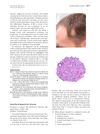
The man has Temporal Triangular Alopecia, a stable, non-scarring hair loss condition best treated with hair transplantation.
 August 2010 in “The Journal of Dermatology”
 The document concludes that low-dose acne treatment is most suitable for moderate acne, with high patient satisfaction and low relapse rates.
 May 2010 in “Journal of the Dermatology Nurses' Association”
 Cicatricial alopecia causes permanent hair loss and is treated to relieve symptoms and stop progression.
 September 2009 in “Journal of the Dermatology Nurses’ Association”
 Hair loss significantly affects quality of life, wet combing is better than visual inspection for finding head lice, many with oral lichen planus have allergies, and wet wraps with steroids quickly improve itchy skin conditions.