4 citations
,
April 1989 in “The Journal of Dermatology” Trichohyalin granules help inner root sheath cells in hair follicles harden by integrating with keratin filaments.
 July 2025 in “Journal of Investigative Dermatology”
 Miniaturized hair follicles in androgenetic alopecia show abnormal mitochondrial activity and damage.
September 2025 in “International Journal of Molecular Sciences” Bacteroides fragilis and Microbacterium sp. T32 may be linked to autoimmune activity in Hashimoto's thyroiditis and alopecia areata.
Defective protein folding due to a mutation is key in ANE syndrome.
 January 2025 in “New Journal of Chemistry”
 Hollow mesoporous organosilica nanoparticles are promising for biomedical use.
3 citations
,
October 2021 in “Neuroscience Letters” 54 citations
,
December 1999 in “Journal of Investigative Dermatology Symposium Proceedings” 63 citations
,
November 2015 in “Pharmaceutical Sciences” Nanophytosomes can improve the delivery and effectiveness of herbal medicines like Rutin.

Injecting follicular cells into skin can lead to the formation of new hair follicles.
April 2023 in “Journal of Investigative Dermatology” CD206+ macrophages are crucial for hair growth in alopecia areata treatment.
August 2023 in “Journal of Investigative Dermatology” Skin organoids can regenerate hair by forming specific cell units with certain signals.
17 citations
,
October 2005 in “Journal of Biological Chemistry” Early involution in Hirosaki hairless rats' mammary glands is linked to a unique modification of STAT5A.
 12 citations
,
November 2014 in “Bioscience, Biotechnology, and Biochemistry”
12 citations
,
November 2014 in “Bioscience, Biotechnology, and Biochemistry” Genetically modifying a bacteria and changing its growth conditions significantly increased the production of a chemical called dipicolinic acid.
13 citations
,
August 2021 in “Frontiers in Bioengineering and Biotechnology” Exosomes from fat stem cells can reduce fat cell formation.
135 citations
,
December 2006 in “PLoS Medicine” Hyaluronate fragments can help reverse skin thinning by working with the CD44 receptor.
16 citations
,
April 2024 in “Proceedings of the National Academy of Sciences” HDAC4 and HDAC7 are crucial for Th17 cell development and could be targeted to treat inflammatory diseases.
July 2026 in “Biochemical and Biophysical Research Communications”  6 citations
,
February 2025 in “Scientific Reports”
6 citations
,
February 2025 in “Scientific Reports” MEGA PROTAC improves prediction and ranking of protein complexes better than existing methods.
27 citations
,
April 2004 in “Biochemical and Biophysical Research Communications” Two new gene clusters important for hair formation were found on human chromosome 11.
9 citations
,
October 2025 in “MedComm” PROTACs offer new ways to treat hard-to-target diseases, with promising drugs for cancer in advanced trials.
 9 citations
,
March 2019 in “Scientific reports”
9 citations
,
March 2019 in “Scientific reports” Temporary ROS production in cultured human hair follicles promotes growth and stem cell activation.
 January 2023 in “Methods in molecular biology”
 ROP GTPase helps control the growth of pollen tubes and root hairs by managing cell structure and movement.
 9 citations
,
July 2001 in “Cell”
9 citations
,
July 2001 in “Cell” Cells from certain embryo parts can induce head formation in another embryo, involving complex signaling pathways.
10 citations
,
August 1998 in “Journal of Investigative Dermatology” 135 citations
,
October 1997 in “Journal of biological chemistry/The Journal of biological chemistry” Trichohyalin is modified by enzymes to form strong structures in hair cells.
 12 citations
,
August 2018 in “Journal of Dermatological Science”
12 citations
,
August 2018 in “Journal of Dermatological Science” Scientists made stem cells that can grow hair by adding three specific factors to them.
May 2024 in “The Journal of Immunology” Alopecia Areata can develop without perforin-mediated cytolysis.
24 citations
,
January 2023 in “Cancer Research” AMPK activation may reduce melanoma risk in red-haired individuals.

Amino acid storage proteins are essential for maintaining stem cells in female fruit flies.
 130 citations
,
September 2018 in “Cell Reports”
130 citations
,
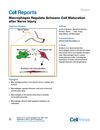
September 2018 in “Cell Reports” Macrophages help heal nerves by aiding the maturation of Schwann cells and are important for nerve repair.