
An infant with a zinc deficiency skin disorder improved with zinc treatment.
 October 2022 in “Veterinária notícias/Veterinária Notícias”
 A 5-year-old Akita with a rare skin condition improved significantly after treatment.
 July 2021 in “Scholars Journal of Medical Case Reports”
 Woodhouse-Sakati Syndrome can include unique symptoms like liver issues and low growth hormone.
 October 2018 in “Journal of Clinical Research in Pediatric Endocrinology”
 Children with classic congenital adrenal hyperplasia have thicker heart fat and more heart and blood vessel risk factors, especially if their condition is not well-controlled.

Bovines can have rare inherited skin diseases with specific symptoms like hair loss, fragile skin, and abnormal porphyrin buildup.

Hormones, especially testosterone and DHT, are key for penis development and function, and testosterone therapy may help with erectile dysfunction in those with low levels.
 February 2016 in “The journal of allergy and clinical immunology/Journal of allergy and clinical immunology/The journal of allergy and clinical immunology”
 A new TP63 mutation was found in a baby with EEC syndrome, showing the need for TREC testing to check for immune issues.
 November 2014 in “Elsevier eBooks”
 Gene mutations can cause problems in male genital development.
 January 2013 in “International journal of trichology”
 Vitamin D3 and its receptor are important for hair growth, and understanding receptors could help treat hair graying and skin cancer.
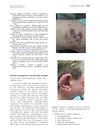
A 72-year-old man was diagnosed with a rare skin form of Rosai-Dorfman disease after years of misdiagnosis.
 November 2011 in “Pediatric dermatology”
 Marie-Unna Hereditary Hypotrichosis is a rare genetic condition causing sparse hair growth, requiring specific recognition for proper care.
 February 2010 in “Journal of The American Academy of Dermatology”
 Surgery on a baby with a skin disorder improved eyelid position and eye health.
 February 2010 in “Journal of The American Academy of Dermatology”
 A woman's nail separation was likely caused by poor blood flow, and a treatment for similar conditions might help.
 February 2010 in “Journal of The American Academy of Dermatology”
 Mimicking growth factors in a topical solution can prolong hair growth phase and reduce hair loss without side effects.
 November 2009 in “Medical & surgical dermatology”
 The document concludes that Borrelia afzelii causes a skin condition in France, a gene is linked to hair loss in Caucasian women, and various genetic mutations affect skin diseases.
 February 2009 in “Journal of the American Academy of Dermatology”
 Transverse sections are better for non-scarring hair loss, vertical sections are better for lichen planopilaris, and either method works for other scarring hair loss types.
 April 2008 in “Expert review of dermatology”
 Mutations in the P2RY5 gene cause hereditary woolly hair.
 July 1997 in “Journal of Cutaneous Medicine and Surgery”
 Finasteride significantly increases scalp hair and prevents hair loss in young and middle-aged men.
 January 1982 in “Journal of The American Academy of Dermatology”
 Experts discussed treatments for skin conditions in children, emphasizing hydration, cautious medication use, and early intervention for infections.
 94 citations
,
July 2020 in “European Journal of Human Genetics”
94 citations
,
July 2020 in “European Journal of Human Genetics” The guidelines ensure accurate genetic testing and reporting for 21-hydroxylase deficiency.
 45 citations
,
January 2010 in “Journal of Veterinary Medical Science”
45 citations
,
January 2010 in “Journal of Veterinary Medical Science” A gene mutation causes curly hair and hair loss in rats.
 7 citations
,
May 2010 in “British Journal of Dermatology”
7 citations
,
May 2010 in “British Journal of Dermatology” Women treated with X-ray for scalp fungus as children had a higher chance of hair loss, especially with higher radiation doses and severe fungus infections.
 August 2012 in “Expert Review of Dermatology”
 Men with early hair loss may have a higher risk of enlarged prostate and possibly prostate cancer due to shared hormonal factors.
 18 citations
,
August 2012 in “Cutaneous and Ocular Toxicology”
18 citations
,
August 2012 in “Cutaneous and Ocular Toxicology” People with alopecia areata have higher insulin resistance.
 1 citations
,
January 2015 in “Case reports in endocrinology”
1 citations
,
January 2015 in “Case reports in endocrinology” Women with nonclassical congenital adrenal hyperplasia may have a higher risk of fertility issues and miscarriages, and should get genetic counseling.
 9 citations
,
July 2021 in “Dermatology and Therapy”
9 citations
,
July 2021 in “Dermatology and Therapy” New treatments for epidermolysis bullosa show promise in improving patients' lives, but a cure is still not available.
 24 citations
,
January 2000 in “Dermatology”
24 citations
,
January 2000 in “Dermatology” Gene linked to common hair loss found, may lead to new treatments.
 5 citations
,
October 2019 in “The journal of investigative dermatology/Journal of investigative dermatology”
5 citations
,
October 2019 in “The journal of investigative dermatology/Journal of investigative dermatology” The research linked PLCD1 gene variants to the development of trichilemmal cysts.
 11 citations
,
January 2016 in “The Journal of Sexual Medicine”
11 citations
,
January 2016 in “The Journal of Sexual Medicine” Young women with nonclassic congenital adrenal hyperplasia may experience worse sexual function and mild depression compared to healthy women.
 5 citations
,
June 2020 in “Journal of Endocrinological Investigation”
5 citations
,
June 2020 in “Journal of Endocrinological Investigation” Women with congenital adrenal hyperplasia (CAH) have more sexual function issues than those with polycystic ovary syndrome (PCOS), but physical activity can improve sexual functioning in all women.