January 2008 in “Linchuang pifuke zazhi” Betamethasone activates and increases the growth of certain skin cells from hair follicles.
33 citations
,
August 1993 in “FEBS Letters” A new enzyme in rats may help regulate hair growth.
 16 citations
,
January 2017 in “Acta dermatovenerologica Alpina, Pannonica et Adriatica (Tiskana izd.)”
16 citations
,
January 2017 in “Acta dermatovenerologica Alpina, Pannonica et Adriatica (Tiskana izd.)” A patient with complete hair loss regrew all her hair using tofacitinib.
 77 citations
,
January 1980 in “Carcinogenesis”
77 citations
,
January 1980 in “Carcinogenesis” TPA is about 50 times more effective at promoting tumors than MZ.
6 citations
,
November 2020 in “JAAD Case Reports” Tofacitinib may help treat both alopecia areata and inflammatory bowel disease.
 March 2025 in “Journal of Cosmetic Dermatology”
 Botulinum toxin type A may widen certain arteries, but more research is needed.
February 2020 in “Oncology Times” Antibody drug conjugates show promise in targeting cancer cells while reducing harm to healthy cells.
1 citations
,
September 2019 in “DOAJ (DOAJ: Directory of Open Access Journals)” Using a person's own fat cells can help regrow hair after injury.
Acitretin improved monilethrix symptoms temporarily, but they returned after stopping treatment.
2 citations
,
March 2025 in “International Journal of Dermatology” Tralokinumab successfully treated alopecia areata in a patient with atopic dermatitis.
 April 2026 in “Antibodies”
 The role of antibodies in alopecia is unclear, but JAK inhibitors show promise for treatment.
Stress can cause hair loss and trigger autoimmunity by damaging hair follicle cells.
2 citations
,
June 2024 in “Medical Journal of Babylon” Higher CD8+ T cell levels are linked to Alopecia areata in Iraqi patients.
37 citations
,
December 1995 in “Journal of Cell Science” Nexin 1 may help control hair growth.
April 2026 in “Meditsinskiy sovet = Medical Council” Tofacitinib and baricitinib are similarly effective and safe for alopecia areata, but baricitinib works faster.
December 2013 in “Pump Industry Analyst” The method effectively delivers vaccines through the skin without needles.
1 citations
,
May 2025 in “Clinical Reviews in Allergy & Immunology”  January 2024 in “Skin Research and Technology”
 Oral tofacitinib may be an effective future treatment for children with severe alopecia areata, but more research is needed.
 November 2023 in “Materials Today Bio”
 The new treatment using nanoparticles with ISX9 can effectively regrow hair without major side effects.
31 citations
,
October 1992 in “PubMed” A mycobacterial protein shares a similar region with a human skin protein, possibly affecting skin diseases.
May 2025 in “Nonlinear Analysis Real World Applications” Reducing CD8+ T cell growth can stabilize alopecia areata.
April 2025 in “Materials Today Bio” A new treatment using gold nanoclusters can safely reduce unwanted hair growth.
36 citations
,
August 2016 in “The Plant cell” A specific enzyme is crucial for the bean plant's relationship with certain beneficial soil bacteria and fungi.
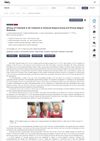
Tofacitinib may effectively treat hair loss and improve symptoms in autoimmune conditions like alopecia areata and Sjögren's syndrome, but long-term treatment might be necessary.
Both treatments for localized alopecia areata are equally effective.
 October 2023 in “Frontiers in medicine”
 Targeted immunotherapy could be a promising new treatment for hair regrowth.
15 citations
,
June 2015 in “PLoS ONE” Thymosin beta-4 promotes hair growth in mice.
December 2025 in “Drug Design Development and Therapy” Anlotinib combined with taxane/capecitabine is more effective than bevacizumab for treating HER-2 negative metastatic breast cancer.
 2 citations
,
November 2023 in “Acta dermato-venereologica”
2 citations
,
November 2023 in “Acta dermato-venereologica” Tofacitinib is effective and safe for treating alopecia areata with a good drug survival rate.
8 citations
,
July 2003 in “Annals of the Rheumatic Diseases” A 13-year-old girl with various symptoms was successfully treated with an antibiotic called co-trimoxazole.