 10 citations
,
December 2005 in “Aktuelle Dermatologie”
10 citations
,
December 2005 in “Aktuelle Dermatologie” Alfatradiol (0.025%) is an effective and safe treatment for hair loss in both women and men.
1 citations
,
February 2025 in “Archives of Dermatological Research” Using Excimer light with topical steroids is the most effective treatment for alopecia areata.
 7 citations
,
January 2019 in “Brazilian Journal of Pharmaceutical Sciences”
7 citations
,
January 2019 in “Brazilian Journal of Pharmaceutical Sciences” Maidenhair fern extract reduced anxiety and depression in rats and may work due to its antioxidant and anti-inflammatory properties.
1 citations
,
January 2014 The emulgel formulation F6 released more Minoxidil than the gel formulation F1.
 May 2025 in “Journal of the Egyptian Womenʼs Dermatologic Society”
 Vitamin D3 is a safe and effective alternative to steroids for treating alopecia areata, with fewer side effects.
 March 2005 in “Journal of The American Academy of Dermatology”
 The two lotions used day and night may be a good alternative to minoxidil for hair loss treatment with better cosmetic effects and tolerance.
April 2023 in “Journal of Investigative Dermatology” Patients were very satisfied with the multidisciplinary group visit for alopecia areata.
3D models from confocal microscopy improve melanoma detection on sun-damaged skin.
 July 2013 in “Our Dermatology Online”
 Minoxidil 2% is more effective than tacrolimus 0.1% for hair regrowth in mild to moderate patchy hair loss, and combining both might give better results.
PMEE may help reverse greying hair by boosting melanin production.
7 citations
,
March 2000 in “CRC Press eBooks”  November 2025 in “SKIN The Journal of Cutaneous Medicine”
 Upadacitinib effectively treats severe alopecia areata and is safe.
July 2026 in “Asian Journal of Pharmaceutical Sciences” A new microneedle treatment for vitiligo improves pigmentation by targeting immune regulation and promoting melanin transfer.
 August 2016 in “Journal of Investigative Dermatology”
 Blocking the CCR5 receptor may be a new way to treat hair loss from alopecia areata.
 June 2026 in “Frontiers in Immunology”
 Upadacitinib effectively treated severe atopic dermatitis, vitiligo, and alopecia areata in one patient.
61 citations
,
January 2013 in “International Journal of Biological Macromolecules” Combining DHT and EDC improves the strength and stability of PADM scaffolds for tissue engineering.
 9 citations
,
June 2014 in “Nutrition and Cancer”
9 citations
,
June 2014 in “Nutrition and Cancer” Eclipta alba extract may work as an anticancer agent and help reverse drug resistance.
 April 2025 in “Journal of Investigative Dermatology”
 Two microRNAs in stem cell exosomes help treat hair loss by targeting a specific signaling pathway.
 December 2025 in “PubMed”
 The minoxidil and finasteride foam remains stable and effective for 180 days at room temperature.
July 2026 in “Journal of the American Academy of Dermatology”  5 citations
,
January 2021 in “Inflammatory Bowel Diseases”
5 citations
,
January 2021 in “Inflammatory Bowel Diseases” Tofacitinib improved ulcerative colitis, skin ulcers, and hair loss in a patient who didn't respond well to other treatments.
The combination therapy improved hair growth and thickness in people with androgenetic alopecia.
 1 citations
,
August 2018 in “Journal of The American Academy of Dermatology”
1 citations
,
August 2018 in “Journal of The American Academy of Dermatology” Dutasteride and minoxidil mesotherapy effectively treats hair loss with minimal side effects.
 April 2024 in “Meždunarodnyj vestnik veterinarii”
 Deltsid 7.5 is the most effective treatment for bovine psoroptosis.
August 2024 in “Scientia Horticulturae” AMF initially inhibits but later promotes citrus root hair growth by regulating auxin levels.
 October 2023 in “Bioactive Materials”
 The new hair loss treatment combining nitric oxide and minoxidil in a special carrier is effective for hair regrowth.
53 citations
,
August 2014 in “Cochrane library” Methotrexate is not proven effective for inducing remission in ulcerative colitis.
January 2025 in “International Journal of Research in Medical Science” Fluoric Acid helps regrow hair and reduces relapse in Alopecia Areata.
July 2026 in “Experimental Dermatology” Minoxidil sulfate helps hair regrowth in alopecia areata by enhancing anti-inflammatory effects and reducing mitochondrial stress.
 9 citations
,
May 2001 in “Journal of the American Veterinary Medical Association”
9 citations
,
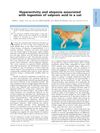
May 2001 in “Journal of the American Veterinary Medical Association” A cat's hyperactivity and hair loss were caused by eating valproic acid but improved after stopping access to the drug.