Sensory neuron remodeling and Merkel-cell changes in the skin happen independently.
Sensory neuron and Merkel cell changes in the skin happen independently during normal skin maintenance.
Sensory neuron remodeling and Merkel-cell changes happen independently during skin maintenance.
Sensory neuron and Merkel cell changes in the skin happen independently during normal skin maintenance.
46 citations
,
April 1987 in “Brain Research” Hair-follicle nerves in cats' spinal cords can be inhibited by GABA-related connections.
106 citations
,
February 2014 in “eLife” Lanceolate complexes in mouse hair follicles are essential for touch and depend on specific cells for maintenance and regeneration.
 February 2023 in “bioRxiv (Cold Spring Harbor Laboratory)”
 Merkel cells stabilize nerve endings in the skin, and they change independently of each other.
Sensory neuron changes and Merkel-cell changes in the skin happen independently during normal skin maintenance.
Sensory neurons and Merkel cells remodel at different rates during normal skin maintenance.
Sensory neuron and Merkel-cell changes in the skin happen independently during normal skin maintenance.

Hair follicle stem cells are crucial for touch sensation and proper nerve structure in mice.
 14 citations
,
October 2018 in “Brain Research Bulletin”
14 citations
,
October 2018 in “Brain Research Bulletin” Exosomes help nerve fibers grow by affecting specific cell signaling pathways.
 31 citations
,
November 2016 in “Cell Reports”
31 citations
,
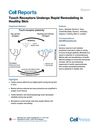
November 2016 in “Cell Reports” Touch sensitivity in mouse skin decreases during hair growth due to changes in touch receptors.
 65 citations
,
September 2010 in “Journal of the Neurological Sciences”
65 citations
,
September 2010 in “Journal of the Neurological Sciences” Kennedy's disease leads to muscle weakness and sensory issues, has no cure but manageable symptoms, and future treatments look promising.
11 citations
,
July 2015 in “Journal of Anatomy” SLVs help maintain muscle stretch sensitivity and could aid in treating hypertension and muscle spasticity.
660 citations
,
December 2011 in “Cell” Different hair follicles in the skin are innervated by unique combinations of mechanosensory neurons, crucial for touch sensation.
25 citations
,
January 2015 in “World journal of stem cells” Hair follicle stem cells can become different cell types and may help treat neurodegenerative disorders.
15 citations
,
January 2015 in “Skin Appendage Disorders” Increased scalp sweating in frontal fibrosing alopecia may be linked to local skin inflammation.
A new imaging method helps see and study touch nerve endings in mouse skin.
 115 citations
,
October 2003 in “Journal of Neuroscience”
115 citations
,
October 2003 in “Journal of Neuroscience” Aβ afferents do not sprout into the superficial spinal cord layers after nerve injury.
 17 citations
,
September 2014 in “PLoS ONE”
17 citations
,
September 2014 in “PLoS ONE” SK2 channels help control sensory signals in rat muscle spindles and hair follicles.
 January 2025 in “Nature Communications”
 Large-scale reconstructions enhance understanding of vibrissal sensory mapping in the brain.
79 citations
,
November 2010 in “Journal of Neuroscience” Hair clipping can trigger axon growth and changes in the skin.
63 citations
,
February 2010 in “Journal of Neurophysiology” Microstimulation of certain facial and mouth nerves can evoke specific sensations, while deeper nerves may require multiple stimulations to affect perception.
 81 citations
,
June 2014 in “Cold Spring Harbor perspectives in medicine”
81 citations
,
June 2014 in “Cold Spring Harbor perspectives in medicine” Skin has specialized touch receptors that can tell different sensations apart.
 21 citations
,
April 1990 in “Journal of comparative neurology”
21 citations
,
April 1990 in “Journal of comparative neurology” The study found that nerve signals are stronger when there are more connection points, but not necessarily denser, along the nerve's path in the spine.
 5 citations
,
March 2023 in “bioRxiv (Cold Spring Harbor Laboratory)”
5 citations
,
March 2023 in “bioRxiv (Cold Spring Harbor Laboratory)” Dynamic, light touch is sensed through a common mechanism involving Piezo2 channels in sensory axons.
 December 2025 in “Nature Communications”
 Club-like receptors detect light touch but not whisking.
 6 citations
,
February 2022 in “The journal of neuroscience/The Journal of neuroscience”
6 citations
,
February 2022 in “The journal of neuroscience/The Journal of neuroscience” Deleting the PTEN gene in mice causes nerve cells to grow larger and heal better after injury, but may cause overgrowth and hair loss in older mice.
 June 2020 in “Journal of Investigative Dermatology”
 Scientists successfully grew mini hair follicles using human skin cells, which could help treat baldness.