17 citations
,
January 2013 in “Journal of Cutaneous Pathology” The onychodermis helps anchor the nail bed and may aid in nail formation.
 4 citations
,
December 2022 in “The journal of investigative dermatology/Journal of investigative dermatology”
4 citations
,
December 2022 in “The journal of investigative dermatology/Journal of investigative dermatology” Human scalp hair follicles can produce hormones and have a system similar to a brain-body communication network.
June 2014 in “Toxicologie analytique et clinique/Annales de toxicologie analytique” Hair analysis can be unreliable due to external contamination and varying drug concentrations.
January 2015 in “International Journal of Nanomedicine” Anionic squarticles can effectively counteract amitriptyline overdose, improving survival rates.
8 citations
,
October 2024 in “Frontiers in Cell and Developmental Biology” Telocytes help organize male reproductive tissues and their changes can lead to diseases.
April 2026 in “Research Square” 30 citations
,
July 1993 in “Journal of Investigative Dermatology” 87 citations
,
February 2000 in “Journal of Investigative Dermatology” Stem cells in developing hair follicles move to specific areas as they mature.
1 citations
,
January 1993 in “Skin Pharmacology and Physiology” Hair growth drugs and epidermal growth factor do not change the calcium binding site gradient in hair follicles.
The data suggests that dosing differences can help manage spasticity in patients with upper motor neuron dysfunction.
9 citations
,
October 1994 in “Brain Research” Fetal sheep develop skin nerve pathways and responses to touch and heat between 75 and 134 days of gestation.
7 citations
,
September 1980 in “Zoological Journal of the Linnean Society” Dendritic cells help regulate skin development and hair growth in mice.
141 citations
,
June 2002 in “Philosophical Transactions of the Royal Society B Biological Sciences” The study revealed how specific genes and proteins control root hair growth in plants.
 29 citations
,
January 2021 in “Translational Psychiatry”
29 citations
,
January 2021 in “Translational Psychiatry” The research suggests that Tourette syndrome is linked to both brain signaling and immune system pathways.
 1 citations
,
July 2016 in “Livestock science”
1 citations
,
July 2016 in “Livestock science” Nerve growth factor helps cashmere goat hair cells grow and is more active during the hair growth phase.
46 citations
,
October 2018 in “Neuroscience Bulletin” 44 citations
,
October 2016 in “Epilepsia” 2-DG reduces seizures by enhancing brain inhibition through specific receptor activation.
 April 2019 in “Journal of Investigative Dermatology”
 Non-coding RNA boosts retinoic acid production and signaling, aiding regeneration.
 May 2023 in “bioRxiv (Cold Spring Harbor Laboratory)”
 Telocytes, cells with long extensions, are vital for hair growth because they produce Wnt signals, which are necessary for hair follicle regeneration.
March 2006 in “The FASEB Journal” Two methods improved nerve regeneration and touch recovery in skin grafts for burn patients.
260 citations
,
January 2020 in “Nature” Stress can cause hair to turn gray by depleting stem cells.
 August 2023 in “bioRxiv (Cold Spring Harbor Laboratory)”
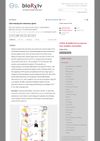
 The research found that specific stem cells maintain skin gland openings and that disrupting their activity can cause blockages or early cancer signs, indicating a need for targeted treatments.
January 2005 in “Zhonghua chuangshang guke zazhi” Human hair keratin is a promising material for nerve repair.
 67 citations
,
December 2009 in “Stem Cells”
67 citations
,
December 2009 in “Stem Cells” β-Catenin signaling is involved in brain cell growth after injury and could be a therapy target.
 4 citations
,
February 2020 in “Cell & tissue research/Cell and tissue research”
4 citations
,
February 2020 in “Cell & tissue research/Cell and tissue research” Hair follicle stem cells might help treat traumatic brain injury.
July 2026 in “Research Square” 13 citations
,
June 2023 in “Frontiers in Molecular Neuroscience” Blocking the KATP channel may help treat migraines.
25 citations
,
January 2013 in “Journal of Cell Science” Tenascin-C and tenascin-W help control stem cell movement and growth in whisker follicles.
 February 2025 in “Advanced Composites and Hybrid Materials”
 Glutamic acid microneedle patches promote better hair growth than traditional treatments.
March 2009 in “Chinese Journal of Dermatology” Melanocytes in the outer root sheath are likely stem cells that grow fast but stay immature.