 23 citations
,
January 2015 in “Journal of The American Academy of Dermatology”
23 citations
,
January 2015 in “Journal of The American Academy of Dermatology” People with myotonic dystrophy type 1 have a higher chance of getting skin tumors, including melanoma.
16 citations
,
January 1998 in “PubMed” Sun exposure and genetics increase skin cancer risk from precancerous lesions.
 April 2023 in “Australasian Journal of Dermatology”
 Lentiginous melanoma is most common on the face, especially the nose, cheek, and pre-auricular areas, with men more likely to have it on the scalp, ears, upper back, and trapezius, and women on the cheek and anterior arm. Sun damage is a key factor in its formation.
31 citations
,
March 1995 in “Journal of Investigative Dermatology” 
Melanocyte transplantation can safely restore skin color, especially in stable vitiligo, but must be chosen carefully based on the disease phase.
1 citations
,
May 2024 in “Pediatric Blood & Cancer” Trametinib can effectively treat severe kaposiform lymphangiomatosis when other treatments fail.
 August 2018 in “Journal of The American Academy of Dermatology”
 Regular follow-up visits, especially with dermatologists, can lower death rates for melanoma patients, with socioeconomic factors also affecting outcomes.
January 1990 in “대한피부과학회지” Peanut agglutinin staining helps differentiate malignant melanoma from nevocellular nevus.
 April 2016 in “Journal of Investigative Dermatology”
 The symposium showed that stem cells are key for understanding and treating skin diseases and for developing new skin models and therapies.
146 citations
,
February 2012 in “Journal of Clinical Investigation” Blocking Hedgehog signaling offers new treatment options for advanced basal cell carcinoma.
1 citations
,
October 2023 in “European Journal of Dermatology” Combining hair transplantation with PRP is more effective for treating hair loss than hair transplantation alone.
 4 citations
,
October 2012 in “Expert Review of Dermatology”
4 citations
,
October 2012 in “Expert Review of Dermatology” Dermoscopy greatly improves melanoma diagnosis and reduces unneeded surgeries.
 May 2015 in “Actas Dermo-Sifiliográficas”
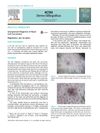
 A young man was unexpectedly diagnosed with basal cell carcinoma after a scalp examination and confocal microscopy.
 19 citations
,
January 2014 in “International Journal of Medical Sciences”
19 citations
,
January 2014 in “International Journal of Medical Sciences” Abnormal activation of hair follicle stem cells and Wnt/β-catenin signaling contributes to sebaceous neoplasms.
Adenophora Radix extract can promote hair growth and increase melanin in mice.
October 1998 in “Data Archiving and Networked Services (DANS)” Basal cell carcinoma cases are rising globally.
December 2021 in “Figshare” New therapies like JAK inhibitors and stem cells show promise for treating vitiligo.
14 citations
,
May 2022 in “Cell Reports” Basal cell carcinomas need extra mutations to grow from small to large tumors.
178 citations
,
April 2011 in “Journal of Clinical Investigation” Basal cell carcinomas in mice can start from hair follicle stem cells and other skin cell types, depending on signaling levels.
27 citations
,
May 2024 in “Clinical and Translational Medicine” Melanocyte stem cells are vital for skin and hair color and have potential in treating skin disorders and cancer.
4 citations
,
October 2019 in “Skin Appendage Disorders” Gefitinib can cause hair and eyebrow darkening.

Inhibiting AP-1 changes skin tumor types and affects tumor cell identity.
11 citations
,
February 1982 in “Mutation Research/Fundamental and Molecular Mechanisms of Mutagenesis” A new method can detect mutations in mice by observing changes in hair follicle cells.
10 citations
,
May 2023 in “iScience” Sox9 is crucial for hair follicle stem cells to become melanocytes instead of glial cells.
 59 citations
,
April 2016 in “Cell Reports”
59 citations
,
April 2016 in “Cell Reports” EdnrB signaling helps melanocyte stem cells regenerate and could be targeted to treat pigmentation issues.
164 citations
,
February 2010 in “Journal of Cell Science” Human dermal stem cells can become functional skin pigment cells.
 January 2025 in “American Journal of Stem Cells”
 Melanocyte stem cells hold promise for skin regeneration and treating pigmentation issues.
September 2023 in “Journal of the American Academy of Dermatology” Hispanic patients in the USA have lower survival rates for melanoma compared to non-Hispanic Whites.
7 citations
,
July 2013 in “Acta Biochimica Polonica” Chemotherapy reduces splenic melanin in mice.
1 citations
,
April 2020 in “Journal of the Endocrine Society” Immunotherapy with pembrolizumab significantly reduced cancer in a young woman with adrenocortical carcinoma.