 1 citations
,
September 2013 in “Mayo Clinic Proceedings”
1 citations
,
September 2013 in “Mayo Clinic Proceedings” A woman's hair loss was treated successfully with iron supplements for her iron deficiency.
 83 citations
,
April 1992 in “Clinical Endocrinology”
83 citations
,
April 1992 in “Clinical Endocrinology” Having enough iron improves the effectiveness of a specific hair loss treatment in women.
 March 2026 in “Dermatology and Therapy”
 Low-dose oral minoxidil helps improve hairline and eyebrow coverage in frontal fibrosing alopecia.
 24 citations
,
July 2017 in “Structure”
24 citations
,
July 2017 in “Structure” FGF9 controls which receptors it binds to through a process where two FGF9 molecules join, and changes in FGF9 can lead to incorrect receptor activation.
3 citations
,
December 2024 in “Stem Cell Reports” Low fucosylation boosts stem cell growth in the eye.
September 2012 in “DOAJ (DOAJ: Directory of Open Access Journals)” 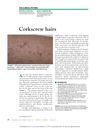 3 citations
,
April 2015 in “Cleveland Clinic Journal of Medicine”
3 citations
,
April 2015 in “Cleveland Clinic Journal of Medicine” The woman has scurvy and needs more vitamin C.
9 citations
,
April 2006 in “International Journal of Dermatology” DFMO may help control hair growth and treat cancer.
December 2018 in “International journal of women’s dermatology” FFA in young women is often missed, and no single treatment works best.
475 citations
,
October 2006 in “Proceedings of the National Academy of Sciences” Folliculin helps regulate energy and nutrient sensing, impacting Birt–Hogg–Dubé syndrome.
 June 2021 in “Asian Journal of Medical Sciences”
 Vitamin B12 deficiency can cause reversible skin darkening.
 September 2017 in “Journal of Clinical Dermatology”
 A growth factor cocktail with FGF9 and microneedling effectively increases hair density and diameter in hair loss patients.
January 2026 in “Journal of Crohn s and Colitis” High-dose IV iron is safe and effective for treating anaemia in IBD patients.
 March 2025 in “Clinical Cosmetic and Investigational Dermatology”
 The Tru9I variant in the VDR gene may influence alopecia areata risk and vitamin D levels.
Raising serum ferritin levels can improve symptoms like fatigue and hair loss, even if hemoglobin levels are normal.
2 citations
,
March 2019 in “PubMed” Fusidic acid successfully treated a rare scalp infection with hair regrowth and no recurrence after 6 months.
3 citations
,
January 2021 in “Molecular genetics & genomic medicine” The study found two new mutations in a Chinese patient with severe biotinidase deficiency.
5 citations
,
September 2019 in “The Open biomarkers journal” Linoleic acid (Vitamin F) can help protect against the harmful effects of acrylamide.
June 2026 in “Frontiers in Medicine” The excimer laser is a promising and safe treatment for frontal fibrosing alopecia.
 18 citations
,
September 2011 in “Livestock science”
18 citations
,
September 2011 in “Livestock science” Maternal Nano-Se supplements improve fetal hair follicle development in cashmere goats.
166 citations
,
November 2008 in “Expert Review of Endocrinology & Metabolism” Biotin and biotinidase are essential to prevent health issues, and deficiencies require lifelong supplementation.
July 2025 in “ALEXMED ePosters” Low levels of folic acid and ferritin may contribute to hair loss and scalp pain in women.
 7 citations
,
January 2009 in “Biological & pharmaceutical bulletin”
7 citations
,
January 2009 in “Biological & pharmaceutical bulletin” Ferrous Ferric Chloride may improve skin cell function and increase hair growth in mice.
April 2017 in “Leukemia research” Tofacitinib helped most teenagers in the study regrow hair with mild side effects.
12 citations
,
September 2011 in “BMJ Case Reports” Quick diagnosis and biotin treatment can dramatically improve biotinidase deficiency symptoms.
 June 2024 in “British Journal of Dermatology”
 Vitamin B supplements may reverse grey hair.
47 citations
,
November 2010 in “Vox Sanguinis” Iron supplements helped female blood donors with low iron avoid anaemia and return to donate again.
Women with hair loss may benefit from higher iron levels.
The 1298CC genotype in RA patients leads to higher methotrexate toxicity, while the 1298AA genotype results in better treatment response.