 November 2014 in “Prescriber”
 The 16-year-old girl with hair loss was successfully treated for alopecia areata, leading to significant hair regrowth.

Baricitinib helps regrow hair in teens with severe alopecia areata.
September 2025 in “British Journal of Dermatology” 16 citations
,
April 2021 in “Frontiers in Cell and Developmental Biology” New hair follicles could be created to treat hair loss.
 24 citations
,
January 2006 in “Skin Pharmacology and Physiology”
24 citations
,
January 2006 in “Skin Pharmacology and Physiology” Finasteride reverses early hair loss and promotes growth.
 January 1996 in “Springer eBooks”
 Hair can regrow if the sebaceous gland is intact, even if the hair root is removed.
 7 citations
,
January 2018 in “Journal of Tissue Viability”
7 citations
,
January 2018 in “Journal of Tissue Viability” An 80-year-old patient grew new hair on a wound, showing that elderly people can still regenerate hair.
 July 2022 in “Research Square (Research Square)”
 Huaier helps hair grow back and repairs tissue after cancer treatment.
84 citations
,
August 1991 in “British Journal of Dermatology” Most children treated with diphencyprone regrew some or all of their hair.
6 citations
,
September 2017  1 citations
,
August 1995 in “Archives of Disease in Childhood”
1 citations
,
August 1995 in “Archives of Disease in Childhood” Minoxidil helped a boy regrow his hair after intense chemotherapy for leukaemia.
 January 2022 in “Open Access Macedonian Journal of Medical Sciences”
 A 5-year-old boy with alopecia totalis had temporary hair regrowth with treatment but relapsed, highlighting the need for thorough investigation and holistic care.
October 2019 in “Innovative Journal of Medical and Health Science” Certain herbs may help treat hair loss by extending hair growth phases.
 85 citations
,
February 1989 in “Journal of The American Academy of Dermatology”
85 citations
,
February 1989 in “Journal of The American Academy of Dermatology” Children with loose anagen hair have easily pluckable hair due to root sheath problems, and it might improve without treatment.
Understanding hair follicle interactions can help treat male pattern baldness.
October 2013 in “The New Scientist” New hair growth from skin cells may help cure baldness.
 34 citations
,
December 1991 in “Annals of the New York Academy of Sciences”
34 citations
,
December 1991 in “Annals of the New York Academy of Sciences” The conclusion is that small hair follicles cause baldness in macaques, and treatments like antiandrogens and minoxidil can prevent hair loss and promote regrowth.
August 2013 in “International Wound Journal” Non-hairy skin cells might be used to regenerate hair, helping with baldness and skin wounds.
 December 2020 in “International journal of research in ayurveda and pharmacy”
 Eating well and avoiding synthetic hair products are key for healthy hair.
14 citations
,
January 1999 in “Dermatology” Hair shedding in children is normal and increases with age.
January 2026 in “Biochemical Pharmacology”  179 citations
,
April 2012 in “Nature Communications”
179 citations
,
April 2012 in “Nature Communications” Regenerated fully functional hair follicles using stem cells, with potential for hair regrowth therapy.
 92 citations
,
August 2017 in “Proceedings of the National Academy of Sciences of the United States of America”
92 citations
,
August 2017 in “Proceedings of the National Academy of Sciences of the United States of America” Newborn mouse skin cells can grow hair and this process can be recreated in adult cells to potentially help with hair loss.
December 2015 in “European Journal of Pediatric Dermatology” Newborns can experience temporary hair loss in bands, unrelated to sleeping position.
4 citations
,
January 2014 in “PubMed” Hair growth is controlled by cycles influenced by hormones and various signals.

A 5-year-old girl has sparse, dry, and brittle hair but is otherwise healthy.
 February 2023 in “Cosmoderma”
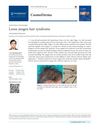
 Loose anagen hair syndrome causes easily shed hair but usually improves with time.
 1 citations
,
February 1988 in “The BMJ”
1 citations
,
February 1988 in “The BMJ” The document explains different hair and scalp conditions, including common hair loss after pregnancy or illness, drug-induced hair loss, hereditary excessive hair growth, patterned baldness, autoimmune hair loss, and permanent loss due to skin disease, with generally limited treatment options.
 1 citations
,
January 1967 in “The BMJ”
1 citations
,
January 1967 in “The BMJ” The document concludes that while some hair and scalp disorders can be treated, hair loss from destroyed follicles is permanent, and damaged hair can only regrow naturally.