 57 citations
,
November 1987 in “Pediatric Dermatology”
57 citations
,
November 1987 in “Pediatric Dermatology” Children's hair grows in different types from before birth through puberty, with growth rates and characteristics varying by age, sex, and race.
4 citations
,
December 2017 in “JAMA pediatrics”  30 citations
,
August 1983 in “Pediatric Clinics of North America”
30 citations
,
August 1983 in “Pediatric Clinics of North America” Most hair loss in children is caused by a few common conditions, and it's important to diagnose these properly and support the child's mental health.
1 citations
,
January 1997 in “Skin Pharmacology and Physiology” Premature infants have less elastic hair than full-term infants.
September 1993 in “Archives of Disease in Childhood” 10 citations
,
January 1985 in “PubMed” Low zinc levels in hair are linked to hair loss and diaper rash in infants.
1 citations
,
December 2023 Hair grows in cycles and changes with age, starting from fetal development.
14 citations
,
January 1999 in “Dermatology” Hair shedding in children is normal and increases with age.
1 citations
,
November 2010 in “Pediatric dermatology” An 11-month-old girl has no scalp or body hair, and the cause is being studied.
11 citations
,
June 2005 in “Postgraduate Medical Journal” Some infants temporarily grow scrotal hair, which usually disappears on its own without any health issues.
 6 citations
,
May 1993 in “Archives of Disease in Childhood”
6 citations
,
May 1993 in “Archives of Disease in Childhood” Children's hair loss can be caused by many factors, including autoimmune diseases, emotional stress, genetics, and infections, with treatment and prognosis varying.
 7 citations
,
November 2013 in “Pediatric and Developmental Pathology”
7 citations
,
November 2013 in “Pediatric and Developmental Pathology” Over half of the children had abnormal hair under a microscope, with many having genetic hair conditions.
 2 citations
,
August 1994 in “Archives of dermatology”
2 citations
,
August 1994 in “Archives of dermatology” A 19-month-old boy with a rare hair disorder showed mild improvement with treatment, but his family chose gentle hair care due to limited success.
 85 citations
,
February 1989 in “Journal of The American Academy of Dermatology”
85 citations
,
February 1989 in “Journal of The American Academy of Dermatology” Children with loose anagen hair have easily pluckable hair due to root sheath problems, and it might improve without treatment.
 January 2021 in “bioRxiv (Cold Spring Harbor Laboratory)”
 Mothers have more hair proteins than their children, with age-related differences in protein patterns, and some proteins in hair could indicate early childhood development.
 24 citations
,
January 2015 in “Current problems in dermatology”
24 citations
,
January 2015 in “Current problems in dermatology” The document concludes that accurate diagnosis of hair loss in children is crucial due to limited treatment options and the condition's psychological impact.
December 2015 in “European Journal of Pediatric Dermatology” Newborns can experience temporary hair loss in bands, unrelated to sleeping position.
 6 citations
,
October 1993 in “The journal of the Royal Society of Health”
6 citations
,
October 1993 in “The journal of the Royal Society of Health” Children's hair loss has many causes and requires careful diagnosis and personalized treatment, including emotional support.
August 2025 in “Brazilian Journal of Hair Health” Hair-related body dysmorphic disorder is common in hair loss patients and needs early recognition for proper treatment.
33 citations
,
January 2014 in “Pediatric Research” 45 citations
,
January 2010 in “Forensic science international” Neonatal hair can help determine drug exposure during pregnancy.
 May 2017 in “InTech eBooks”
 Early treatment of children's hair loss, which can be caused by various factors, is important due to its emotional impact.
5 citations
,
November 2012 in “Journal of the American Academy of Dermatology” A 3-year-old girl has short anagen syndrome, causing her hair to stay short.
 November 2017 in “Pediatrics in Review”
 A 4-year-old girl with hair loss was diagnosed with early-onset trichotillomania and improved with behavioral interventions.
264 citations
,
October 1958 in “Archives of Dermatology” A 4-year-old girl has a rare hair condition causing fragile, short hair.
January 2018 in “Acta dermato-venereologica” 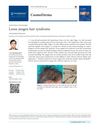 February 2023 in “Cosmoderma”
 Loose anagen hair syndrome causes easily shed hair but usually improves with time.
15 citations
,
August 2010 in “Annals of saudi medicine/Annals of Saudi medicine” Hair tourniquet syndrome is a rare condition where hair wraps around an infant's body part, needing quick removal to prevent damage.
Hair proteins in preschool children and their mothers could indicate developmental changes and health status.
 July 2018 in “Elsevier eBooks”
 The most common cause of hair loss in children is tinea capitis, followed by alopecia areata and telogen effluvium.