Search
for
Sort by
Research
840-870 / 1000+ results
research Subclinical speckled perifollicular melanosis of the scalp.
The scalp has a natural speckled pattern of increased pigment around hair follicles, possibly linked to local hormone production.
research Scalp Involvement in Primary Cutaneous Lymphomas—An Update on Clinical Presentation, Diagnostics, and Management
Scalp involvement in primary cutaneous lymphomas is common and can be aggressive, requiring careful attention.
research 3162 Alopecia universalis after alemtuzumab in multiple sclerosis - a nine year follow up and review of literature
Alopecia universalis from alemtuzumab in multiple sclerosis can be reversed with specific treatments.

research Brigham Eyebrow Tool for Alopecia: A Reliable Assessment of Eyebrow Alopecia Areata
The Brigham Eyebrow Tool for Alopecia is a simple and reliable way to measure eyebrow hair loss.

research Step-down approach to concentration of intra-lesional triamcinolone acetonide in treatment of scalp patchy alopecia areata: insights from an open-label randomized trial
Using a higher concentration of triamcinolone acetonide leads to faster hair regrowth in scalp patchy alopecia areata.

research Beyond the Epidermal-Melanin-Unit: The Human Scalp Anagen Hair Bulb Is Home to Multiple Melanocyte Subpopulations of Variable Melanogenic Capacity
The human scalp has different types of pigment cells in hair follicles with varying abilities to produce pigment.

research 139 Anti-BCC efficacy of a topical hedgehog inhibitor without adverse effects in BCNS patients in a phase 2 randomized controlled trial
Topical patidegib gel effectively treats basal cell carcinoma in Gorlin syndrome patients without causing the side effects seen with oral treatments.
research 5PSQ-117 Effectiveness of baricitinib in alopecia areata
Baricitinib effectively treats alopecia areata, with over half of patients improving after 52 weeks.

research Altered expression of intracellular Toll-like receptors in peripheral blood mononuclear cells from patients with alopecia areata
Increased Toll-like receptors in blood cells may contribute to alopecia areata and could be a target for new treatments.
research A Localized Rash in a 3-Year-Old Child
The child was diagnosed with a skin condition involving inflamed hair follicles.
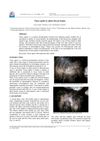
research Tinea Capitis in Adult Libyan Female
An adult Libyan woman was successfully treated for a rare scalp infection usually seen in children.

research Hair loss in children in rural population
Teaching kids about hygiene can reduce scalp infections.
research Giant folliculosebaceous cystic hamartoma
A 15-year-old boy had a rare skin growth on his buttock.
research Distributions of sulphur and other elements in human hair follicles
Sulphur in hair follicles increases from the bulb and then levels off, while other elements vary in distribution.

research Mechanisms of Dermatophyte Invasion on New Zealand Rabbit Skin Models
The study found that injecting spores directly into rabbit skin effectively caused fungal skin infections, with symptoms worsening over time.
research Hair casts. A clinical and morphologic study
A lotion helped remove hair casts, which seem to come from a specific part of the hair follicle, and patients with hair casts can be grouped based on the cause.

research Efficacy of betamethasone valerate foam formulation in comparison with betamethasone dipropionate lotion in the treatment of mild‐to‐moderate alopecia areata: A multicenter, prospective, randomized, controlled, investigator‐blinded trial
Betamethasone valerate foam is more effective and safe for treating mild-to-moderate alopecia areata than betamethasone dipropionate lotion.
research Maintenance, withdrawal, and re-treatment with ritlecitinib and brepocitinib in patients with alopecia areata in a single-blind extension of a phase 2a randomized clinical trial
Continuous treatment with ritlecitinib and brepocitinib is needed to maintain hair regrowth in alopecia areata.
research Pathologic Quiz Case: A Cutaneous Nodule on the Left Temple
The nodule was a benign cutaneous lymphadenoma, not cancer, and was successfully removed.

research Epidemiological pattern of dermatophytosis in calves from Tarai region of Uttarakhand, India
Dermatophytosis in calves is most common in winter, especially in 4-6 month-old female HF crossbreds.

research Evaluation of Effectiveness of Bio-Micro Injection in Treating Alopecia Universalis: A Non-Randomized Interventional Study
Combining mesotherapy with systemic treatments effectively improves alopecia universalis treatment.

research Histochemical observations of lectin-binding sites and keratin distribution in calcifying epithelioma of Malherbe.
Tumor cells in calcifying epithelioma of Malherbe resemble hair follicle cells.

research Unusual Clinical Manifestations of Chronic Discoid Lupus Erythematosus
A woman with discoid lupus improved with treatment after being misdiagnosed with a different hair loss condition.
research [Systemic therapy of diffuse effluvium and hair structure damage].
Medication 1 improved hair quality and growth more effectively than medication 2 and the placebo.
research A computer‐aided drug repurposing: the antibacterial agents targeting GroEL
Daprodustat, combined with PAβN, could be a new antibacterial treatment.
research Isolation of dermatophytes from dogs and cats with suspected dermatophytosis in Western Turkey
Young dogs and cats in Western Turkey often have skin infections caused by fungi, especially Microsporum canis.

research Gray Patch Tinea Capitis in Two Siblings
Two siblings with gray patch tinea capitis were successfully treated after identifying risk factors.

research The first case report of kerion-type scalp mycosis caused by Aspergillus protuberus
A rare fungal infection on a child's scalp was successfully treated with antifungal medication.

research Prominent follicular mucinosis with diffuse scalp alopecia resembling alopecia areata
A woman's hair loss, resembling an autoimmune condition, improved after treatment, but requires ongoing checks due to potential serious associations.