20 citations
,
August 2005 in “The Journal of laboratory and clinical medicine” Mice with damaged skin or hair follicles are more susceptible to anthrax infection.
16 citations
,
March 2023 in “Clinical Cosmetic and Investigational Dermatology” LactoSporin cream reduces wrinkles and improves skin texture safely.
 10 citations
,
May 2019 in “BMC Complementary and Alternative Medicine”
10 citations
,
May 2019 in “BMC Complementary and Alternative Medicine” The extract from Bacillus/Trapa japonica fruit helps increase hair growth and could be a potential treatment for hair loss.
8 citations
,
February 2022 in “PLoS ONE” Bacillus subtilis strain Ydj3 boosts sweet pepper growth, yield, and vitamin C by colonizing roots.
 6 citations
,
February 2023 in “Plant and Soil”
6 citations
,
February 2023 in “Plant and Soil” Bacillus subtilis strain WM13-24 helps plant root growth through volatile compounds.
January 2026 in “Journal of Advanced Research” Bacillus sp. TC5 products help hair regrowth and improve skin drug absorption.
 October 2022 in “Research Square (Research Square)”
 The conclusion is that certain chemicals from Bacillus subtilis help improve plant root growth through a hormone-related process.
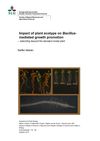 September 2018 in “Epsilon Archive for Student Projects (University of Southampton)”
 Bacillus amyloliquefaciens can boost root hair growth in some Arabidopsis plants, potentially improving agriculture.
January 2013 in “Hunan Agricultural Sciences” Lactobacillus reuteri and Bacillus natto can replace antibiotics to improve piglet health and growth.
 8 citations
,
January 2007 in “International journal of experimental pathology”
8 citations
,
January 2007 in “International journal of experimental pathology” Hairless HRS/J mice resist Bacillus anthracis skin infections due to high numbers of immune cells, not because they lack hair follicles.
January 2025 in “Archives of Dermatological Research” 34 citations
,
April 2012 in “Molecular Biology Reports” The enzyme from Bacillus cereus can be used in detergents and leather processing.
 August 2019 in “Journal of Invertebrate Pathology”
 Thymosin beta 4 protects cells from damage by blocking a harmful microRNA and boosting a protective gene.
 9 citations
,
November 2019 in “Scientific reports”
9 citations
,
November 2019 in “Scientific reports” The AC 2 peptide from Trapa japonica fruit helps protect hair cells and may treat hair loss.
January 2025 in “SSRN Electronic Journal”  9 citations
,
March 2015 in “Journal of Microbiology and Biotechnology”
9 citations
,
March 2015 in “Journal of Microbiology and Biotechnology” Ultra-high molecular weight poly-γ-glutamic acid may help promote hair growth.
165 citations
,
May 2023 in “Science Advances” The hydrogel speeds up healing of infected wounds by providing oxygen and fighting bacteria.
 12 citations
,
November 2014 in “Bioscience, Biotechnology, and Biochemistry”
12 citations
,
November 2014 in “Bioscience, Biotechnology, and Biochemistry” Genetically modifying a bacteria and changing its growth conditions significantly increased the production of a chemical called dipicolinic acid.
2 citations
,
December 2007 in “Microbial pathogenesis” Anthrax bacteria can infect and destroy hair follicles in mice, but the immune system eventually clears the infection.
January 2026 in “Health Food & Biotechnology” A hair serum with 3% keratin from chicken feathers made hair smoother, shinier, and more elastic.
Bacterial augmentation improves hair composting and nutrient availability.
 May 2024 in “Physiologia Plantarum”
 Bacillus subtilis helps plants get more phosphorus and grow better roots.
 March 2024 in “Journal of Pharmaceutical and Sciences”
 Zaleya pentandra extracts, especially acetone, may be useful for new medicines and food industry applications.
 December 2023 in “Sains Malaysiana”
 The enzyme Rand protease works well for leather dehairing and its stability is important, with Leu75 playing a key role.
Four bacteria from the lab were found to be resistant to selenium.
Current microbial test methods for hair cosmetics need revision due to strong bacteriostasis.
3 citations
,
January 2023 in “Biodiversitas Journal of Biological Diversity” Bacillus tequilensis from Leea indica leaves is a strong natural antioxidant source.
 3 citations
,
January 2005 in “Biological & Pharmaceutical Bulletin”
3 citations
,
January 2005 in “Biological & Pharmaceutical Bulletin” The peptide GPIGS helps hair cells grow and speeds up hair regrowth in mice.
2 citations
,
November 2009 in “DSpace (Federal University of Santa Catarina)” Brunfelsia uniflora has good antioxidant properties and moderate antibacterial activity.
 1 citations
,
June 2025 in “International Journal of Plant and Environment”
1 citations
,
June 2025 in “International Journal of Plant and Environment” Nickel oxide nanoparticles made with plant extract can kill bacteria and fungi and break down dyes.