 45 citations
,
May 2003 in “Journal of Cell Science”
45 citations
,
May 2003 in “Journal of Cell Science” α3β1-integrin is crucial for maintaining normal hair follicle shape and function but not needed for the development of the surrounding skin.
 76 citations
,
June 2008 in “Journal of the American Academy of Dermatology”
76 citations
,
June 2008 in “Journal of the American Academy of Dermatology” The conclusion is that certain scalp tissue changes are characteristic of lichen planopilaris, with mucinous perifollicular fibroplasia being a new feature for diagnosis.
 9 citations
,
June 2008 in “Springer eBooks”
9 citations
,
June 2008 in “Springer eBooks” Understanding hair follicle structure is key for treating hair disorders and could help develop new treatments.
 June 2024 in “Benha Journal of Applied Sciences”
 β1 integrin may indicate and influence the severity of hair loss in androgenetic alopecia.
1 citations
,
April 1998 in “PubMed”  January 2024 in “Diagnostic cytopathology”
 Trichilemmal carcinoma can spread to the parotid gland and be diagnosed using fine-needle aspiration cytology.
January 2006 in “Chinese Journal of Dermatology” Amelanotic melanocytes from hair follicles are immature and likely don't transfer melanosomes to keratinocytes.
Genetic factors might cause fibrosing alopecia linked to hair shaft abnormalities.
36 citations
,
April 2016 in “Biochimie” A substance called epidermal growth factor helps increase the growth of important hair follicle cells by activating a specific cell communication route.
1 citations
,
March 2024 in “Genes & Diseases” EBF1 controls hair type and length.
 53 citations
,
September 2011
53 citations
,
September 2011 Other common signs, not just the well-known immune cells around hair bulbs, are important for diagnosing hair loss from alopecia areata.
 30 citations
,
December 2017 in “Clinical, Cosmetic and Investigational Dermatology”
30 citations
,
December 2017 in “Clinical, Cosmetic and Investigational Dermatology” Parietal scalp area has lower hair density and smaller hair diameter in women with hair loss.
 August 1993 in “Journal of Dermatological Science”
 Testosterone metabolism in balding scalp cells may not be the main cause of hair loss.
 August 2016 in “Journal of Investigative Dermatology”
 Human hair follicles have a scent receptor that can influence hair growth.
66 citations
,
February 2007 in “The journal of investigative dermatology/Journal of investigative dermatology” Adenosine may promote hair growth by increasing FGF-7 levels in dermal papilla cells.
250 citations
,
November 2003 in “The Journal of Cell Biology” BMP receptor IA is essential for proper hair cell differentiation in mice.
 3 citations
,
May 2013 in “Pediatric Dermatology”
3 citations
,
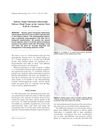
May 2013 in “Pediatric Dermatology” A newborn girl had a rare case of salivary gland tissue on her chest, which was safely removed.
 April 2017 in “Journal of Investigative Dermatology”
 Stem cells can create hair follicles, potentially treating permanent hair loss, and healthy skin and hair depend on mitochondrial function and special fats.
 2 citations
,
May 2023 in “JAAD Case Reports”
2 citations
,
May 2023 in “JAAD Case Reports” The document concludes that early and accurate diagnosis of hair loss on the top of the scalp in Black men is important to distinguish CCCA from other types of hair loss.
 June 2026 in “Indian Journal of Dermatology Venereology and Leprology”
 Trichoscopy helps detect and monitor androgenetic alopecia by identifying key scalp signs.
14 citations
,
October 2002 in “Journal of cutaneous pathology” MAP-2 is crucial for the structure of hair follicles and nails.
 56 citations
,
March 2010 in “Journal of Dermatology”
56 citations
,
March 2010 in “Journal of Dermatology” Most cases of Temporal Triangular Alopecia are found in early childhood and may be related to genetic conditions.
227 citations
,
February 1989 in “The Journal of Comparative Neurology” CGRP-IR axons may help maintain and renew tissues.
 35 citations
,
November 2010 in “Journal of Cutaneous Pathology”
35 citations
,
November 2010 in “Journal of Cutaneous Pathology” Dilated follicular infundibula and increased catagen/telogen follicles are key indicators for diagnosing alopecia areata.
 April 2017 in “Plastic and reconstructive surgery. Global open”
 Baby and adult skin cells are different, with baby cells having more active pathways that could help grow new hair follicles.
11 citations
,
May 2012 in “Genesis” Bmpr2 and Acvr2a receptors are crucial for hair retention and color.
 3 citations
,
June 2023 in “Cureus”
3 citations
,
June 2023 in “Cureus” Pilomatricomas should be considered to avoid misdiagnosis in children with unusual skin tumors.
 March 2014 in “Anais Brasileiros de Dermatologia”
 Hair follicles are a key source of stem cells for skin repair and could help treat baldness.

Skin stem cells in hair follicles are important for touch sensation.
 2 citations
,
March 2009 in “Hair transplant forum international”
2 citations
,
March 2009 in “Hair transplant forum international” Men generally have a certain thickness of hair at their hairline.