5 citations
,
May 2024 in “Journal of Allergy and Clinical Immunology Global” Upadacitinib effectively improved severe atopic dermatitis and alopecia universalis in a 29-year-old man.
 March 2026 in “Clinical Cosmetic and Investigational Dermatology”
 Upadacitinib improved multiple immune-related conditions in one patient.
Combining baricitinib with golimumab helped regrow hair in a patient with ankylosing spondylitis and alopecia areata.
Hair loss in SLE patients is mostly due to chronic telogen effluvium and is linked to moderate disease activity.
1 citations
,
July 2021 in “Acta dermatovenerologica Croatica” Adalimumab significantly improved symptoms and quality of life in two patients with Hidradenitis Suppurativa.
June 2024 in “British Journal of Dermatology” Alopecia areata greatly affects quality of life, especially mental health, and newer assessment tools better capture this impact than older ones.
Excluding alopecia and mucous membrane components from the CLASI-A score reduces its effectiveness in capturing important disease activity.
 39 citations
,
November 2017 in “Journal of The American Academy of Dermatology”
39 citations
,
November 2017 in “Journal of The American Academy of Dermatology” The document suggests using standardized methods to track and measure hair loss in alopecia areata, including patient self-assessment and a 50% improvement in specific scores as a treatment goal.
Adalimumab significantly improved Hidradenitis Suppurativa and quality of life in two patients.
 April 2017 in “Journal of Investigative Dermatology”
 Most patients with cutaneous dermatomyositis either improved or remained stable over 3.5 years.
Baricitinib effectively treats alopecia areata, with over half of patients improving after 52 weeks.
 24 citations
,
June 2021 in “Journal of the European Academy of Dermatology and Venereology”
24 citations
,
June 2021 in “Journal of the European Academy of Dermatology and Venereology” Use specific tools to measure quality of life in alopecia areata patients and improve future treatments.
 August 2024 in “Frontiers in Public Health”
 Alopecia Areata severely impacts mental health, causing anxiety and depression, affecting quality of life.
May 2021 in “Medicina internă” High-dose corticosteroid treatment helped improve symptoms in a patient with Adult Onset Still Disease.
 September 2019 in “Journal of Investigative Dermatology”
 Abrocitinib at 100 mg and 200 mg daily may significantly improve moderate-to-severe atopic dermatitis in patients 12 years and older.
January 2026 in “Archivio istituzionale della ricerca (Alma Mater Studiorum Università di Bologna)” Baricitinib effectively promotes hair regrowth and improves well-being in severe alopecia areata patients.
November 2023 in “Journal of Investigative Dermatology” Higher inflammation markers are linked to more severe alopecia areata.
 November 2023 in “JEADV Clinical Practice”
 Patients with severe alopecia areata felt better and less anxious or depressed when treated with baricitinib compared to placebo.
 October 2022 in “JAAD international”
 Most patients with autoimmune blistering diseases experienced some hair loss, which may be underreported and linked to disease severity.
8 citations
,
June 2023 in “British Journal of Dermatology” The SAAD-41 scale effectively measures the psychosocial impact of alopecia areata.
5 citations
,
February 2023 in “Skin Health and Disease” The Swedish Hairdex-S is a reliable tool for assessing quality of life in Alopecia Areata patients.
January 2026 in “International Journal of Dermatology” The new tool helps measure the impact of alopecia areata on children's quality of life.
 2 citations
,
March 2016 in “The Journal of Dermatology”
2 citations
,
March 2016 in “The Journal of Dermatology” The Facial Psoriasis Log-based Area and Severity Index is a more effective way to measure improvements in facial psoriasis than the traditional method.
June 2025 in “British Journal of Dermatology” Irish dermatologists urgently need guidelines for using JAK inhibitors in treating alopecia areata.
Upadacitinib effectively treated a patient with multiple inflammatory conditions.
1 citations
,
May 2026 in “Journal of Dermatological Treatment” JAK1 inhibitor may effectively treat alopecia areata when TNF-α inhibitors and corticosteroids fail.
29 citations
,
December 2022 in “Dermatology and Therapy” Emotional symptoms from alopecia areata reduce work productivity and daily activity.
 107 citations
,
November 2008 in “The Journal of Rheumatology”
107 citations
,
November 2008 in “The Journal of Rheumatology” Fibromyalgia slightly more common in SLE patients but doesn't affect SLE activity assessments.
 April 2024 in “JEADV clinical practice”
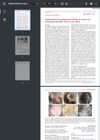
 Upadacitinib significantly improved both rheumatoid arthritis and alopecia areata in a patient.
 April 2017 in “Journal of Investigative Dermatology”
 SIG-1451 could be a promising new treatment for atopic dermatitis.