 November 2023 in “JEADV Clinical Practice”
 Patients with severe alopecia areata felt better and less anxious or depressed when treated with baricitinib compared to placebo.
2 citations
,
February 1990 in “PubMed” DDR-II hair follicle cells don't respond to 1, 25-dihydroxyvitamin D3, aiding diagnosis.
 1 citations
,
April 2022 in “The Journal of Family Practice”
1 citations
,
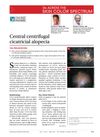
April 2022 in “The Journal of Family Practice” CCCA causes progressive hair loss in Black women, starting from a central scalp patch.
 23 citations
,
January 2009 in “Veterinary Dermatology”
23 citations
,
January 2009 in “Veterinary Dermatology” The hepatitis B vaccine did not cause hair loss in the tested mice.
Finasteride treatment increased blood volume and reduced vessel leakiness in beagle prostates.
2 citations
,
October 2016 in “OPAL (Open@LaTrobe) (La Trobe University)” The Swedish neonatal screening program effectively detects PKU, galactosaemia, and biotinidase deficiency with low false positives.
 March 2024 in “Skin research and technology”
 High CRP levels could indicate vitamin D deficiency in people with alopecia areata.
193 citations
,
June 2007 in “The Plant Journal” GhDET2 is crucial for cotton fiber growth.
13 citations
,
January 2014 in “Zhongguo zhongyao zazhi” Dendrobium candidum polysaccharides promote hair growth.
 3 citations
,
February 2019 in “Disease Markers”
3 citations
,
February 2019 in “Disease Markers” The index to ring finger ratio may indicate disease severity in female ankylosing spondylitis patients, but not in males.
4 citations
,
October 2024 in “Experimental Dermatology” CD8A and FOXD2-AS1 may be key for diagnosing and treating alopecia areata.
3 citations
,
February 2018 in “Experimental and Molecular Medicine/Experimental and molecular medicine” A protein called PCBP2 controls the production of a hair growth protein by interacting with its genetic message and is linked to hair loss when this control is disrupted.
November 2025 in “Journal of Investigative Dermatology” TEDAR is crucial for skin cell differentiation and barrier formation.
January 2009 in “ScholarlyCommons (University of Pennsylvania)” The P133R mutation in AKR1D1 enzyme causes harmful bile acid buildup, explaining related health issues.
 July 2021 in “International journal of dermatology, venereology and leprosy sciences”
 Diphenylcyclopropenone is more effective and has fewer side effects than dinitrochlorobenzene for treating alopecia areata.
September 2022 in “European Journal of Dermatology” Gene sequencing is essential for diagnosing Junctional epidermolysis bullosa.

Baricitinib helps regrow hair in teens with severe alopecia areata.
70 citations
,
December 2008 in “Cancer Research” CXCR2 in skin cells promotes tumor growth.
5 citations
,
October 2021 in “American Journal of Medical Genetics Part A” A new genetic variant causes BRESHECK syndrome by disrupting cell growth and stress response.
 March 1999 in “Hair transplant forum international”
 The document's conclusion cannot be determined from the provided text.
 1 citations
,
February 2024 in “JEADV. Journal of the European Academy of Dermatology and Venereology/Journal of the European Academy of Dermatology and Venereology”
1 citations
,
February 2024 in “JEADV. Journal of the European Academy of Dermatology and Venereology/Journal of the European Academy of Dermatology and Venereology” Baricitinib effectively promotes long-term hair regrowth in alopecia areata patients.
December 2024 in “Clinical and Experimental Dermatology” Patients with central centrifugal cicatricial alopecia benefit from shared decision-making with their doctors.
 July 2023 in “Nasza Dermatologia Online”
 More research is needed on CCCA in children, especially Black and Asian adolescents.
9 citations
,
July 2020 in “JAMA dermatology” Dermatoscopy can help diagnose CCCA without visible hair loss, offering a less invasive option than biopsy.
January 2026 in “Dermatologic Therapy” Higher RBP4 levels are linked to severe alopecia areata, but genetic variant rs3758539 doesn't affect baricitinib response.
 April 2026 in “Institutional Repositories DataBase (IRDB)”
 CD200- cells in hair follicles have a higher ability to regenerate hair.
33 citations
,
June 2007 in “Gene Expression Patterns” CTIP2 may help in skin development and maintenance.
9 citations
,
April 1999 in “Mammalian Genome” Acidic keratin genes are on CFA9 and basic keratin genes are on CFA27 in dogs.
2 citations
,
August 2024 in “Molecular Genetics & Genomic Medicine” Biotin mega-dose therapy led to dramatic improvement in a newborn with a rare metabolic disorder.
1 citations
,
February 2025 in “Journal of the Neurological Sciences” Beta-trace protein may help diagnose and predict treatment response in certain nerve disorders.