 April 2017 in “Our Dermatology Online”
 A 22-year-old with multiple autoimmune diseases needs a multidisciplinary treatment approach.
 January 2017 in “Archives of clinical and biomedical research”
 Enhancing melanin's energy generation may help treat alopecia areata.

Better models and evaluation methods for alopecia areata are needed.
 January 2016 in “Springer eBooks”
 Cryotherapy may be an effective and simple treatment for mild hair loss with few side effects.
Avicennia Marina extract and avicequinone C can reduce hair loss hormone production and increase hair growth factors, suggesting they could be used to treat androgenic alopecia.
 July 2015 in “Cambridge University Press eBooks”
 The document concludes that treatments for female hair loss and excess body hair are available, but managing expectations is important.
Cross-section trichometry is an accurate method to measure hair loss and growth.
 July 2012 in “Springer eBooks”
 The document concludes that proper diagnosis and treatment of nonscarring alopecias can improve quality of life and hair regrowth is possible as the hair follicle remains intact.
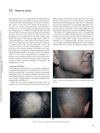 April 2012 in “Informa Healthcare eBooks”
 Alopecia areata is a common autoimmune condition causing varying hair loss, diagnosed by specific patterns of inflammation around hair follicles, with several treatment options available.
 January 2012 in “Elsevier eBooks”
 Hair loss can cause emotional and social issues, and various treatments, including medication, surgery, and psychological support, are needed.
 June 2008 in “Springer eBooks”
 The document concludes that permanent hair loss conditions are complex, require early specific treatments, and "secondary permanent alopecias" might be a more accurate term than "secondary cicatricial alopecia."
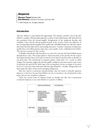 January 2007 in “Elsevier eBooks”
 Alopecia areata is a reversible, autoimmune-related hair loss that can have significant emotional impact and uncertain treatment effectiveness.
 September 1998 in “Journal of the European Academy of Dermatology and Venereology”
 Autoimmune and inflammatory processes are involved in both scarring and non-scarring types of hair loss.
 March 2021 in “Dermatological reviews”
 Hair transplant works well, but needs more research for better results.
 April 2019 in “Journal of the Dermatology Nurses’ Association”
 A 37-year-old man with hair loss and skin issues was successfully treated with oral antibiotics, highlighting the need for early treatment. Long-term care includes low-dose antibiotics and avoiding caps and wigs.
Topical minoxidil helps treat hair loss in teens, but more research needed for safe options.
 January 2009 in “Egyptian Journal of Medical Human Genetics”
 The study suggests that a specific gene variation and higher gene activity are linked to increased baldness in Egyptian men.
 November 1999 in “Journal of Cutaneous Medicine and Surgery”
 Treatments for hair loss include hormone modifiers, minoxidil, and hair transplant surgery.
 September 1998 in “Journal of The European Academy of Dermatology and Venereology”
 Auto-portraits help evaluate scalp hair.
 August 1993 in “Journal of Dermatological Science”
 Testosterone metabolism in balding scalp cells may not be the main cause of hair loss.

Hair loss can cause significant social and emotional issues, especially for women and young men.
 5 citations
,
July 2019 in “Journal of Cutaneous Medicine and Surgery”
5 citations
,
July 2019 in “Journal of Cutaneous Medicine and Surgery” Isotretinoin may cause hair loss, especially in women and young adults.
 218 citations
,
April 2012 in “British Journal of Dermatology”
218 citations
,
April 2012 in “British Journal of Dermatology” Guidelines suggest various treatments for alopecia areata, but leaving it untreated is also an option as 80% cases may recover on their own.
 5 citations
,
June 1994 in “Journal of Cutaneous Pathology”
5 citations
,
June 1994 in “Journal of Cutaneous Pathology” No CD44 in alopecia areata, present in normal and androgenetic alopecia.
 581 citations
,
October 1998 in “Journal of The American Academy of Dermatology”
581 citations
,
October 1998 in “Journal of The American Academy of Dermatology” Finasteride safely and effectively treats male pattern hair loss, but may cause reversible sexual issues and harm male fetuses.
 269 citations
,
August 2002 in “Journal of The American Academy of Dermatology”
269 citations
,
August 2002 in “Journal of The American Academy of Dermatology” 5% minoxidil works better for hair growth and density, with minor irritation.
 205 citations
,
March 2012 in “Science Translational Medicine”
205 citations
,
March 2012 in “Science Translational Medicine” PGD2 stops hair growth and is higher in bald men with AGA.
 198 citations
,
October 2011 in “Journal der Deutschen Dermatologischen Gesellschaft”
198 citations
,
October 2011 in “Journal der Deutschen Dermatologischen Gesellschaft” Use minoxidil for hair loss; finasteride and dutasteride for men, dutasteride for women.
 163 citations
,
November 2003 in “Journal of Investigative Dermatology”
163 citations
,
November 2003 in “Journal of Investigative Dermatology” Low iron levels may be linked to some types of hair loss in women.
 160 citations
,
January 2009 in “Clinical Drug Investigation”
160 citations
,
January 2009 in “Clinical Drug Investigation” HairMax LaserComb® effectively promotes hair growth and stops hair loss in males with androgenetic alopecia, with no serious side effects.