 December 2024 in “Tropical Journal of Natural Product Research”
 Parsley leaf fractions may help treat and prevent hair loss.
2 citations
,
June 2023 in “Current Nutrition & Food Science” Hinokiflavone may help treat cancers and other health issues.
18 citations
,
December 2005 in “Journal of Medicinal Chemistry” A brominated phenoxy compound effectively inhibits a human enzyme and shows potential for clinical use.
15 citations
,
April 2011 in “The journal of investigative dermatology/Journal of investigative dermatology” A3B5 can reduce skin pigmentation and slow melanoma growth.
![Benzo[c]quinolizin-3-ones Theoretical Investigation: SAR Analysis and Application to Untested Compounds](/images/assets/6712367a-949f-47c7-a756-2bfe6316fc69/small/15331.jpg) 6 citations
,
August 2004 in “Journal of Chemical Information and Computer Sciences”
6 citations
,
August 2004 in “Journal of Chemical Information and Computer Sciences” The research found a link between certain molecular features and the biological activity of BC3, which can help identify or create new active compounds.
 January 2004 in “Analytical Sciences: X-ray Structure Analysis Online”
 The document explains how to make a compound called 3.BETA.-Benzoyloxy-4-pregnen-16.ALPHA.,17.ALPHA.-epoxy-6,20-dione and describes its crystal structure.
 11 citations
,
August 2007 in “Bioorganic & Medicinal Chemistry Letters”
11 citations
,
August 2007 in “Bioorganic & Medicinal Chemistry Letters” Scientists made a chemical (compound 4e) that can be applied on skin to reduce oil production, which can help with acne, but it might cause skin sensitivity to light.

A rigid compound with a common structural motif was successfully synthesized.
 November 2022 in “Journal of Investigative Dermatology”
 A new molecule was found to be a safe and effective skin lightener and anti-aging product.
![Benzo[c]quinolizin-3-ones: A Novel Class of Potent and Selective Nonsteroidal Inhibitors of Human Steroid 5α-Reductase 1](/images/assets/ff6e6cbe-cb9c-4d11-87ef-671d28ffd4fa/small/15506.jpg) 28 citations
,
September 2000 in “Journal of Medicinal Chemistry”
28 citations
,
September 2000 in “Journal of Medicinal Chemistry” Benzo[c]quinolizin-3-ones are effective nonsteroidal inhibitors of human steroid 5α-reductase 1.
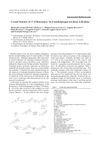 February 1999 in “Analytical Sciences”
 A new antiandrogen compound was made and its detailed three-dimensional shape was described.
20 citations
,
September 2022 in “Journal of Biomedical Optics” PBM helps improve cell survival in 3D tissue engineering.
 14 citations
,
August 2007 in “Bioorganic & Medicinal Chemistry Letters”
14 citations
,
August 2007 in “Bioorganic & Medicinal Chemistry Letters” The compound (1R,2S)-4-(2-Cyano-cyclohexyl-oxy)-2-trifluoromethyl-benzonitrile can stimulate hair growth and reduce oil production when applied topically.
2 citations
,
January 1999 in “Dermatology”  2 citations
,
February 2004 in “Biopolymers”
2 citations
,
February 2004 in “Biopolymers” 4-(4-Phenoxybenzoyl)benzoic acid derivatives can both increase and decrease certain types of reactive oxygen species, and may be relevant to hair loss.
September 2019 in “Journal of Investigative Dermatology” PCE-DP brightens skin and promotes hair growth by enhancing cell growth and reducing melanin uptake.
23 citations
,
October 2008 in “Journal of medicinal chemistry” PF-998425 is a new, effective, and non-phototoxic treatment for skin conditions related to androgens.
May 2010 in “Europe PMC (PubMed Central)” Near-infrared probes can safely and effectively image cysteine protease activity for disease diagnosis.
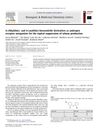 11 citations
,
March 2009 in “Bioorganic & Medicinal Chemistry Letters”
11 citations
,
March 2009 in “Bioorganic & Medicinal Chemistry Letters” Chemicals called 4-(alkylthio)- and 4-(arylthio)-benzonitrile derivatives can potentially reduce oil production on skin, which could help treat conditions like acne and hair loss.
June 2025 in “OPAL (Open@LaTrobe) (La Trobe University)” A new hair dye method uses polyphenols and oxidation to create a long-lasting brown color on gray hair.

Researchers made new compounds that could potentially be developed into anticancer drugs.
![Synthesis and 5α-Reductase Inhibitory Activity of 8-Substituted Benzo[ƒ]Quinolinones Derived from Palladium Mediated Coupling Reactions](/images/assets/2aedba8c-b0ac-4fa3-9ac7-9f375a016bba/small/15581.jpg) 14 citations
,
February 1998 in “Bioorganic & Medicinal Chemistry Letters”
14 citations
,
February 1998 in “Bioorganic & Medicinal Chemistry Letters” Some newly made compounds can block an enzyme linked to hair loss and prostate growth, with one in particular being very selective.
![Synthesis and Activity of 8-Substituted Benzo[c]quinolizin-3-ones as Dual Inhibitors of Human 5α-Reductases 1 and 2](/images/assets/efc54340-66d6-4f27-9930-045ac023f903/small/15248.jpg) 9 citations
,
November 2004 in “Bioorganic & Medicinal Chemistry Letters”
9 citations
,
November 2004 in “Bioorganic & Medicinal Chemistry Letters” New compounds were made that effectively block enzymes related to prostate issues and hair loss.
 13 citations
,
May 2011 in “Bioorganic & Medicinal Chemistry”
13 citations
,
May 2011 in “Bioorganic & Medicinal Chemistry” Changing the 6-position on benzopyran molecules affects insulin release, with some compounds showing strong inhibitory effects.
 7 citations
,
March 2022 in “Molecules”
7 citations
,
March 2022 in “Molecules” 5-Bromo-3,4-dihydroxybenzaldehyde could potentially help hair growth by activating certain cell pathways and inhibiting others.
A new method creates valuable compounds for drug discovery by breaking traditional chemical rules.
![Discovery of 7-Methoxy-6-[4-(4-Methyl-1,3-Thiazol-2-yl)-1H-Imidazol-5-yl]-1,3-Benzothiazole (TASP0382088): A Potent and Selective Transforming Growth Factor-β Type I Receptor Inhibitor as a Topical Drug for Alopecia](/images/assets/9620bd26-3366-4f2a-bcac-f511697bbc41/small/35997.jpg) 6 citations
,
January 2013 in “Chemical & pharmaceutical bulletin/Chemical and pharmaceutical bulletin”
6 citations
,
January 2013 in “Chemical & pharmaceutical bulletin/Chemical and pharmaceutical bulletin” A new compound shows promise as a topical treatment for hair loss.
 April 2019 in “The journal of investigative dermatology/Journal of investigative dermatology”
 Scientists discovered a new way UVB light increases skin pigmentation through the ATP-P2X7 pathway.
 October 2022 in “Journal of ophthalmology”
 Light therapy may improve eye conditions by stimulating cell activity and increasing oxygen availability.
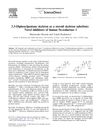 13 citations
,
August 2007 in “Bioorganic & medicinal chemistry letters”
13 citations
,
August 2007 in “Bioorganic & medicinal chemistry letters” A new compound effectively inhibits human 5α-reductase 1.